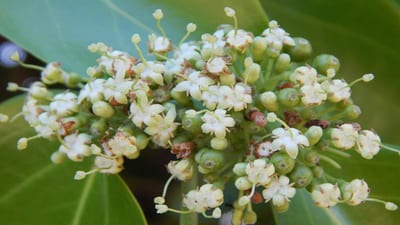
Cleistanthus collinus is a small deciduous tree native to Sri Lanka, belonging to the Euphorbiaceae family, the spurge family that includes many species producing latex or distinctive woody capsule fruits. Its English name is Garari, and in Sinhala it is known as Madara (මදාරා). This profile sets out the recorded botanical facts for the species.
What does Cleistanthus collinus look like?
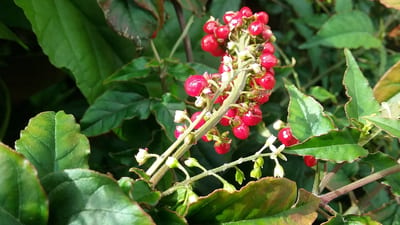
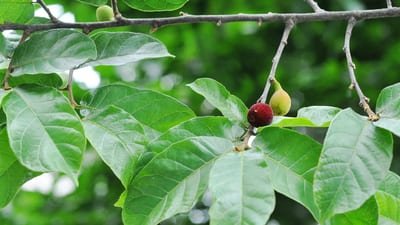
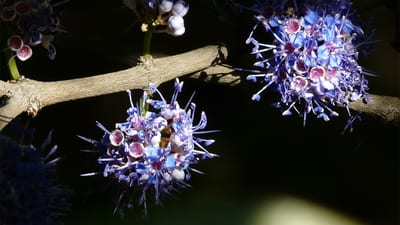
Cleistanthus collinus grows as a small deciduous tree. Its leaves are alternate, quite entire, leathery, circular to broadly-obovate or elliptic, and measure about 1.5 to 3 inches long, carried on a short leaf stalk roughly 6 mm long. The flowers are yellowish-green and appear in small, silky, hairy clusters in the leaf axils.
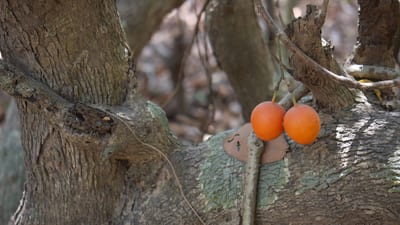
The fruit is a woody, stalkless capsule, roughly spherical in shape with an obscure 3-lobed, rarely 4-lobed, structure. It is about 1.5 to 2 cm in diameter, dark brown, and shining.
Is Cleistanthus collinus poisonous?
Yes. The bark of Cleistanthus collinus has traditionally been used to poison fish, and the outer crust of the capsule, along with the leaves and roots, is also recorded as exceedingly poisonous. No part of the plant is edible, and it should not be consumed in any form.
What is it called in Sinhala?
In Sinhala, Cleistanthus collinus is called Madara (මදාරා). Its English common name is Garari.
What is its status in Sri Lanka?
The species is native to Sri Lanka, meaning it occurs naturally in the island though it is not confined to it alone.
| Attribute | Detail |
|---|---|
| Scientific name | Cleistanthus collinus |
| Family | Euphorbiaceae |
| English name | Garari |
| Sinhala name | Madara (මදාරා) |
| Status in Sri Lanka | Native |
| Edible parts | None |
| Life form | Small deciduous tree |
| Leaves | Alternate, entire, leathery, circular to broadly-obovate or elliptic, 1.5-3 inches long; leaf stalk 6 mm long |
| Flowers | Yellowish-green, in small silky hairy axillary clusters |
| Fruit | Woody, stalkless, spherical capsule, obscurely 3- (rarely 4-) lobed, 1.5-2 cm diameter, dark-brown, shining |
| Toxicity | Bark used to poison fish; outer crust of capsule, leaves and roots are exceedingly poisonous |
Other species in this genus
1 more, sharing the same genus.