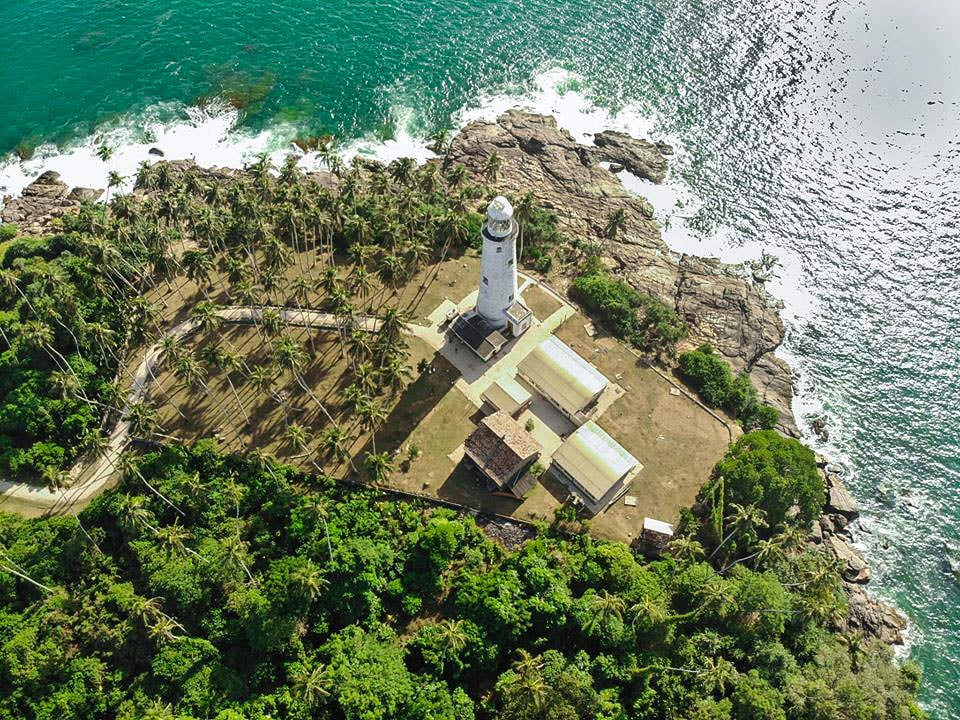

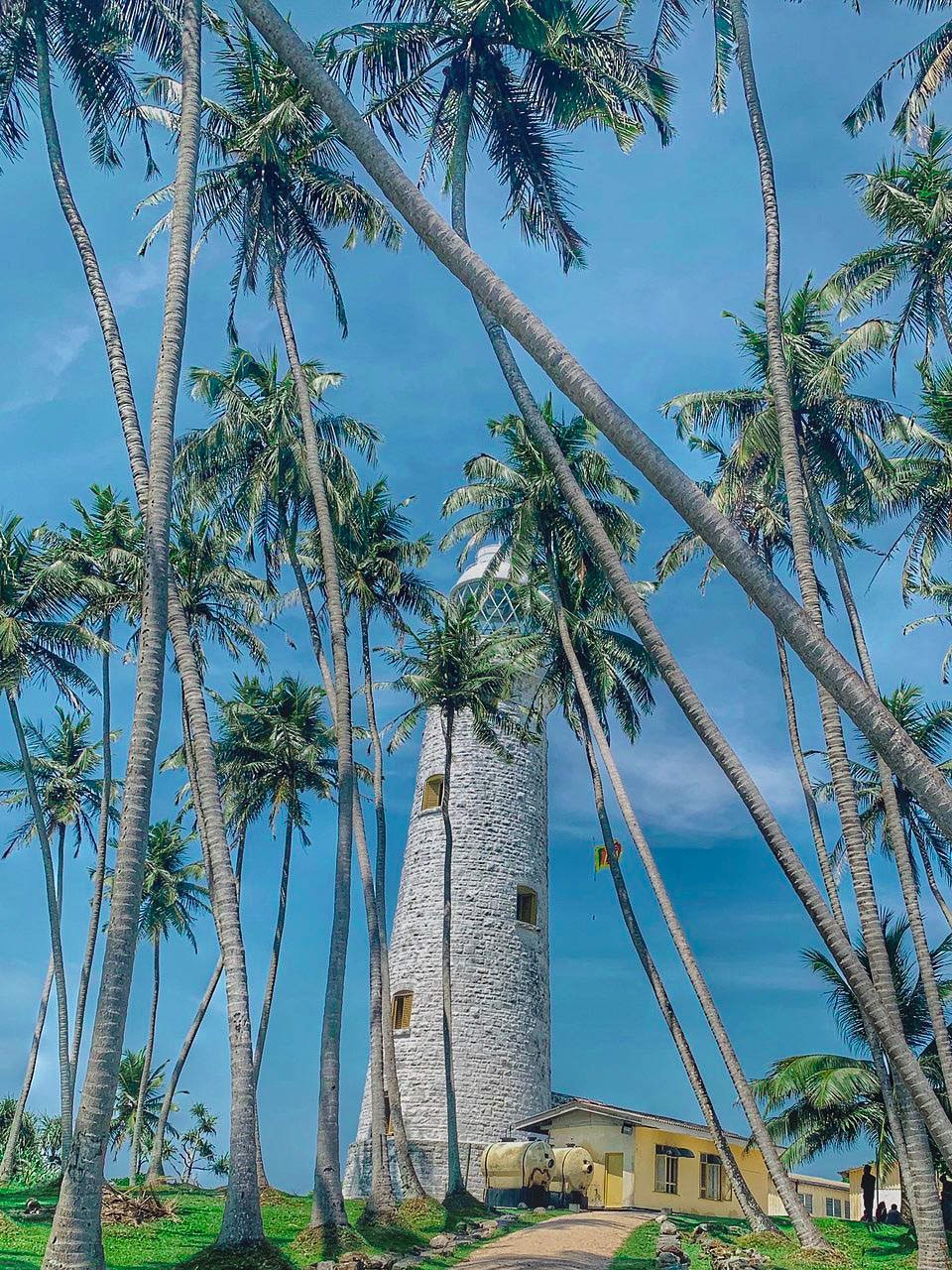
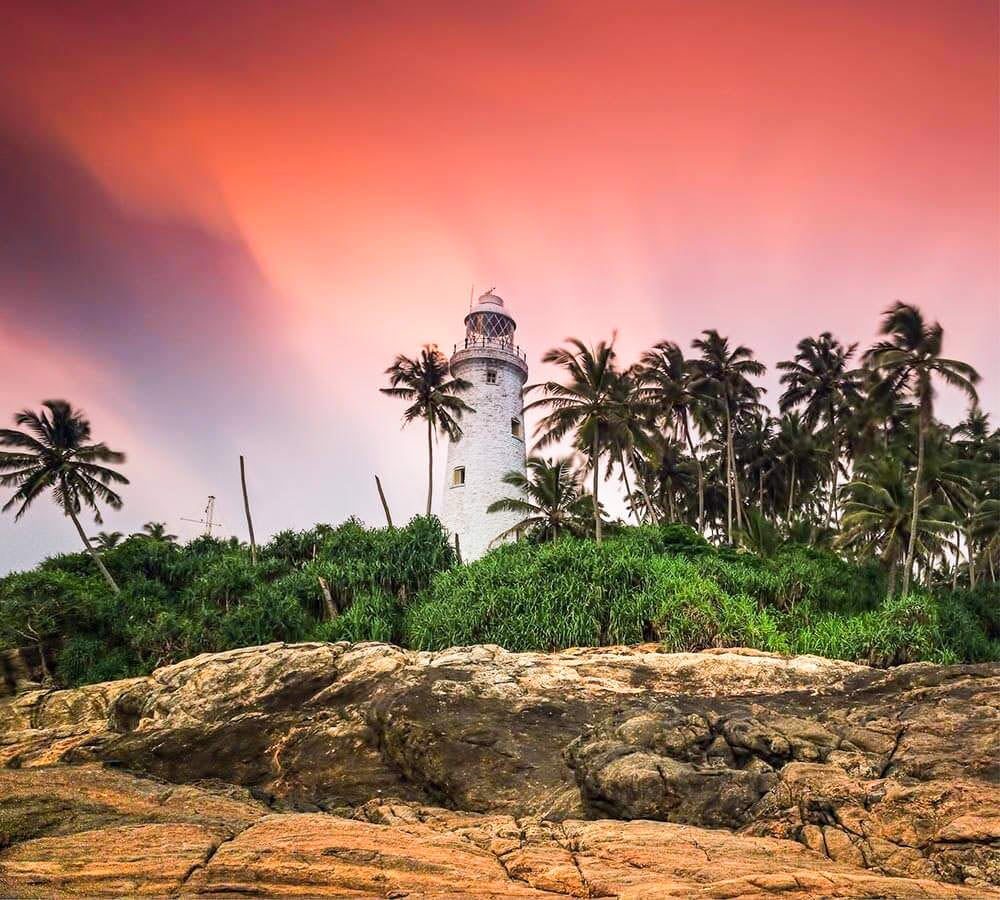
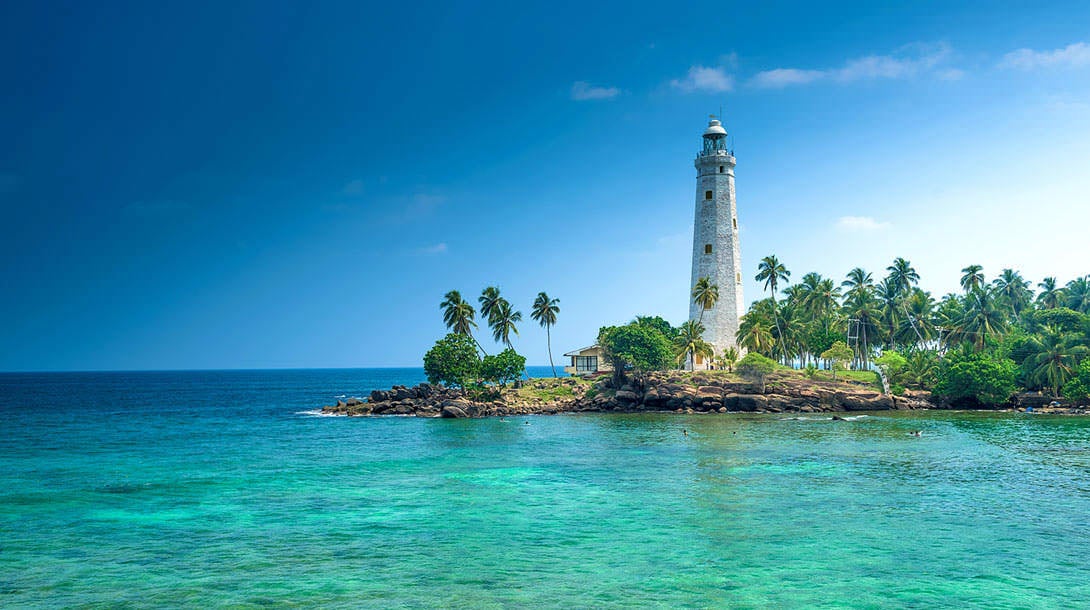
Rising roughly 100 feet above a coral-fringed, eight-acre island half a mile off Beruwala, the Barberyn Island Lighthouse has guided ships safely past the reef-strewn southern approaches of Sri Lanka for more than 130 years. It is one of only four internationally recognised lighthouses in Sri Lanka and remains an active navigational aid — not merely a heritage relic.
What is the history of Barberyn Lighthouse?
The lighthouse was commissioned by the British colonial administration in 1889 and operated under the British Imperial Lighthouse Service. The impetus was practical: the shallow reefs surrounding Beruwala were notorious for holing the hulls of trading vessels, and a reliable fixed light was essential for the busy sea lanes running along Sri Lanka's west coast.
After independence in 1948, the Sri Lankan government assumed responsibility for the structure. In 1969, the original dioptric apparatus — manufactured by the renowned Birmingham firm Chance Brothers — was replaced with a Pharos Marine PRB-21 sealed-beam optic and drive pedestal rotating beacon, making Barberyn one of the more technically advanced lighthouses of its era. A further upgrade came in 2000, when a Differential Global Positioning System (DGPS) was installed and Barberyn was integrated into a national lighthouse network.
In December 2004, the Indian Ocean tsunami struck Sri Lanka's coastline with devastating force. Remarkably, the island and lighthouse emerged without significant structural damage, and the keepers on duty at the time were unharmed.
What can you see on Barberyn Island?
Visitors are not permitted inside the lighthouse tower itself, a policy put in place after incidents of misuse by earlier guests. The five resident lighthouse keepers, however, are generally welcoming and happy to explain how the beacon operates and to share stories of life on the island.
Beyond the tower, the island rewards unhurried exploration. Among the highlights:
- British-era ruins — several stone structures from the colonial period survive, some with wide open windows that frame open-sea views in every direction.
- The old well — an abandoned freshwater well that once supplied the island's small resident community; now largely decorative but evocative of island self-sufficiency.
- The keepers' hut — a clay-roofed structure that served as an informal bar and social space during the British period. Lighthouse keepers still use it as a gathering place today.
- The shoreline — calm stretches of water suitable for swimming on fair-weather days, fringed by coconut palms and dense tropical greenery.
Because reaching the island requires negotiating a boat passage with local fishermen — there is no formal ferry — visitor numbers remain low. That relative seclusion is much of the appeal. With prior permission from the relevant authorities, it may be possible to camp overnight on the island.
How do you get to Barberyn Island from Beruwala?
There is no scheduled boat service to Barberyn Island. The standard approach is to walk down to the Beruwala fishing harbour, speak with the fishermen there, and arrange an informal crossing. The island sits roughly half a mile offshore, so the journey takes only a few minutes by small boat. Agree on both the fare and a return pick-up time before setting off. Early mornings tend to be the most practical time to find willing boatmen.
Beruwala itself is straightforward to reach from Colombo — the town lies approximately 58 km south of the capital along the coastal highway (A2), roughly an hour to 90 minutes by road depending on traffic. Private transfers from Colombo or Negombo can be arranged in advance for a stress-free arrival.
When is the best time to visit Barberyn Lighthouse?
The lighthouse is accessible year-round, but the west coast of Sri Lanka — and Beruwala in particular — is most settled between November and April, when the southwest monsoon is dormant and the sea is calm. Crossing to the island in a small fishing boat is considerably more comfortable and safer during this dry-season window. From May through September, swells driven by the southwest monsoon can make the short crossing rougher and may discourage boatmen from making the trip.
What else is worth seeing near Beruwala?
Beruwala and the adjoining stretch of coast offer several worthwhile diversions that pair well with an island visit. The nearby Madu River Safari — accessed from Balapitiya, a short drive north — takes visitors through one of Sri Lanka's most biodiverse mangrove lagoons. Sea turtle conservation projects at Kosgoda, also to the north, allow visitors to learn about nesting and hatchling release programmes. For those with a taste for maritime heritage, a day trip to the Dutch-fortified town of Galle to the south rounds out a coastal itinerary nicely.
The town of Beruwala itself has a notable Arab trading history and is home to one of Sri Lanka's oldest mosques, the Kechimalai Mosque, which marks the site where Arab traders are said to have first landed on the island — lending the wider area a cultural depth that goes beyond its beaches.
Is Barberyn Lighthouse worth visiting?
For travellers who have already spent time on Beruwala's main beach, a morning trip to Barberyn Island offers something distinctly different: a working piece of maritime infrastructure set within a quiet tropical island, decorated by colonial-era stonework and home to a tiny permanent community. It requires a little initiative — arranging the boat, finding the keepers — but that slight effort filters out the crowds and leaves a more genuine encounter with the place. It is not a polished attraction with a ticket booth; it is a living lighthouse that happens to welcome curious visitors.
Nearby places
8 places within about 25 km, nearest first.
Related reading
2 pages on closely related subjects.