Batik is one of the most recognisable textile traditions in Asia, and Sri Lanka has quietly maintained a living craft industry that blends indigenous design sensibilities with influences carried across centuries of trade and cultural exchange. Whether you are looking to buy a handmade sarong, watch artisans at work in a coastal factory, or simply understand what makes Sri Lankan batik distinct from its Indonesian counterpart, this guide covers the craft from cloth to finished garment.
What is batik and how is it made?
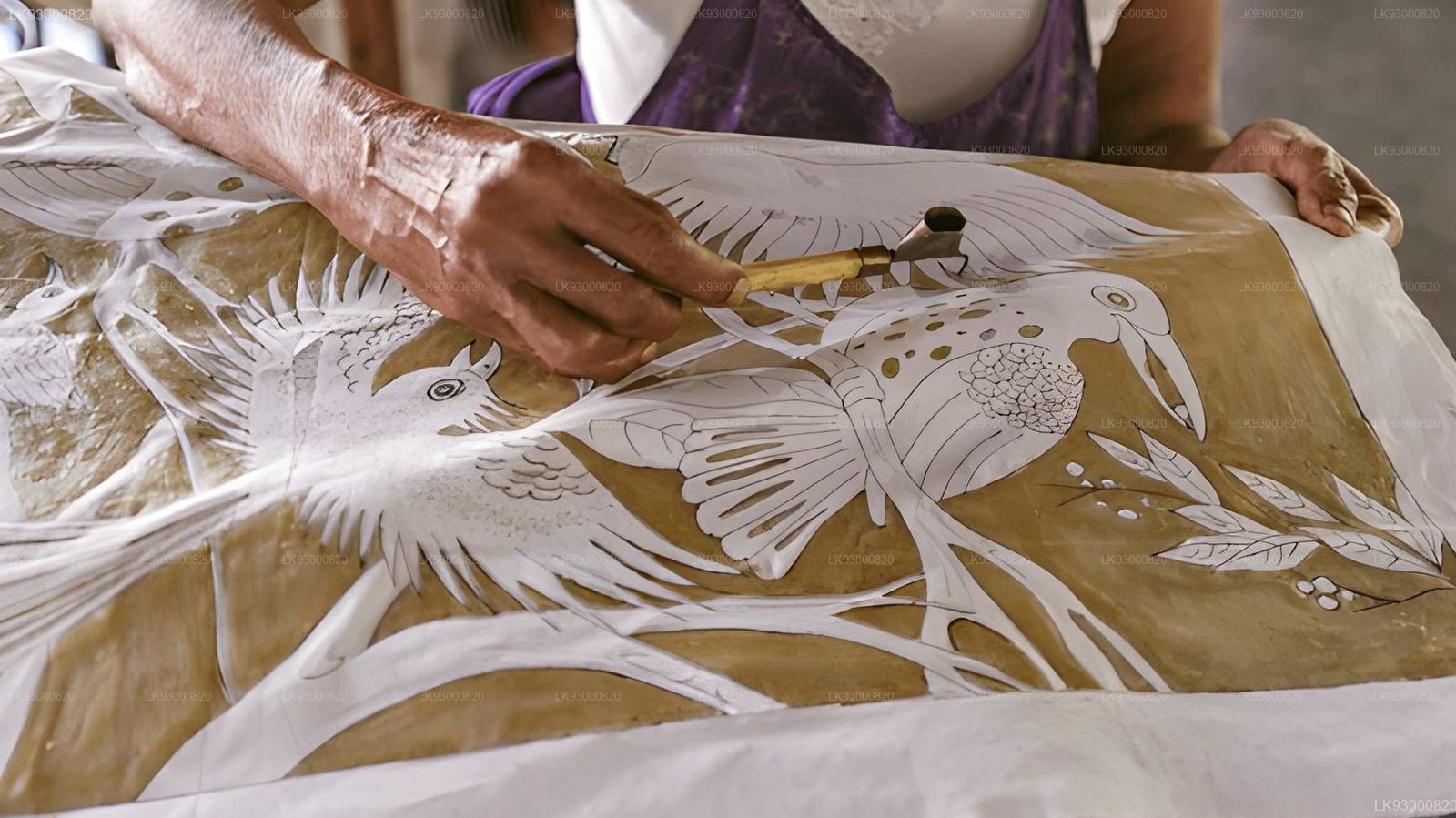
Batik is a wax-resist dyeing technique in which molten wax is applied to fabric before it is submerged in dye. Because wax repels water-based dyes, the areas beneath the wax retain their original colour while the exposed cloth absorbs the new shade. Once dyeing is complete, the wax is removed in boiling water, revealing the pattern underneath.
The wax is applied using one of three methods:
- Canting (tjanting): a small spouted copper cup attached to a handle, used to draw freehand lines and fine details by hand.
- Cap (copper stamp): a pre-formed copper block dipped in wax and pressed onto the fabric, allowing consistent repetition of a motif at speed.
- Stiff brush: used to fill larger background areas quickly.
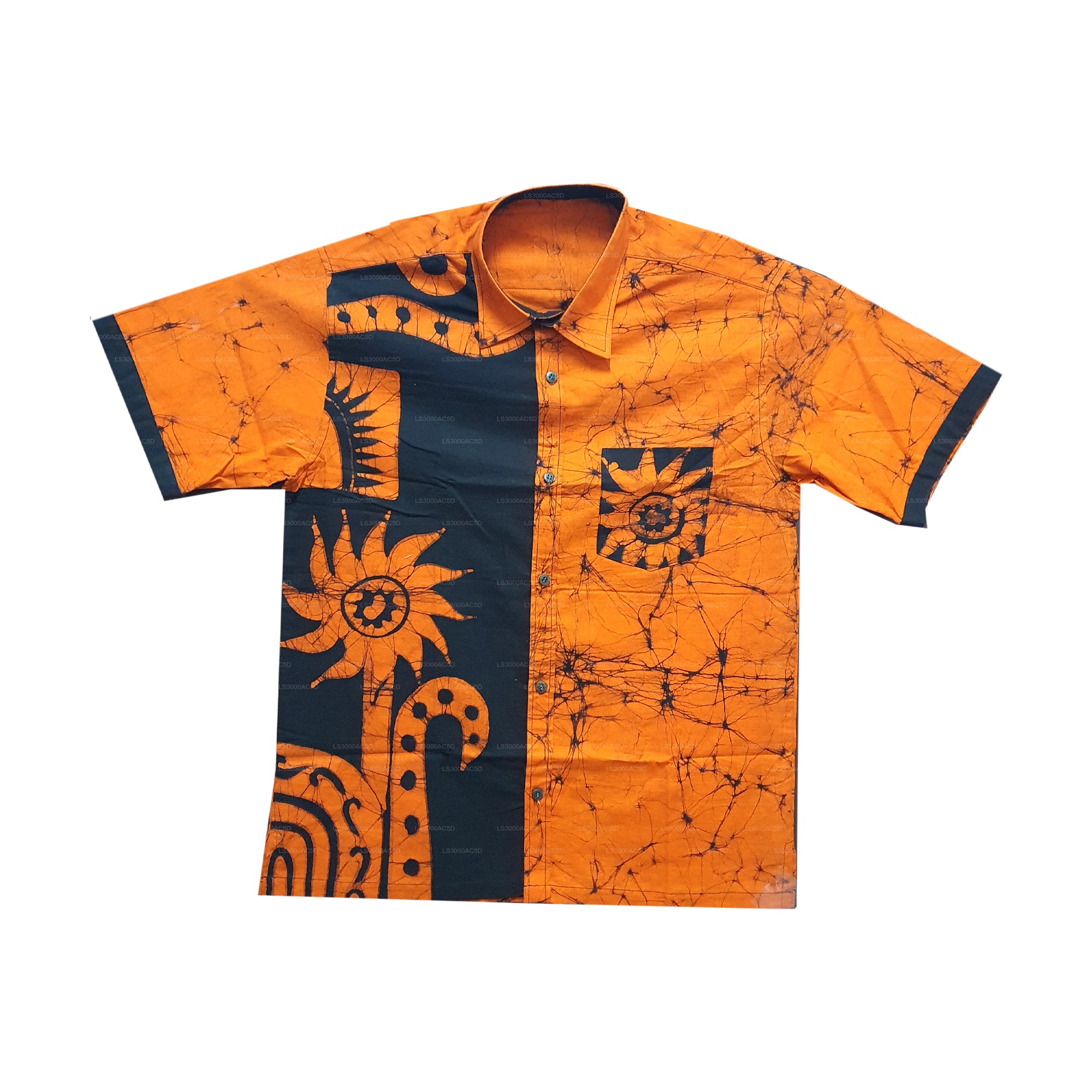
For multicoloured pieces, the process is repeated in stages — fresh areas are waxed and the cloth re-dyed in progressively darker shades. The characteristic fine crackle lines you see on many batik pieces are caused by deliberate or accidental fractures in the wax that allow dye to seep through, and experienced artisans consider this a signature of hand-crafted work rather than a flaw.
Cotton is the most common base fabric because it absorbs dye evenly and holds colour well through repeated washing. Silk batik is also produced, particularly for garments intended for formal or ceremonial use, and commands a higher price.
Where does batik come from? A brief global history
Wax-resist dyeing is among the oldest textile techniques on record. Evidence of the method dates to at least the 4th century BC — ancient Egyptian linen burial wrappings have been found that were coated in wax and incised with a stylus to create patterns before dyeing. Similar traditions developed independently across Asia and Africa over the following centuries.
Batik production is documented in China during the Tang Dynasty (7th–10th century AD) and in Japan during the Nara Period (7th–9th century AD), where it was known as rōkechi. On the African continent, wax-resist fabric work has its deepest roots among the Yoruba people of present-day Nigeria. Today the craft is practised across Sri Lanka, India, Indonesia, Malaysia, Singapore, the Philippines and Nigeria.
Indonesian batik occupies the most prominent position on the global stage. In October 2009, UNESCO inscribed Indonesian batik on the Representative List of the Intangible Cultural Heritage of Humanity, recognising it as a living tradition of exceptional cultural depth. Some scholars argue that the Indonesian tradition was influenced by Sri Lankan or Indian practitioners who settled in Java as early as the 6th or 7th century, though the precise origins remain contested.
What is the history of batik in Sri Lanka?
The conventional account holds that batik making as a commercial craft was introduced to Sri Lanka by Dutch traders, probably in the 17th or 18th century. However, some textile historians argue that rudimentary wax-resist techniques already existed on the island before European contact, and that the Dutch connection accelerated rather than originated the tradition.
Sri Lanka's modern batik industry grew significantly during the 20th century and today functions primarily as a small-scale artisan sector concentrated along the southwest coast. The Dutch colonial influence along this coastline is a broader thread that runs through many of the region's craft traditions. Unlike Indonesian batik, which is deeply codified — certain motifs were historically reserved for royalty — Sri Lankan batik is comparatively open in design, mixing local motifs with patterns imported or adapted from Javanese originals.
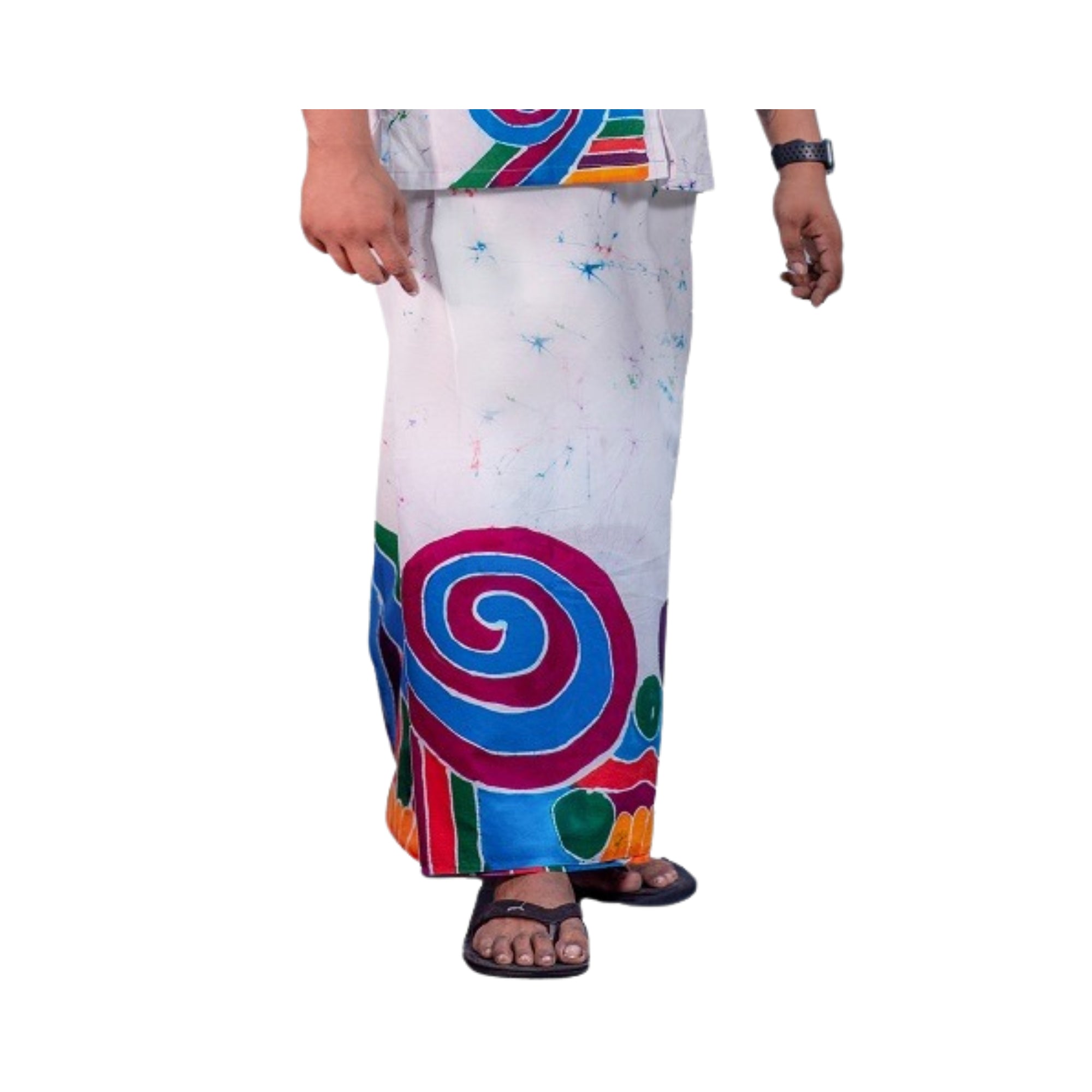
Sri Lankan batik designs draw on several visual traditions: elephants, lotus flowers, peacocks, the Kandyan architectural scroll, and abstract geometric patterns all appear frequently. The palette tends toward the bold and warm, with indigo, ochre, burnt orange and forest green among the most commonly seen combinations.
Where can you buy or see batik made in Sri Lanka?
The area most associated with Sri Lankan batik is the southwestern coastal stretch around Hikkaduwa, where Galle Road is lined with batik shops and market stalls. These outlets sell a broad range of goods: shirts, sarongs, dresses, wall hangings, tablecloths and bed linen. Most items are cotton; silk pieces are available but less common and generally need to be sought out from specialist producers.
The Mahawewa area, a short distance inland from the coast, is home to several batik factories. Many of these welcome visitors and offer informal tours of the production floor, where you can watch the wax application, dyeing baths and finishing stages carried out in sequence. Factory visits tend to be more instructive than street stalls for understanding how a finished piece was actually made.
For travellers heading further north, the Sigiriya area has also developed a small batik-making scene, partly because the Cultural Triangle draws visitors who are receptive to craft souvenirs. Hands-on batik workshops in this region allow participants to design and dye a small piece themselves under guidance — a practical way to understand the craft from the inside.
What should you look for when buying batik in Sri Lanka?
Quality varies considerably across price points. A few indicators that a piece is genuinely hand-crafted:
- Canting work: look for slight irregularities in line width — uniformly perfect lines usually indicate a printed or cap-stamped piece rather than a freehand one.
- Crackle lines: fine, irregular veining in the dyed areas is typical of hand-made batik and considered desirable.
- Reverse side: on quality pieces the design penetrates the fabric and is clearly visible (though not identical) on the reverse. A design that appears only on the surface is likely screen-printed.
- Fabric weight: heavier cotton holds dye more richly and drapes better than thin, loosely woven cloth.
Sarongs and shirts make practical gifts and pack flat, making them easy to carry home. Wall hangings, though bulkier, showcase the most elaborate design work and are worth considering if you have the luggage space.
How does Sri Lankan batik differ from Indonesian batik?
The differences are both cultural and technical. Indonesian batik — particularly Javanese batik — follows a highly structured design vocabulary in which motifs carry specific social and ceremonial meanings. The parang (machete diagonal), kawung (palm fruit circle) and truntum (guiding star) patterns, for instance, each carry symbolic weight rooted in court culture.
Sri Lankan batik is less codified. While certain motifs recur — the elephant and the lotus appear on perhaps a majority of tourist-oriented pieces — there is no comparable hierarchy of restricted designs. Sri Lankan producers are freer to experiment, which has led to a more eclectic range of contemporary patterns alongside traditional ones. This flexibility is both the craft's commercial strength and, some critics argue, a reason it has not achieved the same cultural depth or international recognition as its Indonesian counterpart.
Can you take a batik-making class in Sri Lanka?
Yes. Factory tours in Hikkaduwa and the surrounding area frequently include a short demonstration followed by an opportunity to try applying wax yourself. More structured workshops — where participants complete a piece from initial design through to dyeing and wax removal — are available from specialist craft operators, typically in the Hikkaduwa, Galle and Sigiriya regions. These sessions usually last two to four hours and result in a small piece of cloth that participants take home. Booking in advance is advisable during the peak tourist season between November and April.
Related reading
3 pages on closely related subjects.