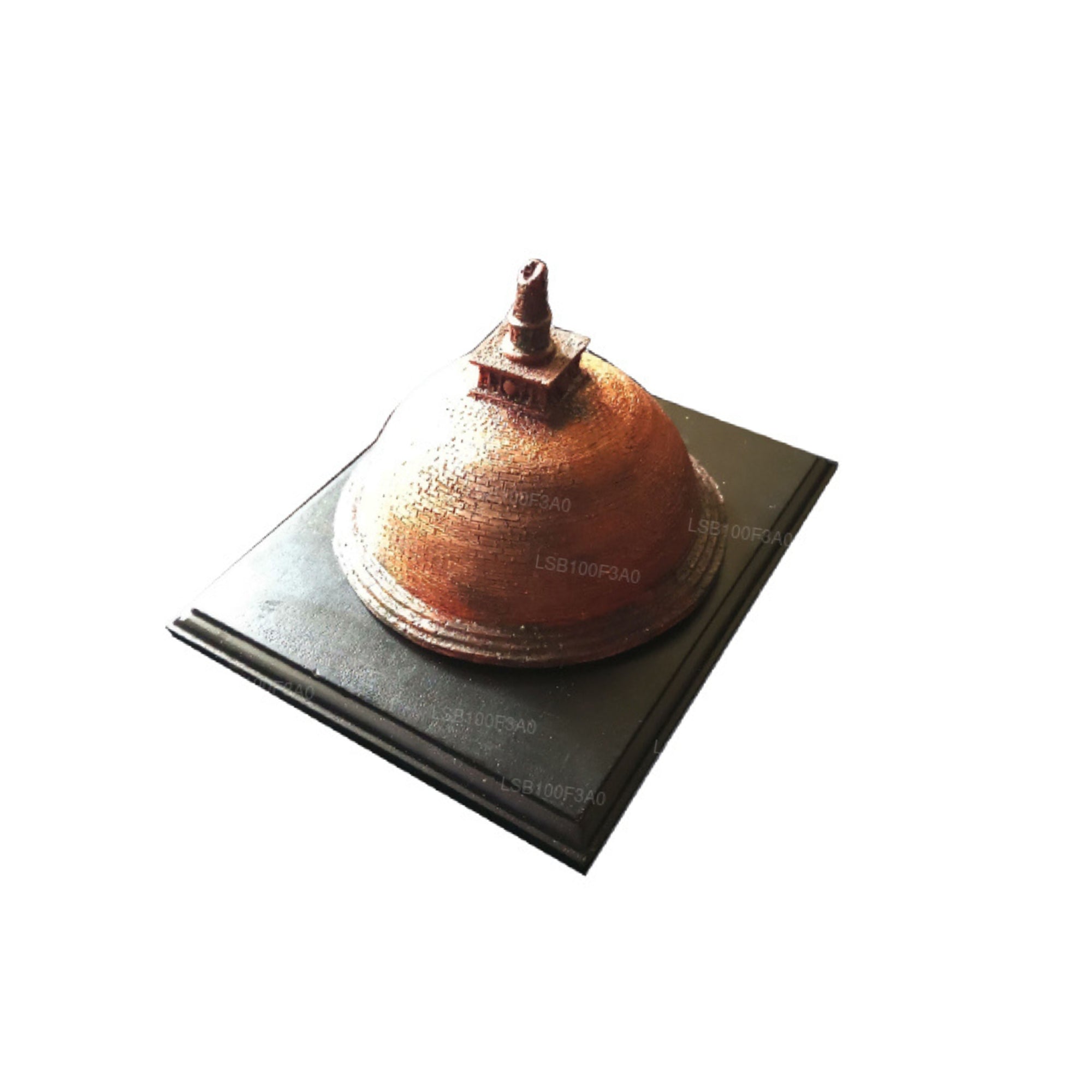
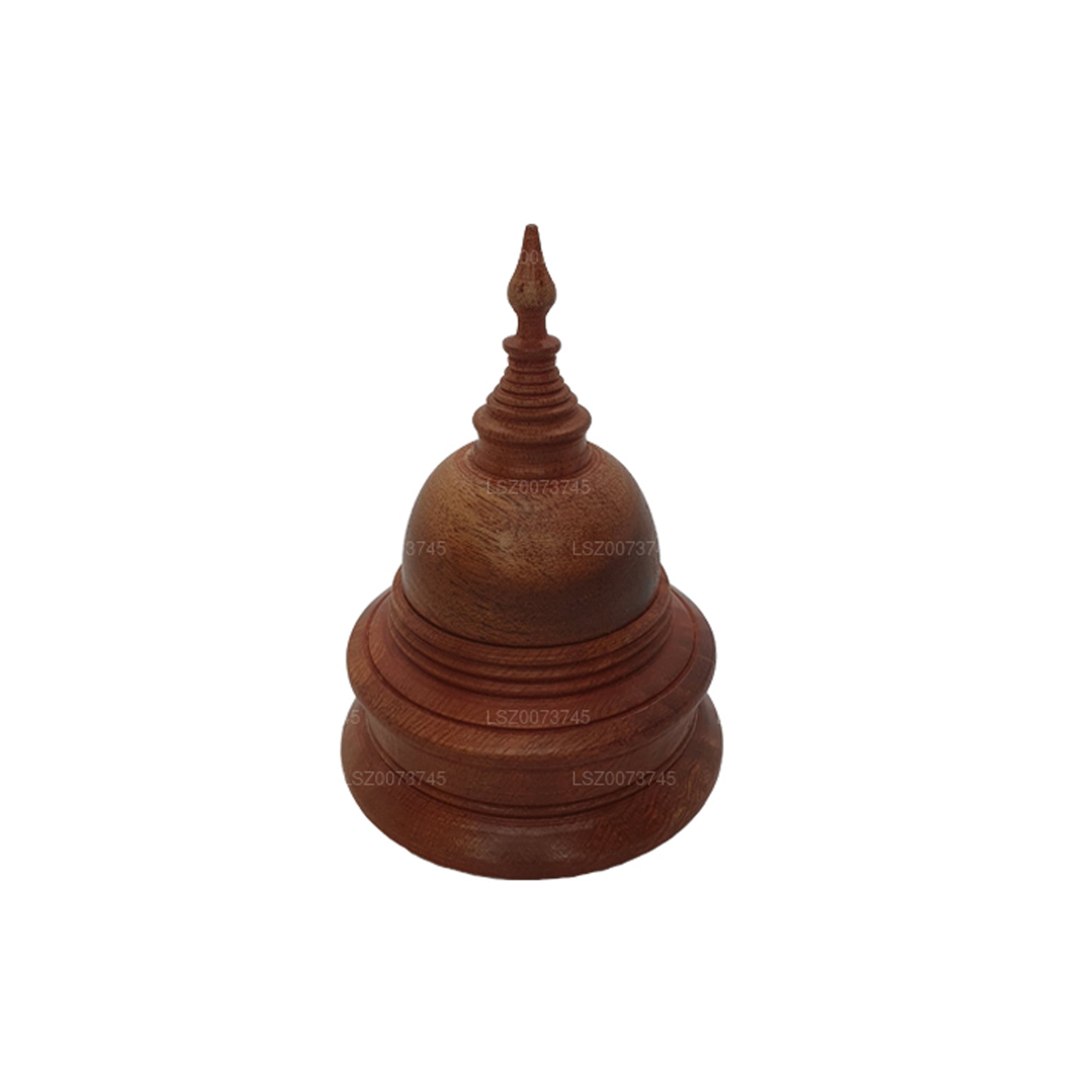
Perched atop the rocky plateau of Mihintale, roughly 13 kilometres east of Anuradhapura, the Ambasthala Stupa marks one of the most consequential moments in Sri Lankan history: the spot where the Indian monk Mahinda Thero first met King Devanampiyatissa in the 3rd century BCE and introduced Buddhism to the island. The name Ambasthala means "mango tree terrace" in Pali, a reference to the mango grove where that legendary encounter is said to have taken place. Today the stupa stands as a quietly powerful memorial, drawing pilgrims, scholars, and curious travellers in roughly equal measure.
What is the historical significance of the Ambasthala Stupa?
According to the Mahavamsa, the ancient Pali chronicle of Sri Lanka, Mahinda Thero — son of the Indian emperor Ashoka — arrived at Mihintale on the full moon of the month of Poson (around June) and encountered King Devanampiyatissa who was hunting deer. After a brief philosophical exchange, the king recognised Mahinda's wisdom and accepted the Dhamma. This single meeting set Sri Lanka on a course that shaped its language, art, architecture, and identity for more than two millennia.
The stupa was subsequently built over the precise spot of that encounter, enshrining a relic and creating a permanent axis for devotion. Mihintale as a complex later grew into one of the earliest monastic cities in Asia, with stupas, refectories, hospital ruins, and meditation caves spread across several terraced hills.
What can you see at the Ambasthala Stupa site?
The stupa itself is a gleaming white dome rising above a square terrace, its form characteristic of early Anuradhapura-period architecture. A flight of granite steps — counted by pilgrims as a form of merit-making — leads from the base of the Mihintale hill up through forested terraces to the Ambasthala platform. Along the way you pass the Kantaka Cetiya, one of the oldest stupas in the complex, decorated with carved friezes of animals, dwarfs, and lotus motifs that offer a rare window into early Sri Lankan sculpture.
- Ambasthala Dagoba: the central shrine marking the site of Mahinda's arrival; the area around it is kept clear for circumambulation.
- Mahinda's Cave (Aradhana Gala): a rocky outcrop nearby where Mahinda Thero is said to have meditated; the views across the Anuradhapura plain are expansive.
- Sinha Pokuna (Lion Bath): a stone trough carved with a lion's head, used in antiquity for ritual bathing.
- Refectory ruins: large stone troughs that once stored food distributed to monks, giving a sense of the community's scale.
- Naga Pokuna: a rock-cut pool with a five-hooded cobra carved in relief, one of the most photographed details on the hill.
Higher still is the Maha Seya stupa, a later addition that commands panoramic views and is a popular destination for the Poson Poya pilgrimage each June.
When is the best time to visit Mihintale and the Ambasthala Stupa?
Mihintale is accessible year-round, but the most culturally immersive time to visit is Poson Poya — the full moon day in June — when hundreds of thousands of white-clad pilgrims climb the steps by torchlight to mark the anniversary of Buddhism's arrival on the island. If large crowds are not your preference, early mornings on any weekday outside the Poson season offer the stupa in near-solitude, with mist still clinging to the surrounding scrub forest.
The North Central Province experiences its dry season roughly from May to September, making those months the most comfortable for walking the exposed granite staircases. Between October and January, brief afternoon showers can make the stone steps slippery; sandals with grip are advisable year-round.
How do I get to the Ambasthala Stupa from Colombo or Kandy?
Mihintale lies about 200 kilometres north of Colombo and around 175 kilometres north of Kandy, making it most naturally combined with a visit to Polonnaruwa and the wider Cultural Triangle circuit. The nearest major transport hub is Anuradhapura, which has rail connections from Colombo and regular bus services. From Anuradhapura, Mihintale is a straightforward 20-minute drive east along the A9 road. Three-wheelers and taxis are readily available at Anuradhapura for the final leg.
Most visitors arrange a private vehicle for the day so they can also cover Anuradhapura's own monumental zone — the Ruwanwelisaya, the Sri Maha Bodhi, and the Jetavanaramaya — without being tied to public transport schedules.
What should visitors know before arriving?
Mihintale is an active place of worship, not merely a heritage site, and basic etiquette applies throughout. Removing shoes before ascending the main staircase is obligatory. White or modest clothing is appreciated; bare shoulders and short skirts are considered disrespectful. Photography is generally permitted in open areas but should be discreet near worshippers in prayer.
| Detail | Information |
|---|---|
| Location | Mihintale, North Central Province |
| Distance from Anuradhapura | Approximately 13 km east via A9 |
| Best visiting hours | Early morning or late afternoon to avoid midday heat |
| Dress code | Modest; shoes removed on staircase |
| Entry fee | Foreign visitors typically pay a combined site fee; confirm current rates on arrival |
| Poson Poya pilgrimage | Full moon of June — largest annual gathering |
How does the Ambasthala Stupa fit into a broader Sri Lanka itinerary?
Mihintale pairs naturally with a full day in Anuradhapura, which holds some of the most ancient Buddhist monuments in the world. Travellers with more time can extend northward toward Wilpattu National Park, Sri Lanka's oldest and largest national park, roughly 60 kilometres to the west, combining heritage and wildlife in a single northern circuit. The Kiri Vehera Stupa at Polonnaruwa offers a complementary experience for those interested in the full arc of Sri Lanka's stupa-building tradition.
For travellers who wish to understand the broader architectural and religious context, the UNESCO World Heritage listing of the Sacred City of Anuradhapura — within which Mihintale is contextually linked — provides a concise overview of what makes this landscape so significant on a global scale.
Why is Mihintale called the Cradle of Buddhism in Sri Lanka?
The phrase is used because no other site in the country can claim a more direct connection to the religion's introduction. While Anuradhapura became the administrative and spiritual capital, Mihintale was the first point of contact. Monks continued to inhabit its caves and terraces for centuries after Mahinda's arrival, and the inscriptions found across the hill — some dating to the 3rd century BCE — are among the oldest Brahmi script inscriptions discovered in Sri Lanka. The site is therefore as important to historians and archaeologists as it is to Buddhist pilgrims.
Nearby places
13 places within about 25 km, nearest first.
- Kantaka Stupaunder 1 km
- Mihintale Hospital ruinsunder 1 km
- Mihindu Maha Stupa (Seya)under 1 km
- Mihintale Mountainunder 1 km
- Mihindu Caveunder 1 km
- Aradhana galaunder 1 km
- Mihintale Junction Railway Station1 km
- North Central Province4 km
- Jaya Ganga (Yodha Ela)4 km
- Senarathgama Railway Station5 km
- Manakanda7 km
- Kala Wewa Reservoir8 km
- Thalkote Lake9 km