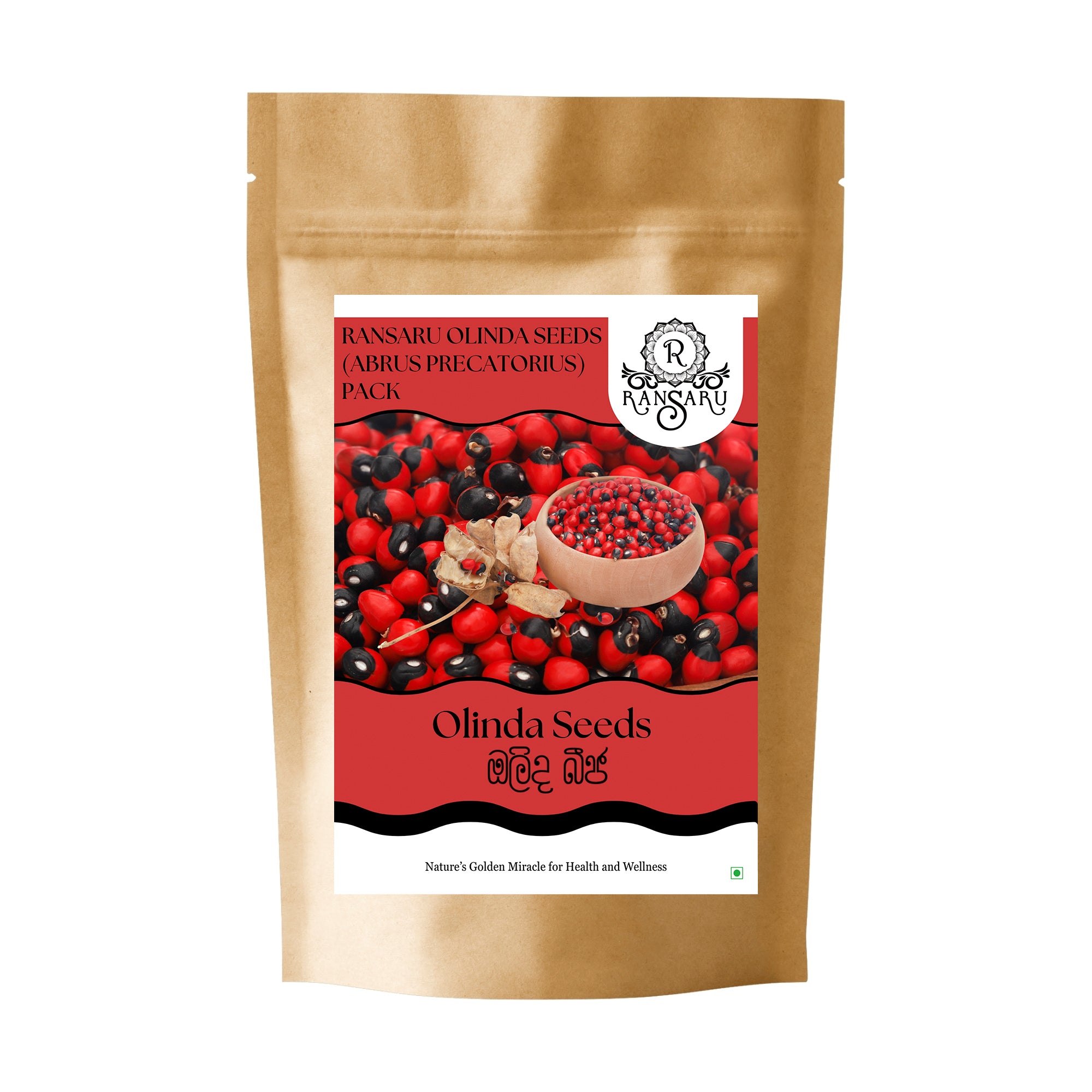




Abrus melanospermus is a flowering leguminous vine native to tropical Asia, including Sri Lanka, where it has a place in the island's traditional ayurvedic plant catalogue. Closely related to the well-known Abrus precatorius (rosary pea), it shares several botanical traits but is distinguished by its dark-coloured seeds — the species name melanospermus derives from the Greek for "black-seeded."
What is Abrus melanospermus?
Abrus melanospermus belongs to the family Fabaceae (legumes). It is a slender, twining vine that climbs through scrub forest and secondary vegetation, typically found in lowland and mid-elevation habitats across Sri Lanka. Like others in the genus, it produces small pink to purple flowers arranged in clusters, followed by short seed pods that split open to reveal glossy seeds.
The plant is sometimes confused with Abrus precatorius, whose distinctive red-and-black seeds are among the most recognisable in the plant kingdom. Abrus melanospermus seeds, by contrast, are uniformly dark — black or very dark brown — which is its clearest distinguishing feature in the field.
Where does Abrus melanospermus grow in Sri Lanka?
In Sri Lanka, this species is typically found in the dry and intermediate zones, often in disturbed or secondary forest margins, scrublands, and along roadsides. It tends to grow as a climbing vine, using surrounding shrubs and trees for support. Habitats within or adjacent to protected areas — such as the dry-zone forests around Wilpattu National Park — can support populations of this and related Abrus species.
The plant thrives in tropical climates with a pronounced dry season, tolerating relatively poor soils. Its wide distribution through seasonal dry forest makes it accessible to traditional practitioners across Sri Lanka's interior regions.
What are the traditional ayurvedic uses of Abrus melanospermus?
Sri Lanka has one of the longest continuous traditions of ayurvedic medicine in South Asia, drawing on a rich pharmacopoeia of native and naturalised plants. Abrus melanospermus appears in this tradition alongside better-documented species such as Acacia chundra and Pongamia pinnata.
In traditional formulations, plants from the Abrus genus are referenced for their roots, leaves, and seeds. The roots and leaves of related species have been used in preparations addressing respiratory conditions, fever, and skin disorders, among others. As with all members of this genus, seeds contain abrin — a potent toxin — and must never be consumed directly. Traditional ayurvedic use of Abrus species is typically restricted to processed formulations prepared under expert guidance.
- Parts used: Roots, leaves (seeds avoided due to toxicity)
- Traditional applications: Used in classical texts for respiratory, inflammatory, and dermatological conditions
- Preparation: Typically processed into decoctions or incorporated into compound formulations
- Practitioners: Licensed ayurvedic physicians (vaidyas) in Sri Lanka
It is important to note that no part of any Abrus species should be self-administered without professional guidance. The seeds in particular are highly toxic, and traditional knowledge around their safe handling has been developed over centuries of specialist practice.
How does Abrus melanospermus differ from Abrus precatorius?
Abrus precatorius — known in Sri Lanka as "Olinda" or "Madhu" — is the most widely recognised species in the genus and has been documented extensively in Sinhala folk medicine and ornamental use. Its seeds, bright red with a black spot, have historically been used as weights and in jewellery-making.
| Feature | Abrus melanospermus | Abrus precatorius |
|---|---|---|
| Seed colour | Uniformly black or dark brown | Red with black spot |
| Common name (Sinhala) | Less commonly named | Olinda / Madhu |
| Distribution in Sri Lanka | Dry and intermediate zones | Widespread across multiple zones |
| Ayurvedic prominence | Secondary / specialist use | Well-documented in classical texts |
| Toxicity | Seeds contain abrin (highly toxic) | Seeds contain abrin (highly toxic) |
Why does Sri Lanka's ayurvedic plant catalogue matter?
Sri Lanka's documented pharmacopoeia of medicinal plants represents one of the most comprehensive in South Asia, with hundreds of species catalogued across Sinhala, Sanskrit, and Tamil classical traditions. Plants like Abrus melanospermus — even when less prominent than flagship species — are important components of this biodiversity record. Protecting the natural habitats where these plants grow is therefore both a conservation and a cultural priority.
The Sinharaja Forest Reserve, a UNESCO World Heritage Site, is one of many protected areas in Sri Lanka that safeguard the ecosystems within which native medicinal plants continue to survive. Ongoing documentation by the Sri Lanka Department of Ayurveda and academic institutions ensures that species such as Abrus melanospermus remain part of the living knowledge tradition rather than becoming botanical footnotes.
Can visitors learn about Sri Lankan medicinal plants on a tour?
Botanical and wellness tourism is a growing area in Sri Lanka, with visitors increasingly interested in the island's ayurvedic traditions as part of a broader cultural experience. Several village and nature-based experiences offer guided introductions to medicinal plant identification and traditional preparation methods. These are best combined with nature walks in secondary forest zones where species such as Abrus melanospermus are naturally distributed.
For those travelling through the cultural heartland of the island, a visit to an established ayurvedic centre or herbal garden can offer firsthand exposure to Sri Lanka's living plant pharmacopoeia in a safe, curated environment.
Other species in this genus
1 more, sharing the same genus.
Related reading
1 pages on closely related subjects.