Xanthium indicum, known in English as Common Cocklebur, is a native annual herb of Sri Lanka belonging to the daisy family, Asteraceae. It is a non-edible plant with no recorded food use, identified mainly by its lobed leaves and small spiny seed cases.
What does Xanthium indicum look like?
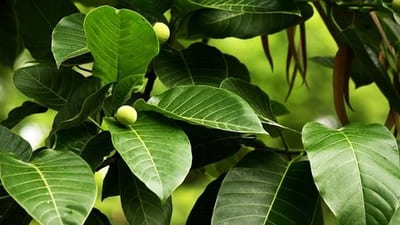
Xanthium indicum grows as an annual herb. Its leaves are broadly ovate and divided into three to five lobes, carried on distinct stalks (petiolate). The leaf blades range from 3 to 15 cm long and 2.5 to 15 cm wide, coming to an acute or acuminate point at the tip while the base is rounded or heart-shaped (cordate). The margins are irregularly toothed (serrate), and both leaf surfaces are covered in short stiff hairs (hispidulous), with tiny glands on the underside.
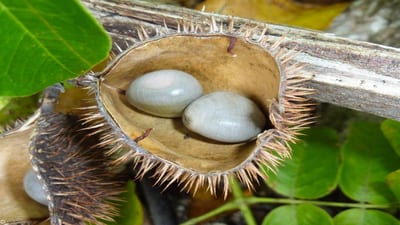
The fruit is an achene, narrowly ovoid to elliptic in shape, 1.3 to 1.5 mm long and 3 to 4 mm broad. It is greyish black and smooth, tapering to a fine point at the apex. This spiny, clinging fruit structure is typical of the genus Xanthium and of many members of Asteraceae, which produce dry, single-seeded fruits adapted to attach to fur or clothing for dispersal.
Where does Xanthium indicum grow?
Xanthium indicum is classified as native to Sri Lanka, meaning it occurs naturally on the island as part of its original flora, alongside populations elsewhere in its broader native range in tropical and subtropical Asia.
Is Xanthium indicum edible or useful?
No edible parts are recorded for this species. It should not be eaten or used as a food plant.
What is Xanthium indicum called in Sinhala?
In Sinhala, Xanthium indicum is known by the local names Wal rambuttan and Urukossa.
| Attribute | Recorded detail |
|---|---|
| Scientific name | Xanthium indicum |
| Family | Asteraceae |
| English name | Common Cocklebur |
| Sinhala / local name | Wal rambuttan / Urukossa |
| Status in Sri Lanka | Native |
| Edible parts | None |
| Life form | Annual herb |
| Leaves | Broadly ovate, 3–5 lobed, petiolate; 3–15 x 2.5–15 cm; acute or acuminate apex; rounded or cordate base; margins irregularly serrate; hispidulous both surfaces; glandular beneath |
| Achenes | Narrowly ovoid or elliptic, 1.3–1.5 mm long, 3–4 mm broad, greyish black, smooth, tapering to a fine point at apex |