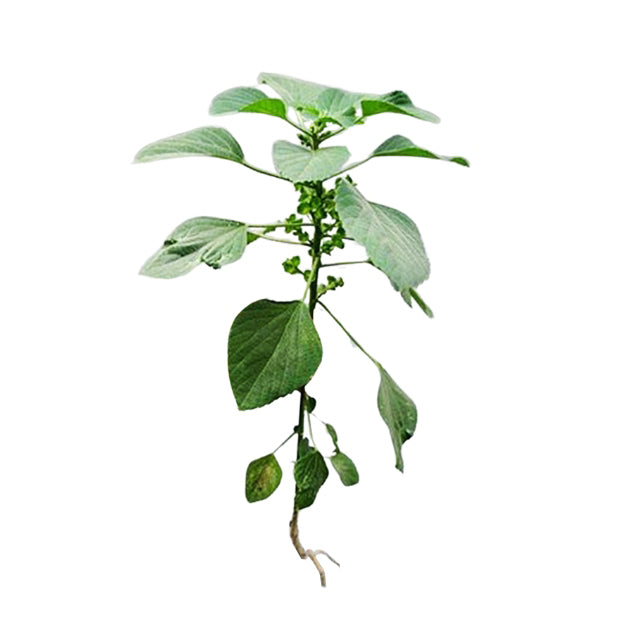




Tylophora indica var. indica is a climbing herb native to tropical and subtropical Asia, including Sri Lanka, where it holds a recognised place in the island's traditional Ayurvedic pharmacopoeia. Known in classical texts and local practice alike, this slender vine has been used by Ayurvedic physicians for centuries, particularly in the management of respiratory and allergic conditions. Its continued documentation in Sri Lankan medicinal-plant catalogues reflects the enduring relevance of botanical medicine in the country's healthcare heritage.
What is Tylophora indica var. indica?
Tylophora indica var. indica belongs to the family Apocynaceae (formerly placed within Asclepiadaceae). It is a perennial, twining herb that produces small, star-shaped flowers typically in shades of purple or dull violet, arranged in cymose clusters. The leaves are ovate to elliptic, with a smooth or slightly hairy surface. The plant produces slender follicle fruits containing seeds with a silky coma.
Within the broader species Tylophora indica, the variety indica represents the most widely distributed and studied form across South Asia. In Sri Lanka it is found across a range of low- to mid-elevation habitats, often growing along forest margins, scrublands, and disturbed areas.
What are the traditional Ayurvedic uses of this plant?
In the Ayurvedic tradition of Sri Lanka and the Indian subcontinent, Tylophora indica has been employed primarily as a treatment for respiratory ailments. Practitioners have historically used preparations of the leaf to address bronchial asthma, allergic rhinitis, and chronic bronchitis. The plant is considered to act on the respiratory channels (pranavaha srotas) and is used both as a leaf preparation and in compound formulations.
Secondary applications documented in traditional practice include use as an emetic at higher doses, and as a treatment for dysentery and rheumatic complaints. Because the alkaloids present in the plant — most notably tylophorine — can be potent, classical texts typically prescribe small, carefully measured doses under the supervision of a qualified Ayurvedic physician.
- Respiratory support: traditionally applied in bronchial asthma and allergic conditions
- Digestive use: used as an emetic and in the management of dysentery in classical formulations
- Anti-inflammatory: prescribed in some traditions for rheumatic and inflammatory disorders
- Antimicrobial: noted in ethnobotanical literature for applications in skin conditions
What does modern research say about Tylophora indica?
Phytochemical studies have identified a group of phenanthroindolizidine alkaloids — particularly tylophorine, tylophorinine, and tylophorinidine — as the primary bioactive constituents of Tylophora indica. These alkaloids have attracted interest from researchers investigating anti-asthmatic, anti-inflammatory, and immunomodulatory mechanisms.
Several controlled studies conducted in South Asia have investigated the plant's efficacy in bronchial asthma, with some reporting measurable improvements in respiratory function among participants. Researchers have also explored potential anti-tumour properties of tylophorine derivatives in laboratory settings, though clinical application in oncology remains at an early stage. Current scientific literature advises caution due to the potential for nausea and other side-effects at therapeutic doses.
Where does Tylophora indica var. indica grow in Sri Lanka?
In Sri Lanka, the plant is distributed across the dry zone, intermediate zone, and lower elevations of the wet zone. It commonly establishes itself in secondary vegetation, hedgerows, and the margins of agricultural land. Collectors and Ayurvedic practitioners typically harvest the leaves, which are the part most frequently used in traditional medicine, taking care to avoid over-harvesting from any single population.
The species is not considered endangered in Sri Lanka, though habitat loss due to land conversion puts pressure on populations in some districts. Conservation of medicinal plant habitats is increasingly recognised as part of preserving the country's intangible Ayurvedic heritage.
How is Tylophora indica used in Ayurvedic practice today?
Contemporary Ayurvedic practitioners in Sri Lanka may prescribe fresh or dried leaf preparations, typically in very small quantities given the potency of the alkaloids involved. The leaves are sometimes administered as a chew (one or two leaves per dose) or as part of a decoction, depending on the condition being addressed. Self-medication is not advised; the plant's therapeutic window is narrow, and inappropriate use can cause nausea, vomiting, and other adverse effects.
In institutional Ayurvedic settings, Tylophora indica may appear as a component of compound preparations targeting respiratory or immunological conditions. Sri Lanka's Ministry of Indigenous Medicine maintains documentation of such plants within the national medicinal-plant registry, supporting both clinical use and research.
How does Tylophora indica fit into Sri Lanka's broader medicinal plant heritage?
Sri Lanka is home to a rich diversity of medicinal plants, many of which are catalogued within the Ayurvedic, Siddha, and Unani systems practised on the island. Tylophora indica var. indica sits within a larger tradition that encompasses hundreds of documented species used in the treatment of everything from common fevers to complex chronic conditions.
The island's unique biogeography — shaped by its position at the southern tip of the Indian subcontinent and its range of climate zones — has fostered a plant diversity that Ayurvedic physicians have drawn upon for well over two thousand years. Efforts to catalogue, conserve, and study these plants continue through academic institutions, government bodies, and traditional practitioners across Sri Lanka.
Important safety note
Tylophora indica var. indica contains pharmacologically active alkaloids and should only be used under the guidance of a qualified Ayurvedic physician or healthcare professional. The information on this page is for educational purposes only and does not constitute medical advice. Dosage, preparation method, and suitability vary significantly depending on individual health status and the condition being treated.
Other species in this genus
1 more, sharing the same genus.