Tagetes patula, known locally as Badadas, is a flowering plant of the daisy family (Asteraceae) that has become naturalized in Sri Lanka despite not being native to the island. It is grown widely across the tropics as an ornamental, and in Sri Lanka it is now recorded as an established exotic rather than a cultivated rarity.
What does Tagetes patula look like?
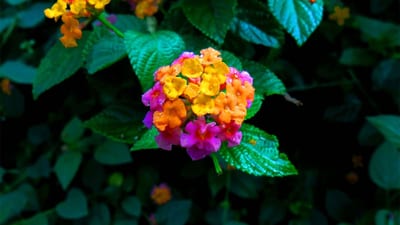
Like other members of the Asteraceae, Tagetes patula produces composite flower heads made up of many small florets packed into what looks like a single bloom. Plants in this genus are typically low, bushy herbs with finely divided, aromatic leaves and flowers in shades of yellow, orange and red. The genus Tagetes is native to Mexico and Central America, and many of its species, including this one, have spread far beyond that original range through cultivation.
Where does Tagetes patula grow in Sri Lanka?
The species is classed as a naturalized exotic in Sri Lanka, meaning it was introduced from elsewhere but now reproduces and persists in the wild without ongoing human planting.
What is its conservation status?
Tagetes patula is not endemic to Sri Lanka and carries no special conservation designation here. Its naturalized status reflects an introduced origin and successful establishment outside cultivation, which is a common pattern for hardy ornamental Asteraceae across South Asia.
What is it called in Sinhala?
In Sri Lanka the plant is known locally as Badadas. This is the common Sinhala name used alongside the scientific binomial Tagetes patula.
Can you eat Tagetes patula?
No edible parts are recorded for this species. It should not be treated as a food plant.
| Attribute | Recorded detail |
|---|---|
| Scientific name | Tagetes patula |
| Family | Asteraceae |
| Sinhala / local name | Badadas |
| Status in Sri Lanka | Naturalized Exotic |
| Edible parts | None |
Other species in this genus
1 more, sharing the same genus.