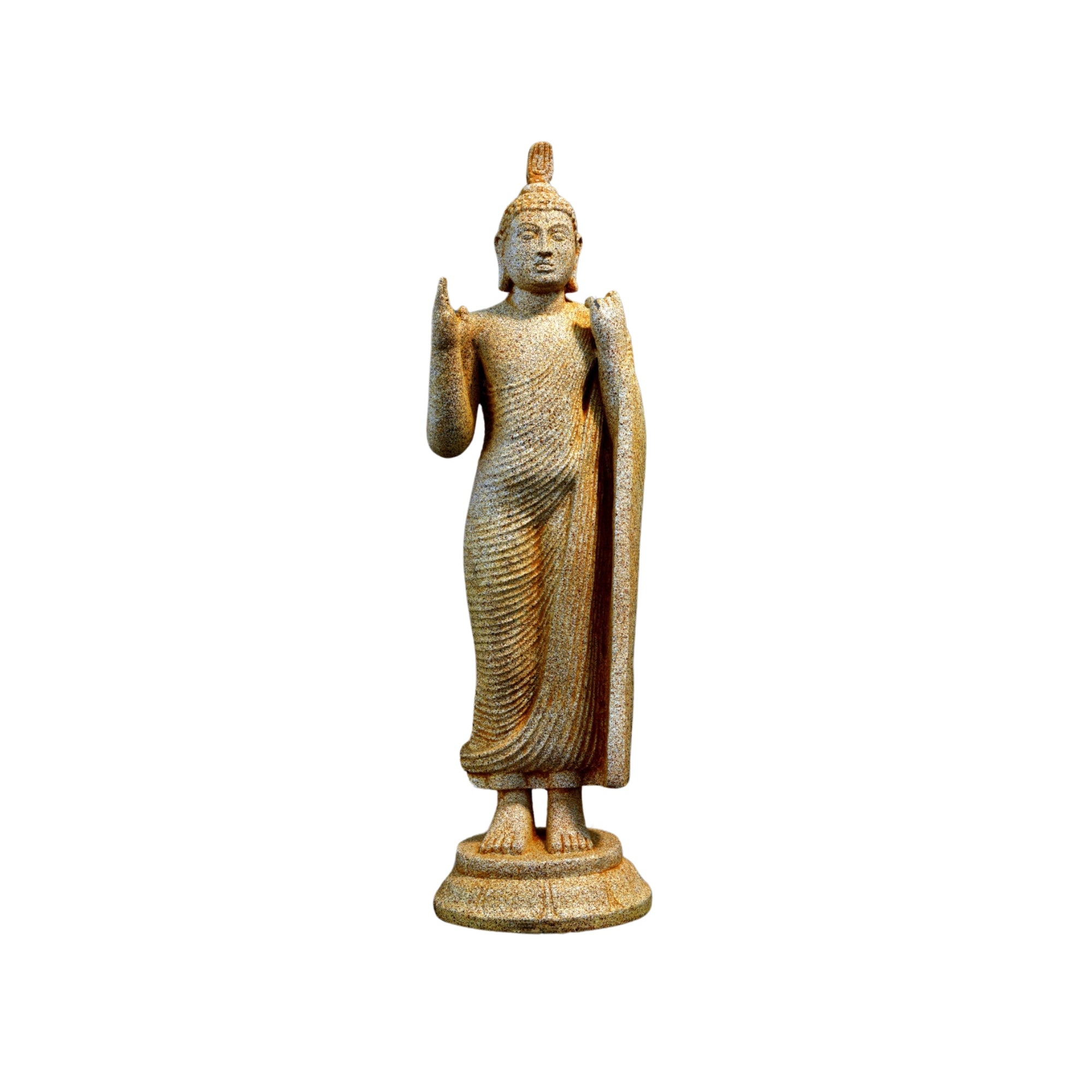
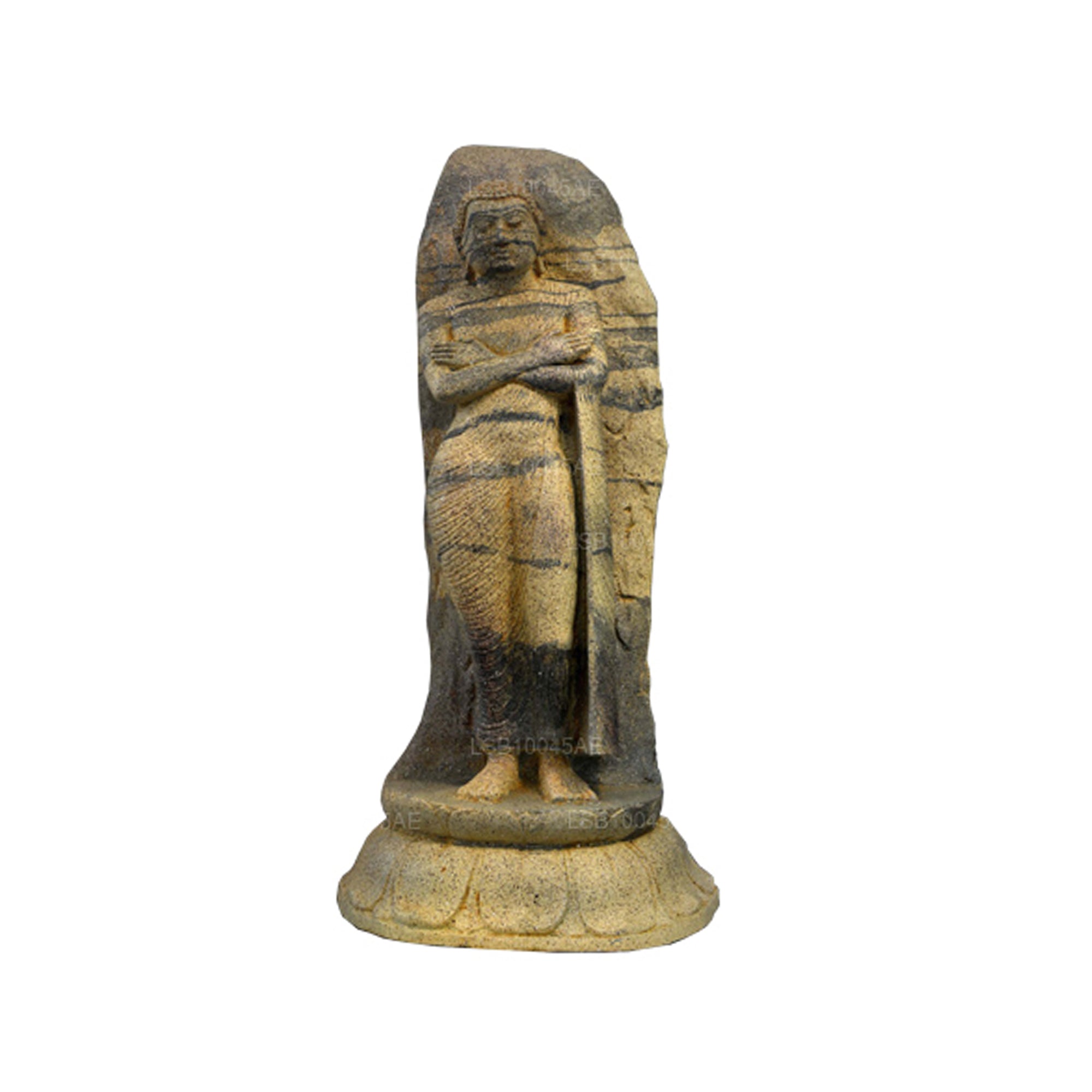
Hidden among the dry-zone scrubland of Sri Lanka's North Central Province, the Sasseruwa Buddha Statue — also known as the Ras Vehera Buddha — stands roughly 12 metres tall, carved directly into a sheer granite face. It is one of the tallest ancient standing Buddha statues in the country, yet it receives a fraction of the visitors that flock to better-marketed sites nearby. For travellers willing to step slightly off the beaten path, it offers an unusually quiet encounter with Sri Lanka's classical Buddhist heritage.
What is the history behind the Sasseruwa Buddha Statue?
Scholars place the carving within the Anuradhapura period, suggesting it dates back well over a thousand years, though its precise age remains debated. Local tradition holds that the statue was carved in friendly competition with the more famous Sigiriya-era craftsmen responsible for the Aukana Buddha, located roughly 13 kilometres away. One story claims a cock crowed before the Sasseruwa carving could be completed, halting work and leaving parts of the surface intentionally — or at least permanently — unfinished.
That incompleteness is not a flaw to overlook; it is central to the statue's character. You can trace tool marks across the robes and base, reading the working methods of ancient sculptors more clearly here than at the polished Aukana figure. The site is listed among Sri Lanka's protected archaeological monuments under the Central Cultural Fund.
What can you see at the Sasseruwa temple complex?
The Buddha image itself follows the abhaya mudra — the right hand raised in a gesture of protection — a pose shared with the Aukana statue and typical of the regional school of rock-relief carving. The figure wears a clinging robe whose folds are rendered in shallow relief, a stylistic trait consistent with late Anuradhapura craftsmanship.
- Cave temples: A cluster of drip-ledge caves lines the rock outcrop around and above the main statue. Several still contain faded wall paintings and older seated figures, some in considerably poor repair but evocative precisely because of that.
- Monastic ruins: Scattered stone columns, guardstones, and the outlines of former monks' quarters spread through the surrounding scrub, indicating this was once an active monastic complex of meaningful scale.
- Ras Vehera dagoba: A modest white stupa (also called Ras Vehera, giving the site its alternative name) sits within the complex, still in active use by local Buddhists. It is regularly dressed with white cloth and fresh flowers.
- Rock inscriptions: Brahmi inscriptions have been identified on the rock face, contributing to scholarly understanding of the site's patronage and historical timeline.
The resident monk community maintains the grounds, and the site functions as an active place of worship rather than a purely archaeological zone, so a respectful, quiet approach is expected of visitors.
How does Sasseruwa compare to the Aukana Buddha?
| Feature | Sasseruwa | Aukana |
|---|---|---|
| Height | ~12 m | ~13.4 m |
| Finish | Partially unfinished | Fully carved and polished |
| Crowd level | Low to moderate | Moderate to high |
| Active temple | Yes | Yes |
| Cave temples on site | Yes | Limited |
| Distance from each other | ~13 km — easily combined in one day | |
Most travellers who visit both agree that Aukana wins on sheer sculptural refinement, while Sasseruwa wins on atmosphere and the rare privilege of genuine solitude at an ancient site.
When is the best time to visit Sasseruwa?
The North Central Province falls within Sri Lanka's dry zone. The most comfortable visiting months run from roughly May through September, when rainfall is limited and early-morning temperatures are bearable. Visiting between 6 a.m. and 9 a.m. keeps the sun low, the rock face in soft light, and the site largely free of other visitors.
Poya (full moon) days draw larger local congregations to the temple, which can be a rewarding time to observe traditional worship but expect more activity around the statue itself. The site is open throughout the year and there is no evidence of formal seasonal closure, though access conditions on the unsealed approach road can deteriorate after heavy rain in October and November.
How do you get to the Sasseruwa Buddha Statue?
The site lies near Tambuttegama in the Anuradhapura District, roughly 30 kilometres south of Tambuttegama town. There is no scheduled public transport that runs directly to the statue; the standard approach is by private car or tuk-tuk from Anuradhapura (allow around an hour depending on road conditions) or as part of a combined day trip from Dambulla or Habarana.
The access road leading from the main highway to the statue is narrow and partially unpaved. A standard saloon car can generally manage the route in dry conditions, though a 4WD provides greater comfort. Parking is informal and limited; arriving early avoids congestion.
Given the logistical effort of reaching Sasseruwa independently, most visitors pair it with the Aukana Buddha Statue in a single morning circuit and then continue on to Wilpattu National Park or Anuradhapura for the afternoon.
What should visitors know before going?
- Dress code: Cover shoulders and knees — this is an active religious site, not a museum. Sarongs are sometimes available to borrow at the entrance.
- Footwear: Remove shoes before approaching the statue and any shrine rooms within the complex.
- Photography: Generally permitted of the statue from the front. Do not pose facing away from the Buddha image — it is considered disrespectful.
- Entry fees: A nominal fee is typically collected by the temple, though the amount is not fixed by government decree and may vary.
- Facilities: There are no restaurants or formal toilet facilities at the site. Carry drinking water, particularly in the dry-season months.
Why is Sasseruwa worth including in a North Central Province itinerary?
Sri Lanka's cultural triangle — anchored by Anuradhapura, Polonnaruwa, and Dambulla — tends to pull visitors toward its most famous landmarks. Sasseruwa represents the quieter, less-curated layer of the same heritage: a place where the physical evidence of ancient craft and devotion is present but unpackaged. For travellers who find heavily managed archaeological sites slightly sterile, the rawness of Sasseruwa's unfinished giant offers a more direct connection to the people who made it and the belief system that motivated them.
It is also straightforwardly beautiful in the early morning, the rock warm and golden, the bo trees rustling, and the silence broken only by the occasional chant from the resident monks. That alone justifies the detour.