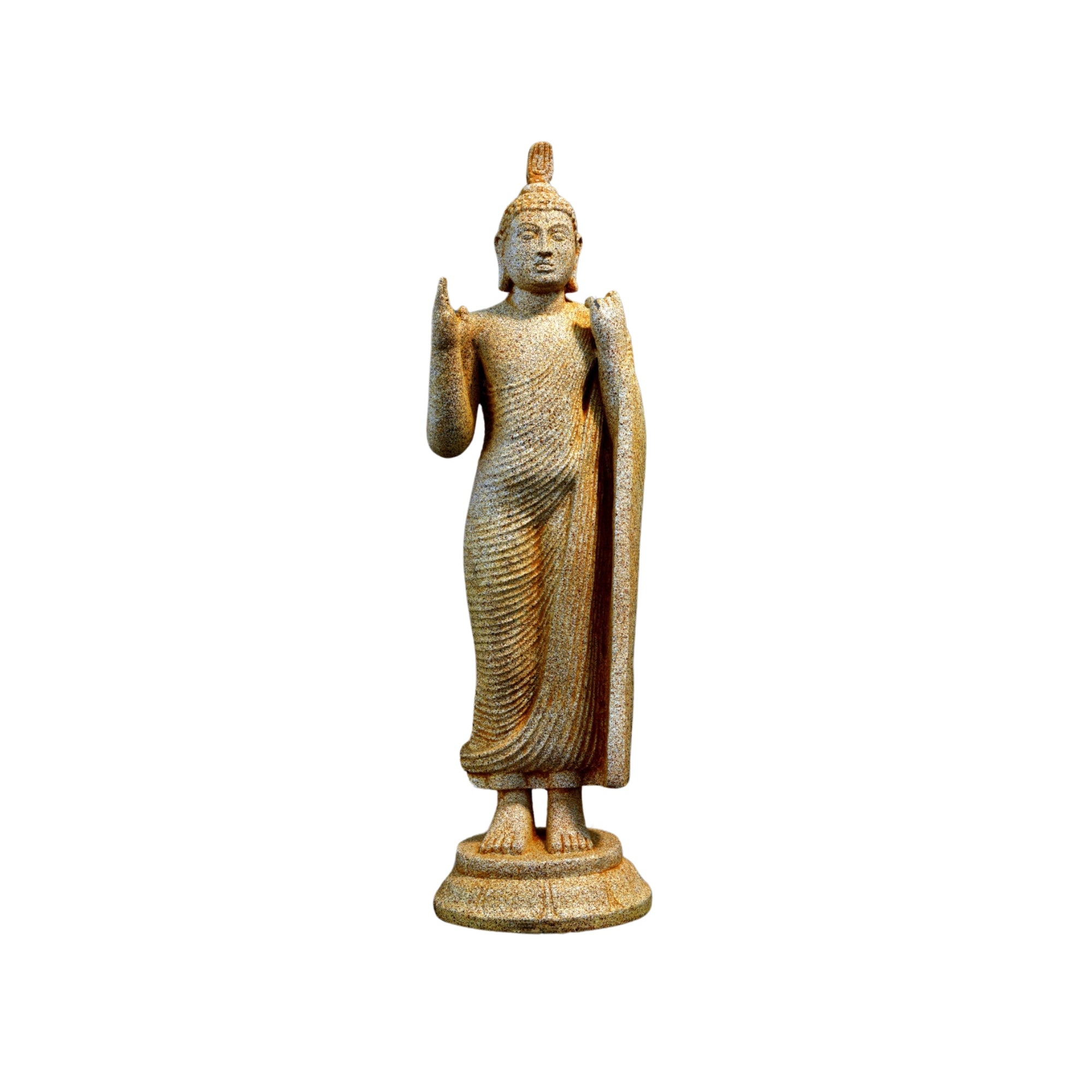
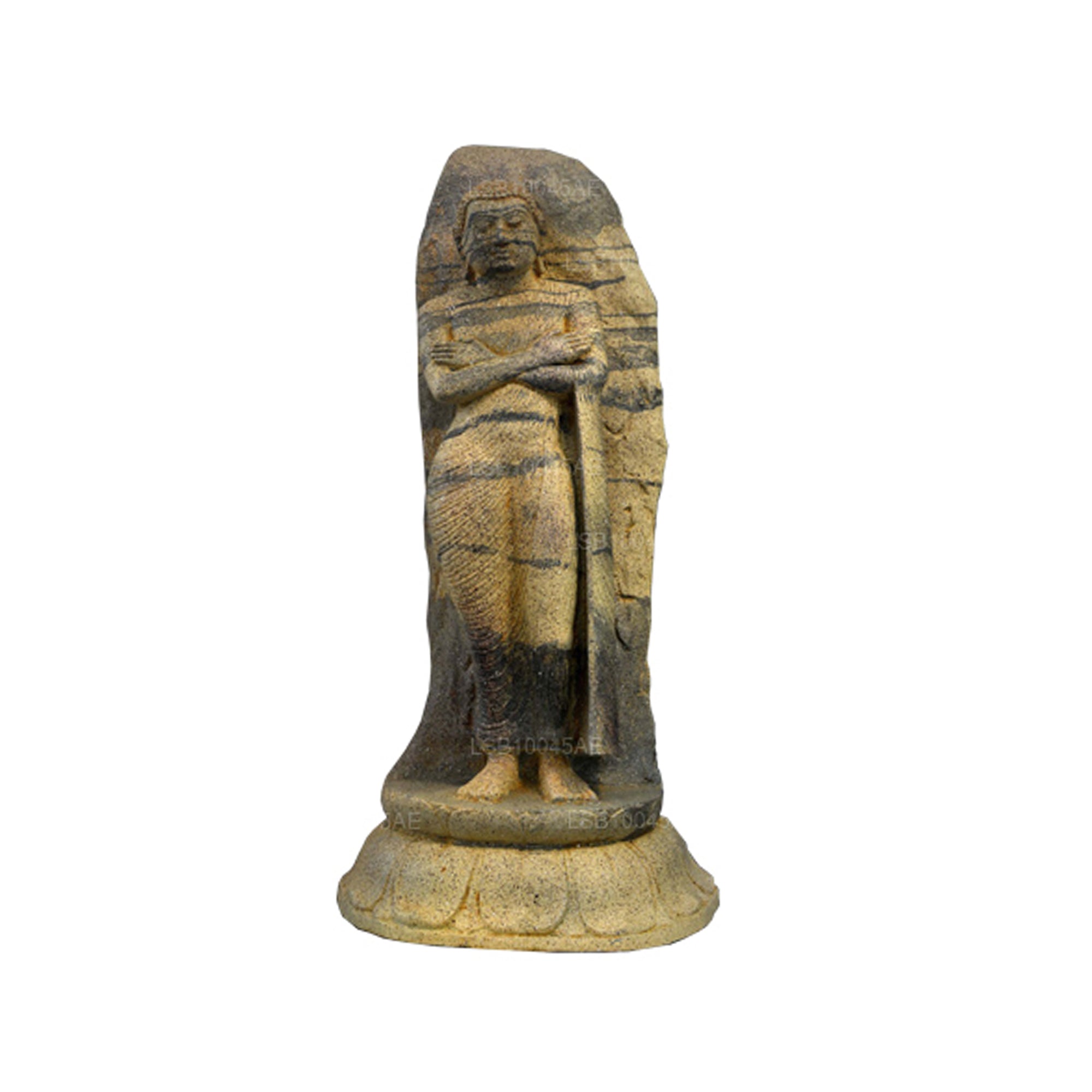
Carved directly from a granite outcrop deep in the dry-zone forest of Kurunegala District, the Sasseruwa Buddha statue is one of Sri Lanka's most rewarding — and least crowded — ancient monuments. Together with the surrounding Raswehera Rajamaha Viharaya, it offers a rare combination of archaeological depth, forest solitude, and living religious practice that few sites along the well-worn heritage trail can match.
What is the history of Raswehera Rajamaha Viharaya?
The temple complex is traditionally dated to the reign of King Pathissa II, placing its origins roughly 2,200 years ago during the early Anuradhapura period. According to local chronicles, King Devanampiyatissa — who played a central role in establishing Buddhism across the island — is credited with planting a sapling from the sacred southern branch of the Bodhi tree at this site, linking Raswehera to the very foundations of Sri Lankan Buddhist heritage.
At the time of its founding, the site was named Raswehera after the honey-coloured radiance (ras) said to emanate from the newly enshrined Buddha image. The complex grew over succeeding centuries into a substantial monastic centre, evidenced by the 99 rock caves scattered across the hillside — each one once occupied by a resident Arahant (fully enlightened monk). Rock inscriptions found in many of these caves provide epigraphic confirmation of the site's long continuous use.
How does the Sasseruwa statue compare to the Aukana Buddha?
Most visitors make the short detour to Sasseruwa specifically to compare it with the more famous Aukana Buddha — but the two statues are quite distinct. At Aukana, the colossal standing figure has been fully freed from the parent rock and finished to a smooth surface; a separate stone spire (sirasapata) rises above the head. The Sasseruwa figure, by contrast, remains partially attached to the rock face behind it, giving it a slightly less refined, almost emergent quality. The crowning spire is absent here.
Scholars have long debated whether Sasseruwa was a prototype abandoned before completion, or whether the two images were carved simultaneously by competing craftsmen as a kind of artistic contest. Neither theory has been definitively settled, which adds an appealing layer of mystery to a visit.
- Aukana: fully detached, highly polished, spire intact
- Sasseruwa: partially rock-attached, slightly rougher finish, no separate spire
- Setting: Sasseruwa sits within a forested valley with far fewer visitors, preserving an atmosphere of quiet contemplation
What else can you see at Raswehera?
The estate of the Rajamaha Viharaya extends well beyond the main Buddha image. A walk through the rock-cave complex reveals ancient drip-ledge caves with Brahmi inscriptions — some of the earliest written records found in Sri Lanka — as well as later paintings and carved relief panels added by subsequent generations of devotees. The resident monastic community continues to use several of the caves for meditation, so visitors are asked to maintain a respectful silence in those areas.
The forest canopy surrounding the caves shelters a population of toque macaques and a variety of dry-zone bird species, making the approach path genuinely pleasant for anyone with an interest in wildlife. The proximity to Wilpattu National Park, Sri Lanka's oldest and largest national park, means the surrounding landscape retains much of its original dry-zone character.
- Rock-inscribed Brahmi cave inscriptions (among the earliest in Sri Lanka)
- 98 additional monk cave dwellings across the hillside complex
- An active working temple with resident monks
- Dry-zone forest rich in birdlife along the access path
When is the best time to visit Sasseruwa?
The site is accessible year-round, but the dry season — roughly from May to September — offers the most comfortable walking conditions on the unpaved paths that weave between the cave dwellings. The surrounding forest is at its most atmospheric in the early morning, when light filters through the canopy and the monastic community is actively engaged in alms rounds and prayer. Full-moon (Poya) days attract local pilgrims and bring added colour and ceremony to the site, though the paths can become busier than usual on those days.
Temperatures in Kurunegala District can be high between January and April. Carrying water and wearing light, loose clothing (covering shoulders and knees out of respect for the active temple) is advisable at any time of year.
How do I get to Raswehera from Colombo or Kurunegala?
Raswehera Rajamaha Viharaya lies off the main highway network of North Western Province, but is reachable by several routes.
| Route | Approximate Distance from Kurunegala | Road Condition |
|---|---|---|
| Kurunegala–Anuradhapura road (A28) via Galnewa turnoff | Around 45 km | Sealed highway, then secondary road |
| Kurunegala–Galnewa road direct | Around 40 km | Mostly sealed |
| Kekirawa–Thabuttegama road from the north | Varies by origin | Sealed, good condition |
Public buses run between Kurunegala and the nearby town of Tambuttegama, with connections toward the Raswehera area, though private transport or a hired vehicle is considerably more convenient given the final section of road. A private driver allows you to combine Sasseruwa with Aukana on the same day, as the two sites are within a manageable distance of each other.
Is there an entry fee for Sasseruwa?
Raswehera Rajamaha Viharaya is an active religious site managed by the temple custodians rather than a government-ticketed attraction. There is typically no fixed government entry fee, though donations to the temple are customary and welcome. Dress code — covered shoulders and knees — is strictly observed. Photography inside cave shrines may be restricted; ask the resident monks before photographing any interior.
How does Sasseruwa fit into a broader heritage itinerary?
The statue sits at the southern edge of Sri Lanka's ancient cultural heartland. Pairing it with Aukana (to the north-east) and then continuing on to the ancient city of Polonnaruwa creates a logical two-day circuit through some of the most significant Buddhist monuments in Asia. The relative obscurity of Raswehera means that even during peak season, visitors can explore the cave complex in near-total quiet — a contrast that makes the more celebrated sites that follow feel all the richer.
Nearby places
10 places within about 25 km, nearest first.
- Namal Uyana8 km
- Tambuttegama8 km
- Aukana Railway Station11 km
- Kawudagala11 km
- Sasseruwa Buddha Statue13 km
- Avukana City13 km
- Aukana Buddha Statue13 km
- Palugaswewa Railway Station14 km
- Abanpola Railway Station20 km
- Randenigama Railway Station20 km
Related reading
6 pages on closely related subjects.