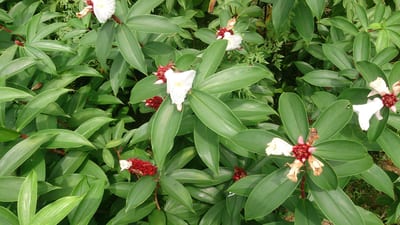
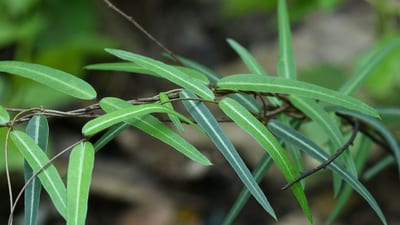
Salacia reticulata, known locally as Kothala Himbutu, is a woody climbing plant native to the dry zone forests of Sri Lanka and the Andaman Islands. For centuries, it has occupied a quiet but important place in Sri Lankan village life — not as an ornamental creeper, but as a practical medicinal resource passed down through generations of Ayurvedic knowledge.
What is Salacia reticulata and where does it grow?
Salacia reticulata belongs to the genus Salacia within the family Celastraceae. In Sri Lanka, it grows primarily in dry zone forests, favouring areas with well-drained, laterite-rich soils. The plant is a perennial climber, producing small yellow flowers and fleshy red fruits that attract birds. Its bark is pale and fissured, and it is this bark — along with the roots and stem — that carries the majority of the plant's bioactive compounds.
While the plant is also found in southern India and the Andaman Islands, Sri Lanka is considered its primary habitat and the source of most traditional knowledge surrounding its use. Related species such as Salacia oblonga and Salacia chinensis share similar properties but are distinct botanically.
How has Kothala Himbutu been used in Ayurvedic medicine?
In Sri Lanka's Ayurvedic tradition, Kothala Himbutu has long been prescribed for conditions broadly described as excess sugar in the blood, unwanted weight gain, and joint inflammation. Classical Ayurvedic texts reference preparations from the plant for early-stage diabetes (madhumeha), rheumatic complaints, and certain urogenital conditions.
Perhaps the most distinctive folk practice associated with the plant is the use of cups or jugs carved from its stem wood. Water stored in these vessels overnight absorbs trace amounts of the active compounds; this water, consumed on an empty stomach each morning, is considered a gentle daily tonic. The practice remains common in villages across Sri Lanka's dry zone provinces, where the plant grows within reach of households that have used it for generations.
Alongside better-known Ayurvedic formulations such as Yogaraja Guggulu, Kothala Himbutu represents one of Sri Lanka's most regionally specific herbal contributions to traditional medicine.
What active compounds give Kothala Himbutu its properties?
Scientific investigation into Salacia reticulata has identified several bioactive compounds responsible for its traditional reputation. The most studied are salacinol and kotalanol — sulfonium-ion compounds that act as inhibitors of alpha-glucosidase enzymes in the small intestine. By slowing the breakdown of complex carbohydrates into simple sugars, these compounds help moderate the rise in blood glucose that follows a meal.
Research published in peer-reviewed pharmacology journals has documented this mechanism, lending scientific credibility to traditional Ayurvedic claims. Studies have also indicated potential anti-obesity effects, linked to the plant's ability to reduce fat cell differentiation and support healthy lipid metabolism. Mangiferin, a polyphenol also found in mango leaves, is another compound identified in Salacia extracts and is associated with anti-inflammatory activity.
It is worth noting that while the evidence base is growing, Salacia reticulata products are generally considered complementary wellness aids. Anyone managing a diagnosed medical condition should consult a qualified healthcare professional before use.
How is Kothala Himbutu prepared and consumed?
Traditional preparations vary by region and practitioner, but the most common methods include:
- Bark-infused water: A piece of dried bark is steeped in water overnight, or water is left to stand overnight in a purpose-made cup turned from the stem wood; the infused water is drunk before breakfast.
- Decoctions: Bark or root pieces are simmered in water, reduced, and consumed as a concentrated tea — typically prescribed in measured doses by an Ayurvedic physician.
- Powder (churna): Dried bark or root is ground into a fine powder and mixed with warm water or honey.
- Standardised extracts: Modern supplement manufacturers produce capsules and tablets standardised to salacinol content, allowing more precise dosing.
The carved Kothala Himbutu mug — a polished vessel turned directly from the plant's stem wood — represents the most traditional form of consumption and is now produced as a heritage wellness product for those who wish to follow the practice as it has been observed in Sri Lankan villages for hundreds of years.
Is Kothala Himbutu safe to use?
When used as a traditional beverage preparation in modest quantities, Kothala Himbutu is generally considered safe for healthy adults. Reported side effects at higher doses include mild gastrointestinal discomfort — a consequence of the alpha-glucosidase inhibition, which causes undigested carbohydrates to ferment in the lower gut. This effect is dose-dependent and typically subsides as the body adjusts.
People who are pregnant, breastfeeding, or taking prescribed medication for diabetes or blood pressure should seek medical advice before beginning any regimen involving Salacia extracts, as additive effects on blood glucose are theoretically possible. Children and individuals with known liver conditions should also exercise caution.
Where does Kothala Himbutu fit within Sri Lanka's broader herbal tradition?
Sri Lanka's pharmacopoeia of medicinal plants is extensive, and Kothala Himbutu sits within a wider ecosystem of dry zone flora that includes Acacia chundra and Pongamia pinnata, both of which also feature in Ayurvedic formulations. The island's tropical climate, diverse soil types, and historical exchange with Indian Ayurvedic scholarship have combined to produce a rich body of ethnobotanical knowledge.
Dry zone forests — where Kothala Himbutu is most abundant — stretch across the North Central, Northern, and Eastern provinces. Travellers visiting ancient cities such as Polonnaruwa may notice the surrounding scrub jungle is the same landscape from which plants like Kothala Himbutu have been harvested by local communities for generations. Wildlife sanctuaries such as Wilpattu National Park preserve large tracts of this habitat, where the plant continues to grow undisturbed.
Contemporary interest in herbal wellness, both locally and internationally, has brought renewed attention to plants like Salacia reticulata. Small-scale producers in Sri Lanka now export standardised extracts to markets in Japan, the United States, and Europe, where demand for evidence-backed botanical supplements continues to grow.
How can I experience or purchase authentic Kothala Himbutu products?
Authentic Kothala Himbutu products — including the traditional mug turned from the stem wood — are produced by small artisans in Sri Lanka's dry zone districts. Lakpura curates a selection of these heritage wellness items, including the carved Kothala Himbutu mug, allowing visitors and international customers to access the product in its most traditional form. When purchasing, look for products that clearly state the species as Salacia reticulata, since other Salacia species are sometimes substituted.
Other species in this genus
1 more, sharing the same genus.
Related reading
2 pages on closely related subjects.