Psiadia ceylanica is a flowering shrub native to Sri Lanka, belonging to the daisy family, Asteraceae. In Sinhala it is known as Pupula. It has no recorded edible parts and no food or culinary use is associated with it.
What does Psiadia ceylanica look like?
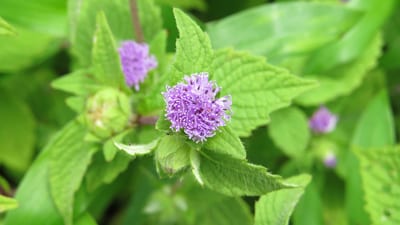
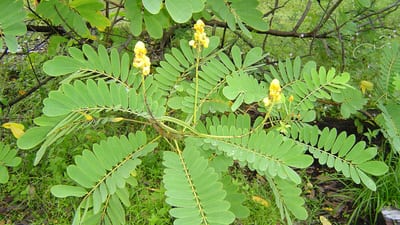
Psiadia ceylanica is a shrub typically standing 1-2.5 m tall, occasionally as low as 0.5 m. Young stems are densely pubescent or tomentose, giving them a soft, hairy texture. The leaves measure 5-8 cm by 2-3 cm, each carried on a short petiole of 0.5-1 cm.
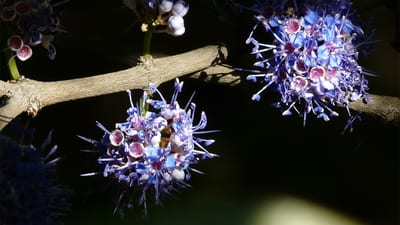
Flower heads (capitula) are bell-shaped (campanulate) and borne in numerous terminal clusters called corymbs. Each involucre, the whorl of bracts beneath the flower head, is 3-4 mm long and 2-3 mm in diameter. Every capitulum holds 6-8 flowers with pale mauve or violet corollas, 5-6 mm long. As is typical of the Asteraceae family, the small individual flowers are grouped tightly to resemble a single bloom.
The fruit is an achene, 2-2.5 mm long, brown, and marked with 4-5 ribs. Each achene carries a pappus (a tuft of fine bristles aiding wind dispersal) that is dirty white when fresh but turns reddish with storage.
Where does Psiadia ceylanica grow?
Psiadia ceylanica is classed as native to Sri Lanka, meaning the island is within its natural range, though it is not recorded here as found exclusively on the island.
What is its conservation and toxicity status?
The species is recorded as native, with no edible parts listed. Since no edible use is recorded, the plant should not be treated as a food source.
What is Psiadia ceylanica called in Sinhala?
The local Sinhala name recorded for Psiadia ceylanica is Pupula.
| Attribute | Recorded detail |
|---|---|
| Scientific name | Psiadia ceylanica |
| Family | Asteraceae |
| Sinhala name | Pupula |
| Status in Sri Lanka | Native |
| Edible parts | None |
| Habit | Shrub, (0.5-) 1-2.5 m tall |
| Young stems | Densely pubescent or tomentose |
| Leaves | 5-8 x 2-3 cm; petioles 0.5-1 cm long |
| Capitula | Campanulate, numerous, in terminal corymbs |
| Involucre | 3-4 mm long, 2-3 mm diameter |
| Flowers per capitulum | 6-8 |
| Corolla | 5-6 mm long, pale mauve or violet |
| Achenes | 2-2.5 mm long, brown, 4-5 ribbed |
| Pappus | Dirty white, becoming reddish with storage |