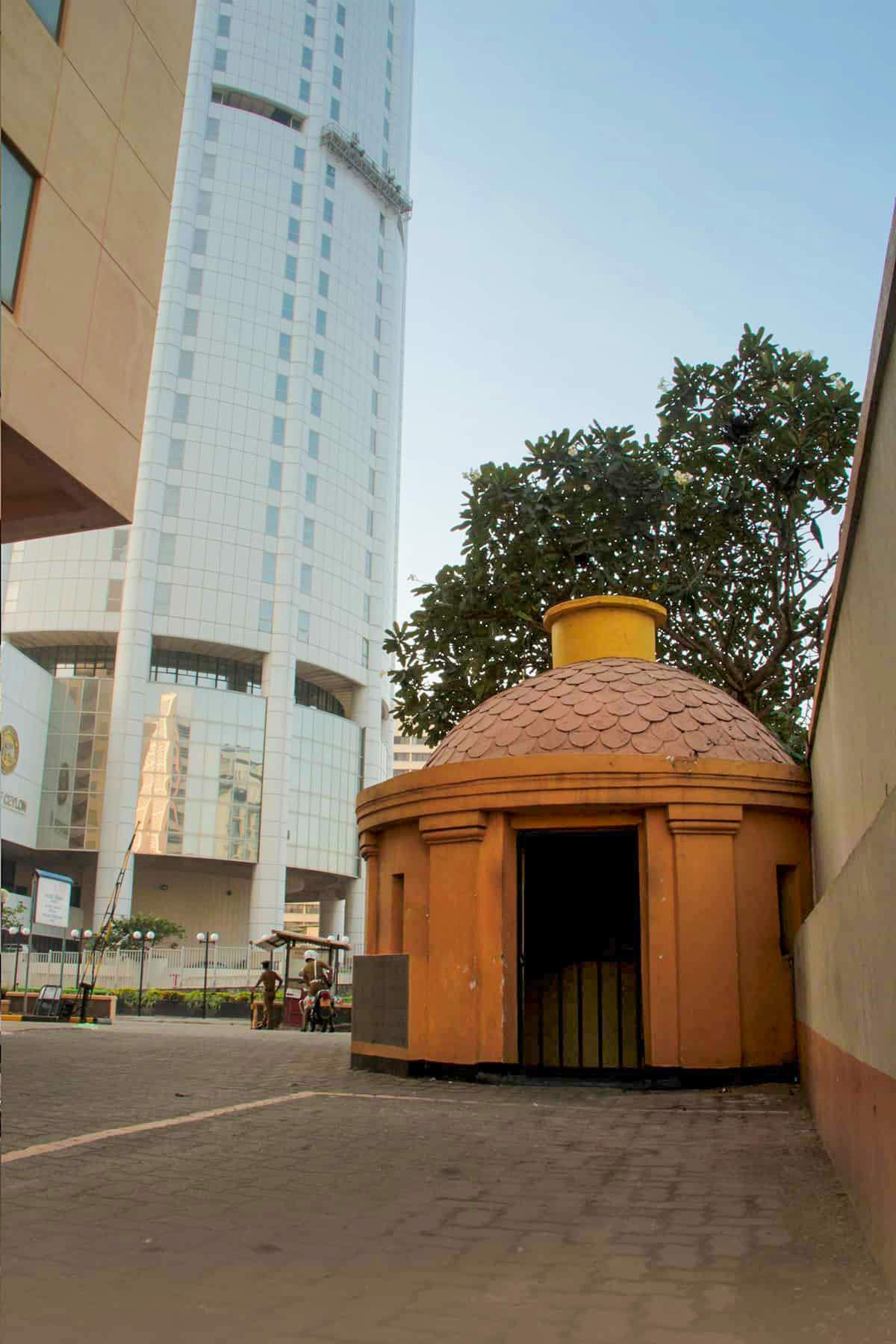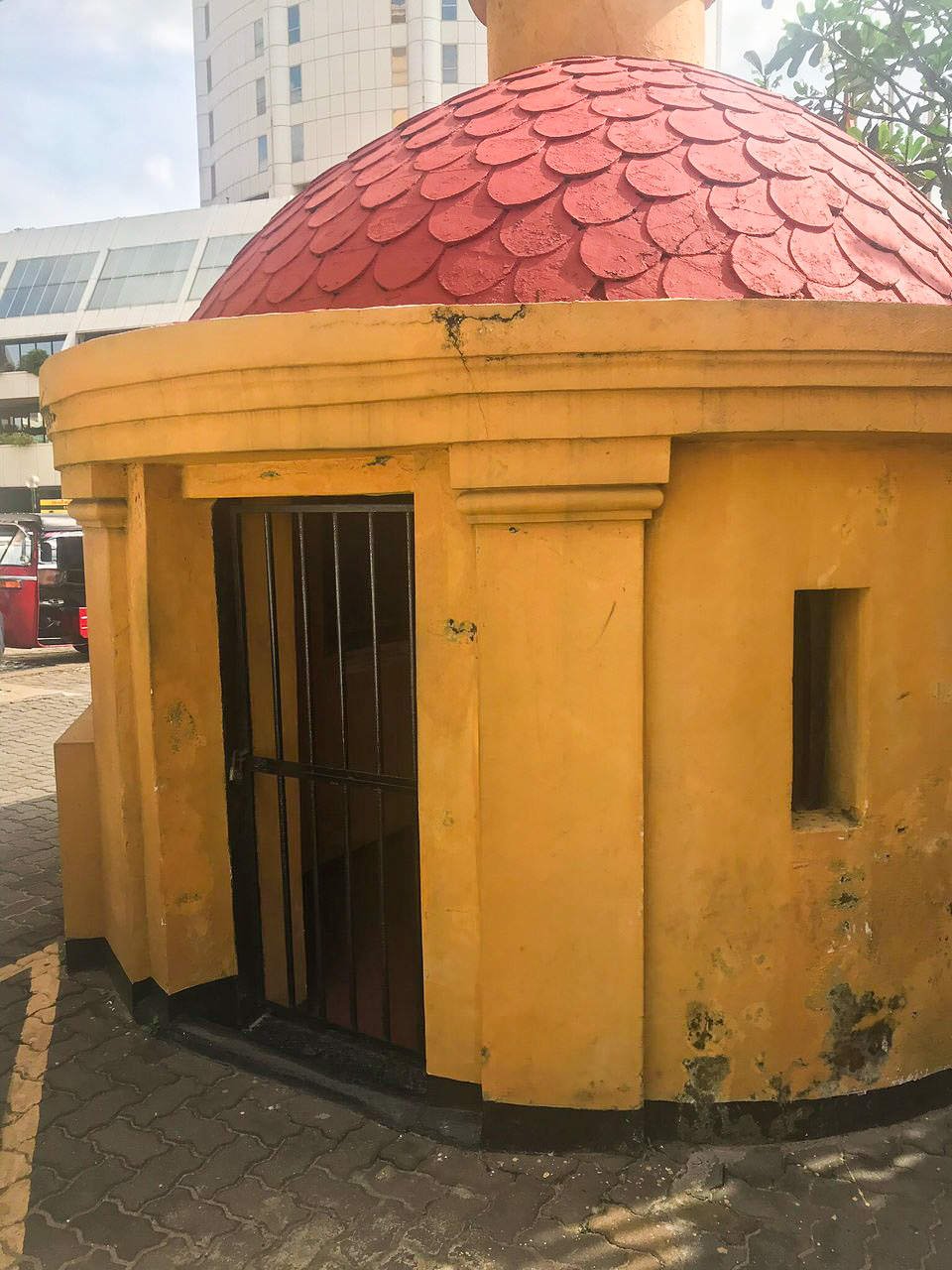

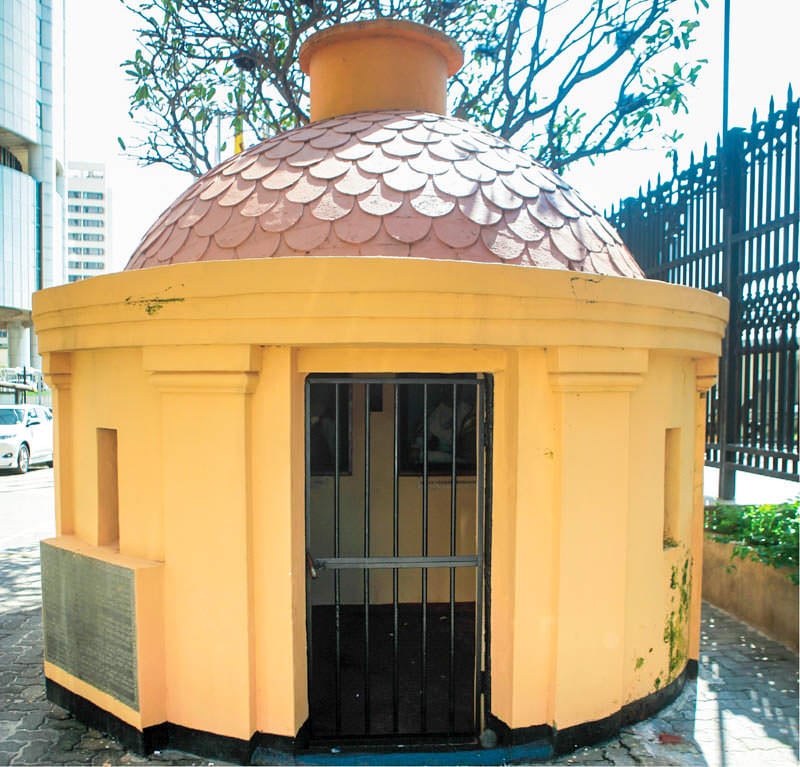
Tucked inside a Colombo parking lot, in the shadow of glass towers and colonial-era facades, stands one of the city's most overlooked historical footnotes: the last jail cell of Sri Vikrama Rajasinha, the final king of Ceylon. It is a small, ornate structure — closer in appearance to a decorative gatehouse than a prison — yet what it represents reaches back to the collapse of the Kandyan Kingdom in 1815 and the end of over two millennia of indigenous rule on the island.
Who was Sri Vikrama Rajasinha?
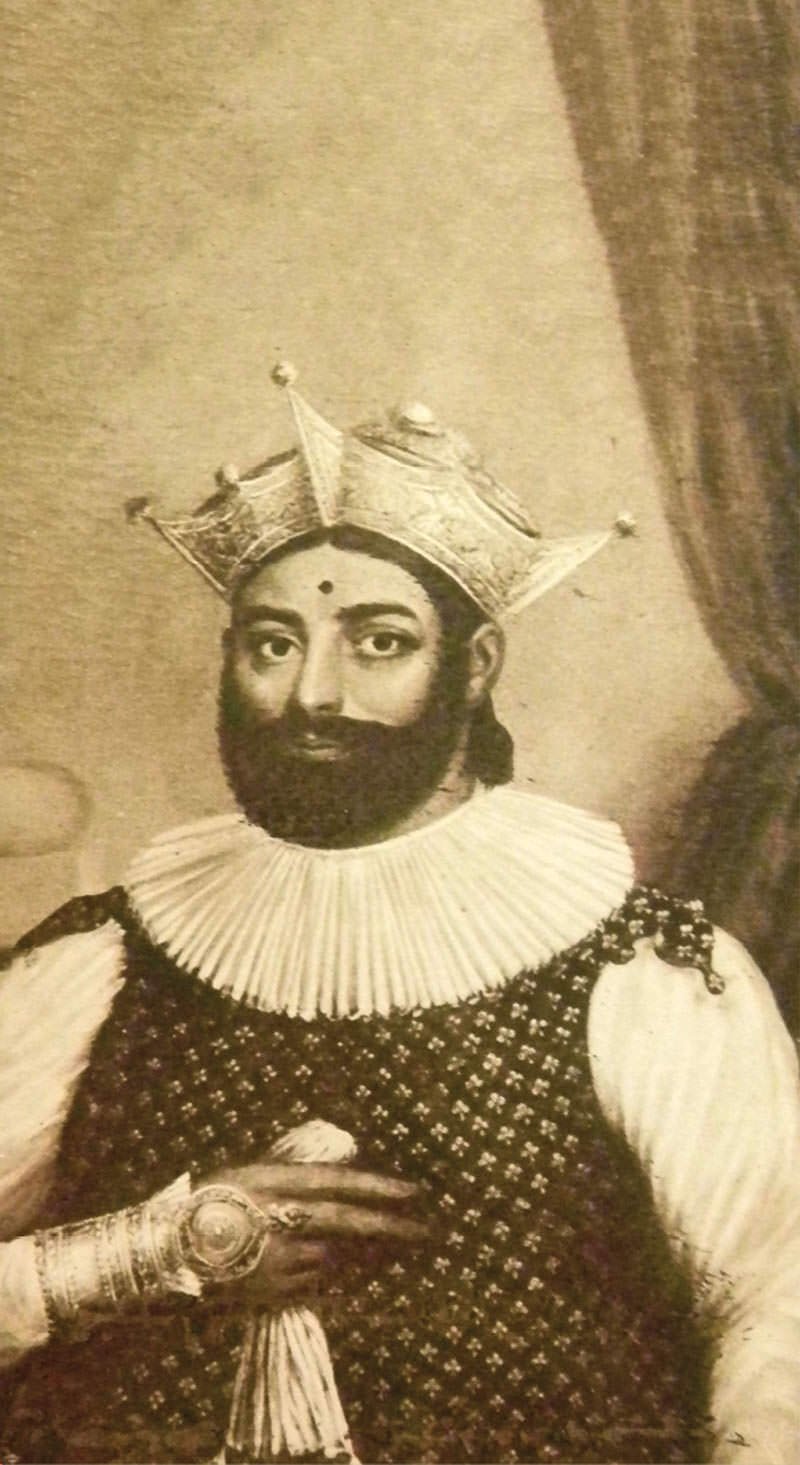
Sri Vikrama Rajasinha — born Kannasamy Nayaka — was not, by origin, Sinhalese. He came from the Nayak dynasty of Madurai in South India, was Tamil-speaking, and was of Telugu and Tamil heritage. The Nayak rulers had governed Kandy for generations, and Sri Vikrama Rajasinha was the last of their line to occupy the Kandyan throne. This historical detail is rarely discussed but matters greatly: the lion flag he carried, which forms the central element of the modern Sri Lankan national flag, was the standard of a king of South Indian origin.
His reign was marked by increasing cruelty toward his own chiefs and subjects, which eroded the internal support that might otherwise have protected the kingdom. He executed or mutilated nobles who displeased him, and it was ultimately a coalition of Kandyan chiefs — most notably Ehelepola Nilame and Pilimatalawe — who opened the gates to the British. In 1815, the Kandyan Convention was signed, handing the kingdom to the British Crown without a single battle being fought.
What happened to the king after his capture?
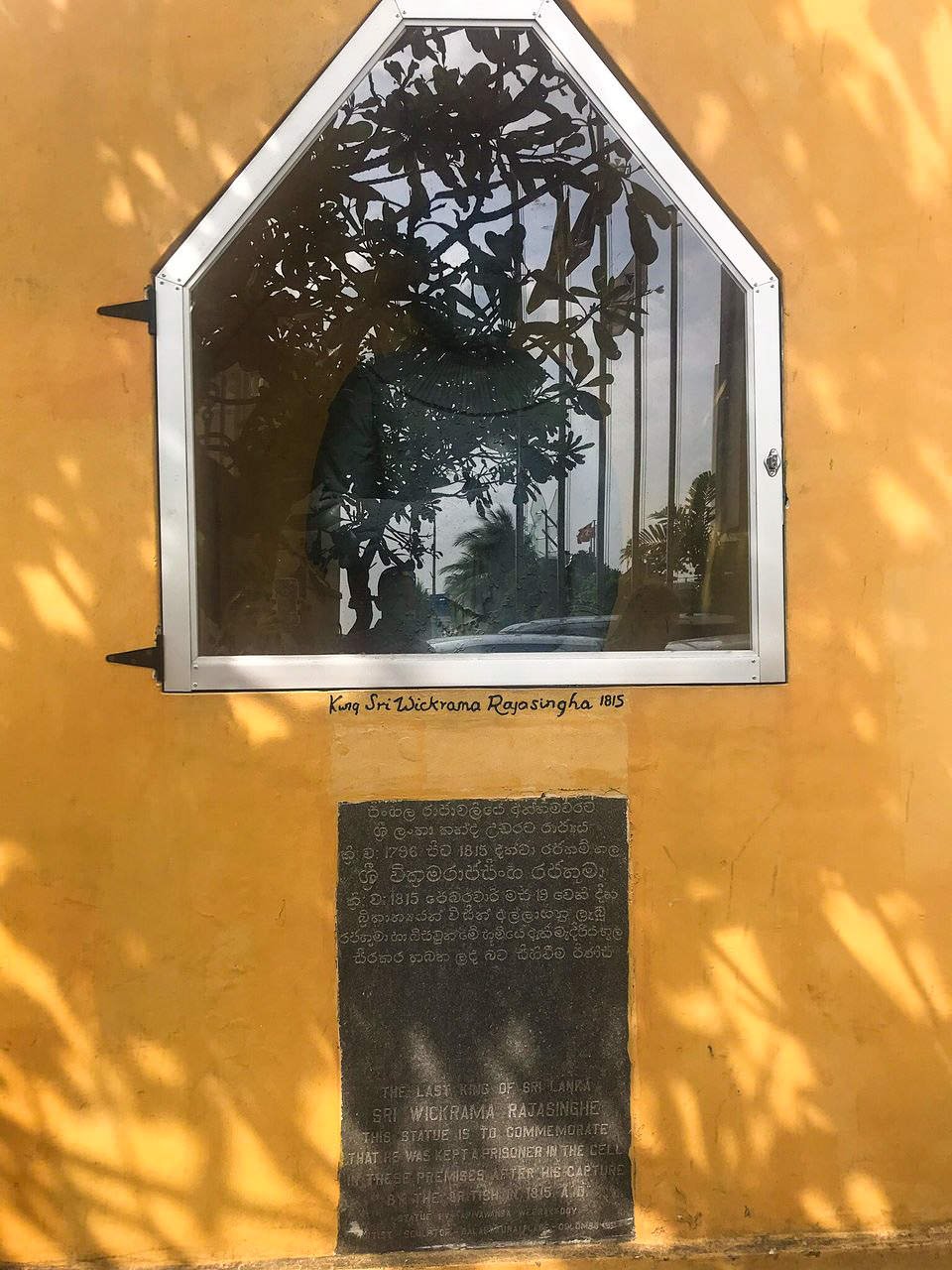
Following his arrest, Sri Vikrama Rajasinha was held briefly in Colombo before being transported by ship to India. He spent the rest of his life in exile in Vellore, in present-day Tamil Nadu, where he died in 1832. He never returned to Sri Lanka. The small cell displayed near the Ceylinco Building in Colombo's Fort district is understood to mark the site where he was held after his capture, though the original structure was almost certainly destroyed in the decades since — most of this part of Fort was heavily damaged in the 1996 Central Bank bombing.
What can you see at the memorial cell?
The structure itself is compact: a single room fronted by ornamental stonework. Inside, visitors will find a set of portraits depicting the key figures of this episode in Sri Lankan history:
- Sri Vikrama Rajasinha — the king himself
- Queen Venkata Rengammal — his consort
- Pilimatalawe — the first chief minister to betray him to the British
- Robert Brownrigg — the British Governor-General who accepted the Kandyan Convention
There are also images depicting the ship that carried the king into exile and the site of his burial in Vellore. The portraits are modest and unrestored, which only adds to the atmosphere of neglect — this is not a site that receives government attention or significant tourist footfall, which makes it quietly affecting.
Why does this site matter beyond the history?
Sri Vikrama Rajasinha's story functions as a lens through which several threads of Sri Lankan identity can be examined. His Tamil and Telugu heritage complicates straightforward narratives about ethnic ownership of the island's kingship. The fact that his flag — a Nayak dynastic standard — became the lion flag of the modern Sri Lankan nation is an irony that historians have noted but that rarely enters popular discussion.
The setting amplifies this sense of historical irony. The cell sits in one of Colombo's most commercially dense precincts, surrounded by the Bank of Ceylon tower, the World Trade Center, and the InterContinental hotel. The kingdom that once stretched across the entire island's interior has been reduced to a plaque-sized presence in a parking lot. It is a sobering juxtaposition for anyone who takes a moment to consider it.
How do you get to the prison cell from central Colombo?
The site is located in Colombo Fort, very close to the Dutch Hospital precinct. If you are already visiting the Fort area — perhaps before or after a meal near Dutch Hospital — it is a short walk of a few minutes. The Ceylinco Building, in whose shadow the cell stands, is a recognisable local landmark. There is no entrance fee, and no formal opening hours; the structure is visible from the street and can be viewed in a matter of minutes. A Colombo city tour that covers the Fort district is the easiest way to include it in a broader itinerary.
Is the prison cell the original structure?
Almost certainly not in its current form. The 1996 Central Bank bombing devastated much of the surrounding Fort district, and the structures in this area were extensively rebuilt or restored afterward. The current cell appears to be a reconstruction or a stylised marker rather than an original colonial-era building. Treat it as a commemorative monument rather than an archaeological site.
How does this site fit into a broader Colombo itinerary?
On its own, the cell warrants no more than fifteen minutes. It rewards visitors who arrive with some prior knowledge of Kandyan history and the events of 1815; without that context, it can seem unremarkable. Pair it with the Dutch Hospital area, the nearby Colombo Lotus Tower, or a walk through the Fort district's colonial architecture for a half-day that covers several centuries of the city's layered past. For those who want to follow the story of the Kandyan Kingdom further, the ancient royal city of Polonnaruwa — a UNESCO World Heritage Site — provides a much grander sense of what Sri Lanka's pre-colonial kingdoms built and left behind.
Nearby places
15 places within about 25 km, nearest first.
- 7 Degrees Restaurants & Bar, Colombounder 1 km
- British Colonial Architectureunder 1 km
- Cargills Buildingunder 1 km
- Colombo Fort Hotelsunder 1 km
- Fort Shri Sudarmalaya Buddhist Templeunder 1 km
- Old Colombo Lighthouse and Clock Towerunder 1 km
- President's House, Colombounder 1 km
- South Expansion of the Colombo Harbourunder 1 km
- The Central Pointunder 1 km
- World Trade Center, Colombounder 1 km
- St Andrew's Scots Kirkunder 1 km
- Ministry Of Crabunder 1 km
- Old Colombo Dutch Hospitalunder 1 km
- Port City Colombounder 1 km
- The Lake House, Colombounder 1 km