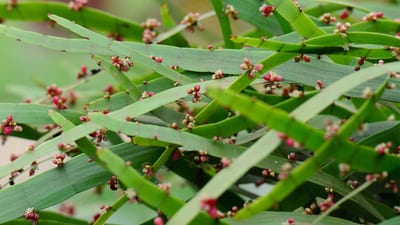
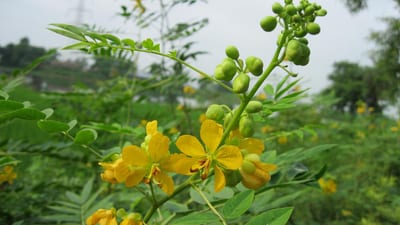
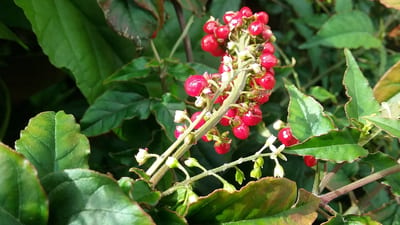
Pithecellobium dulce is a thorny tree in the family Fabaceae, known in English as Madras thorn or Manila tamarind. In Sri Lanka it is recorded as a naturalized exotic species, and it carries the local name Pinikaral.
What does Pithecellobium dulce look like?
As a member of Fabaceae, the pea and legume family, Pithecellobium dulce shares the family's typical traits of compound leaves and pod-like fruit. It grows as a tree armed with thorns along its branches, a feature reflected in its common English name, Madras thorn.
Where does Pithecellobium dulce grow?
The species is not native to Sri Lanka. It is classed as a naturalized exotic, meaning it was introduced from elsewhere and now reproduces and persists in the wild without ongoing human cultivation. Its broader native range lies in Central America and Mexico, from where it has been widely introduced across the tropics.
What is its conservation status in Sri Lanka?
Pithecellobium dulce holds no special conservation designation in Sri Lanka. Its recorded status is simply naturalized exotic, placing it among the many introduced plants that have established themselves in the island's landscapes over time.
Can you eat Pithecellobium dulce?
No edible parts are recorded for this species in Sri Lanka. It should not be treated as a food plant here.
What is Pithecellobium dulce called in Sinhala?
The local name recorded for this species is Pinikaral.
| Attribute | Recorded detail |
|---|---|
| Scientific name | Pithecellobium dulce |
| Family | Fabaceae |
| English name | Madras thorn, Manila tamarind |
| Sinhala / local name | Pinikaral |
| Status in Sri Lanka | Naturalized Exotic |
| Edible parts | None |