Passiflora edulis, known commonly as passion fruit, is a climbing vine of the family Passifloraceae grown in Sri Lanka for its edible fruit. It is recorded in Sri Lanka only as a cultivated plant, not as a wild or naturalised species.
What does Passiflora edulis look like?
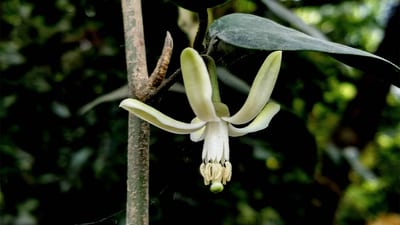
It is a glabrous climber that can reach up to 12 m in length, typically supporting itself with tendrils as it grows. Each leaf is three-lobed, 5-11 cm long and 4-10 cm wide, with three main veins running from the base, and is carried on a petiole 1-4 cm long. The flowers are solitary, borne on a peduncle 2-6 cm long alongside a tendril 5-20 cm long, and accompanied by bracts 1.5-2 cm by 1-1.5 cm in size. Each flower is white and 4-7 cm across.
What does the fruit look like?
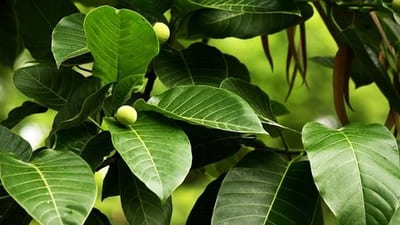
The fruit is a berry, globose in shape and 4-5 cm in diameter, with a smooth, glabrous skin that ripens to yellow or purplish depending on the variety. Inside, it holds numerous small seeds, each 5-6 mm long and 3-4 mm wide. The fruit is the edible part of the plant.
Where does Passiflora edulis grow in Sri Lanka?
In Sri Lanka, the species is found only under cultivation, grown for its fruit rather than occurring wild. Members of the Passifloraceae family more broadly are climbers native to the warmer regions of the Americas, and passion fruit itself is widely cultivated across the tropics and subtropics for the same reason.
What is it called in Sinhala?
No Sinhala name is recorded for this species.
| Attribute | Detail |
|---|---|
| Scientific name | Passiflora edulis |
| Family | Passifloraceae |
| English name | Passion fruit |
| Status in Sri Lanka | Only under cultivation |
| Edible parts | Fruit |
| Life form | Climber, to 12 m, glabrous |
| Leaves | 3-lobed, 5-11 x 4-10 cm, 3-nerved from base; petioles 1-4 cm |
| Inflorescence | 1-flowered; peduncle 2-6 cm; tendril 5-20 cm; bracts 1.5-2 x 1-1.5 cm |
| Flowers | 4-7 cm diameter, white |
| Fruits | Berry-like, globose, 4-5 cm diameter, glabrous, yellow or purplish |
| Seeds | Many, 5-6 x 3-4 mm |
Other species in this genus
2 more, sharing the same genus.