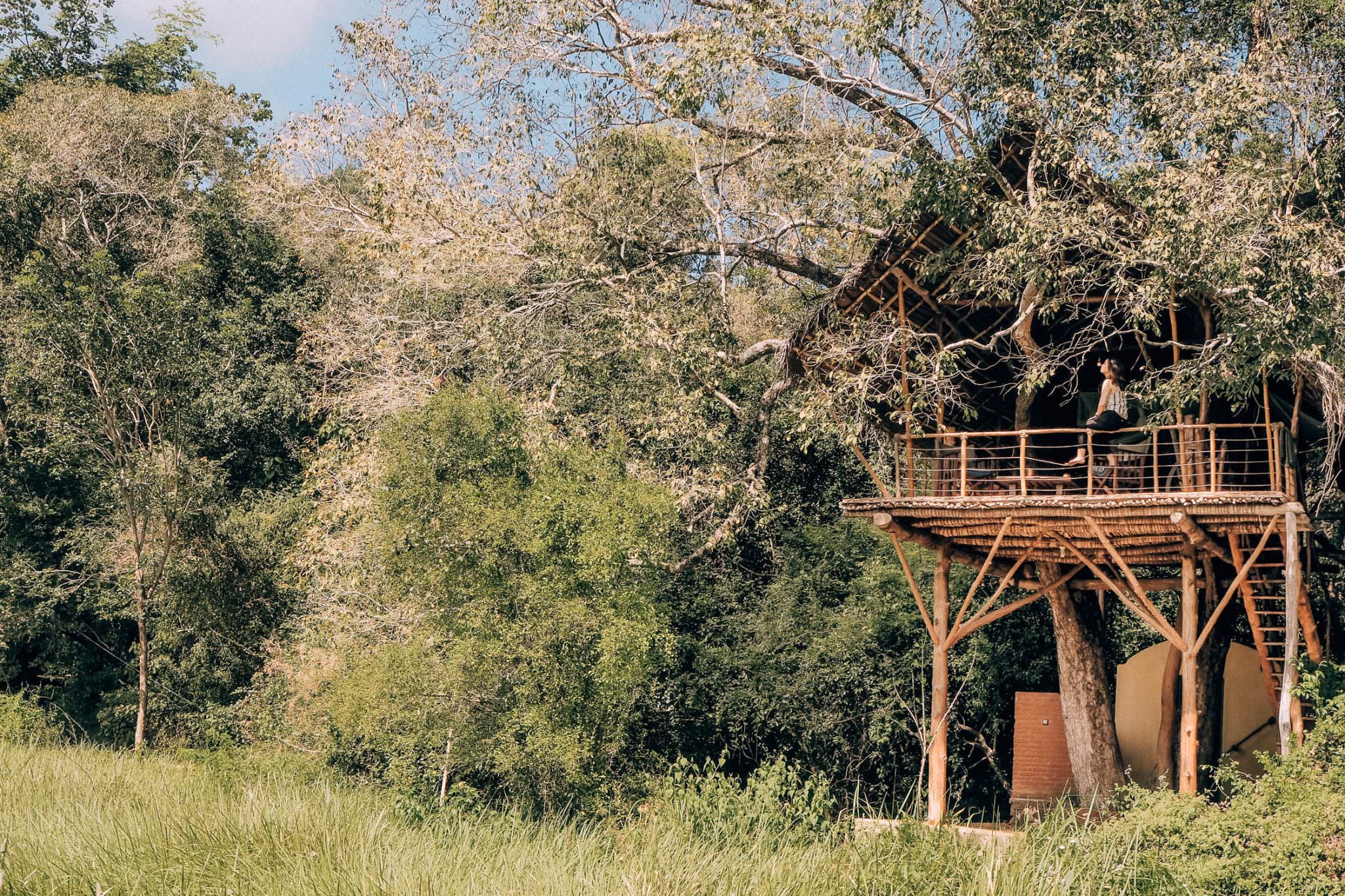
Sri Lanka's geological and natural history stretches back hundreds of millions of years, making it one of South Asia's most rewarding destinations for travellers interested in prehistoric landscapes, ancient ecosystems, and deep-time natural heritage. A paleo tour here is not a single fixed route — it is a lens through which the island's forests, fossils, rock formations, and living relics of ancient flora and fauna reveal themselves in an entirely different light.
What Is a Paleo Tour in Sri Lanka?
A paleo tour combines elements of natural history, geology, palaeontology, and ecology into a journey that traces the deep past of a living landscape. In Sri Lanka, this means visiting ancient rock formations, endemic species that have survived largely unchanged for millions of years, ruins embedded in prehistoric terrain, and protected forests that shelter biodiversity found nowhere else on Earth.
Unlike a standard wildlife or heritage tour, a paleo-focused itinerary is curated around context — understanding why Sri Lanka's dry-zone tanks predate most of Europe's medieval infrastructure, why the island's endemic species count is disproportionately high for its size, and how tectonic and climatic history shaped every ecosystem a traveller passes through.
Where Do Paleo Tours Go in Sri Lanka?
The island offers several regions of particular interest to travellers approaching Sri Lanka through a deep-time or natural-history lens.
- The Ancient Cities of the Dry Zone: The north-central plains around Polonnaruwa preserve not only medieval ruins but a landscape shaped by ancient irrigation civilisations that understood their monsoon-driven hydrology with remarkable sophistication. The tank systems here are among the oldest engineered water bodies still in use anywhere in the world.
- Sinharaja Forest Reserve: Designated a UNESCO World Heritage Site, Sinharaja Forest Reserve is a lowland rainforest that has persisted through ice ages and continental drift, preserving a canopy of trees and an understorey of endemic species that collectively represent one of the oldest continuously forested areas in the Asian tropics.
- Horton Plains and the Central Highlands: The montane grasslands of Horton Plains National Park sit atop a plateau sculpted by ancient volcanic and tectonic forces. The area's cloud forest communities and endemic highland species reflect an evolutionary isolation that began when Sri Lanka separated from the Indian subcontinent.
- Udawalawe and the Southern Dry Zone: The open savannah terrain around Udawalawe National Park preserves a landscape type that dominated much of the island before human settlement expanded. Elephant herds here number in the hundreds, making the park one of the most reliable places in Asia to observe this ancient megafauna in a near-natural setting.
- Wilpattu's Ancient Lakes: The villus — natural lakes — of Wilpattu National Park are ancient water features that predate the park's formal designation by millennia, and the park's remoteness has allowed it to retain a vegetation structure and wildlife density closer to the island's prehistoric baseline than almost any other accessible area.
What Ancient Flora Can You Encounter on a Paleo Tour?
Sri Lanka's botanical heritage is as significant as its fauna. Several plant species present on the island are taxonomically ancient, belonging to lineages that were widespread across Gondwana before the continents separated. Guided botanical walks in lowland forests can identify living representatives of genera that dominated prehistoric landscapes.
The island's spice heritage also has deep roots. Ceylon black pepper is one of the world's oldest traded commodities, and its wild relatives still grow across Sri Lanka's wet-zone forests. Cloves — the dried flower bud of Syzygium aromaticum — belong to the myrtle family, a plant lineage with fossil records stretching back to the Cretaceous. Walking through a spice garden in the wet zone is, in a quiet way, a walk through botanical deep time.
What Ancient Wildlife Can You See?
Sri Lanka's fauna includes species whose lineages have remained largely unchanged for tens of millions of years. Crocodiles — observable on a crocodile watching excursion along riverine habitats — represent one of the most ancient surviving vertebrate lineages on Earth. The mugger and saltwater crocodiles present in Sri Lanka are not relics of a failed experiment; they are a spectacularly successful body plan that has outlasted countless extinction events.
The island's endemic birds, amphibians, and freshwater fish represent evolutionary radiations that occurred after Sri Lanka's separation from the Indian subcontinent, making them useful biological markers of geological time. Specialist guides on a paleo-themed tour can contextualise sightings within this evolutionary framework in a way that transforms a standard wildlife drive into a genuinely educational experience.
How Do I Combine a Paleo Tour with Other Sri Lanka Experiences?
A paleo tour does not require any specialist equipment or prior knowledge — it is, above all, a way of framing a Sri Lanka itinerary. Most travellers combine paleo-focused stops with conventional sightseeing, selecting guides with backgrounds in geology, ecology, or natural history rather than purely historical interpretation.
In the cultural zone, a visit to the ancient ruins at Polonnaruwa gains additional depth when a guide explains the ecological conditions that made the Mahaweli river basin the cradle of Sri Lankan civilisation. In the south, the Madu River Safari through the Madu Ganga lagoon system introduces travellers to a mangrove ecosystem that has existed in some form for millions of years, sheltering species that rely on this precise habitat structure.
For travellers with a particular interest in agricultural prehistory, a visit to a traditional paddy field (kumbura) reveals rice cultivation practices that connect directly to some of the earliest wet-rice agricultural systems in South Asia.
When Is the Best Time to Visit Sri Lanka for a Paleo Tour?
The island's geography means there is no single dry season that covers the whole country. The dry zone — north, north-central, and south-east — is generally most accessible between May and September, when the roads into parks such as Wilpattu and Udawalawe are in good condition and wildlife concentrates around permanent water sources. The wet zone, including Sinharaja, is most comfortably visited between January and April, when rainfall is lower and forest trails are drier underfoot.
For travellers whose primary interest is botany or geology rather than wildlife, the shoulder months of March–April and September–October offer a useful compromise: transitional weather patterns often produce dramatic light conditions in highland areas, and many lowland forests are lush without being waterlogged.
How Long Does a Paleo Tour of Sri Lanka Take?
A meaningful paleo itinerary covering both the dry-zone ancient sites and the wet-zone forests requires a minimum of seven to ten days. A five-day eco-focused circuit can cover the highlights of one region in reasonable depth. Travellers with two weeks can combine the north-central plains, the central highlands, and the southern national parks into a single coherent journey that follows the island's geological and ecological gradients from the ancient volcanic basement rocks of the interior to the coastal mangroves and coral formations of the shore.
Related reading
6 pages on closely related subjects.