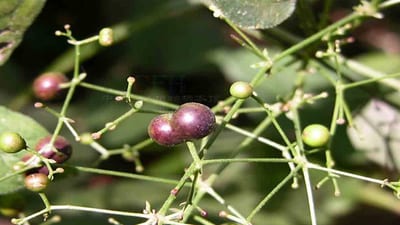
Melicope lunu-ankenda is a native Sri Lankan plant recognised within the country's rich tradition of Ayurvedic and traditional medicine. Known by its local Sinhala name, this species belongs to the family Rutaceae and grows across the island's tropical lowland and mid-elevation zones. It represents one of hundreds of indigenous medicinal plants catalogued and used by Sri Lankan healers across centuries of botanical knowledge.
What is Melicope lunu-ankenda?
Melicope lunu-ankenda is a small tree or shrub found in moist, tropical environments throughout Sri Lanka. The genus Melicope encompasses numerous species distributed across Asia, the Pacific, and the Indian Ocean region, and several members of this genus have documented ethno-botanical significance. In Sri Lanka, lunu-ankenda — translated loosely as "salt branch" — reflects the plant's traditional association with its characteristic taste or medicinal properties as perceived by local practitioners.
The plant produces aromatic leaves and small flowers typical of the Rutaceae family, which includes well-known species such as citrus. Its bark, leaves, and roots have historically been incorporated into traditional preparations intended to address a range of health concerns, particularly within Sri Lanka's Ayurvedic framework.
What is Melicope lunu-ankenda used for in Ayurveda?
Within Sri Lanka's Ayurvedic tradition, Melicope lunu-ankenda is valued for its potential therapeutic applications. Traditional practitioners have used various parts of the plant in herbal formulations aimed at supporting digestion, reducing inflammation, and addressing fever. The plant is included in Sri Lanka's national catalog of Ayurvedic medicinal plants, affirming its recognised role in the country's formal indigenous medicine system.
As with many medicinal plants in the Ayurvedic canon, the manner of preparation matters considerably. Different parts of the plant — leaf, bark, or root — may be processed separately as decoctions, powders, or oils, each suited to different therapeutic purposes. Traditional knowledge of such preparations has been preserved and transmitted through institutions like the Gampaha Wickramarachchi Ayurveda Institute and similar bodies dedicated to Sri Lankan indigenous medicine.
Sri Lanka's Ayurvedic pharmacopoeia is one of the most diverse in Asia, drawing on the island's exceptional biodiversity. Melicope lunu-ankenda exists alongside hundreds of other documented species — from Acacia chundra to Pongamia pinnata — that together form the backbone of traditional healing practice on the island.
Where does Melicope lunu-ankenda grow in Sri Lanka?
The species is typically found in the island's wet and intermediate zones, favouring humid forest edges and disturbed lowland habitats. It is not exclusive to any single region but tends to occur more frequently in areas with reliable rainfall and moderate elevation. The forests of the Sinharaja Forest Reserve and surrounding southwest lowlands support the kind of moist, biodiverse environment where many Rutaceae family plants, including this species, are found.
Sri Lanka's botanical diversity is closely tied to its geography — a relatively small island that contains an extraordinary range of microclimates, from coastal lowlands to cloud forests and montane plateaus. This diversity has made the island an important source of medicinal plant material for regional Ayurvedic and traditional medical systems for well over two thousand years.
How does Melicope lunu-ankenda fit into Sri Lanka's broader herbal tradition?
Sri Lanka has a formally institutionalised system of indigenous medicine that encompasses Ayurveda, Siddha, Unani, and traditional Sinhala medicine. The government maintains official pharmacopoeias and plant catalogs that document species like Melicope lunu-ankenda, providing practitioners with standardised references for identification, preparation, and therapeutic application.
This formal recognition is significant. Unlike many folk remedies that circulate informally, plants in the national catalog have been reviewed and accepted as part of a regulated system. Practitioners trained in accredited Ayurvedic colleges study these species as part of their curriculum, ensuring continuity of knowledge even as the natural habitats of wild-harvested plants face increasing pressure.
Traditional medicine remains a primary healthcare option for a substantial portion of Sri Lanka's rural population. Interest in Ayurvedic approaches has also grown internationally, leading to greater attention to the documentation, sustainable cultivation, and export potential of Sri Lankan medicinal plant species. Plants like Melicope lunu-ankenda are part of this broader conversation about preserving and sharing indigenous botanical knowledge responsibly.
Is Melicope lunu-ankenda available as a cultivated plant?
Like many traditional medicinal plants, Melicope lunu-ankenda has historically been harvested from wild populations rather than systematically cultivated. Growing interest in herbal medicine and the commercial value of Ayurvedic products has prompted efforts to bring more medicinal species into cultivation, reducing pressure on wild stocks and ensuring more consistent quality for formulation purposes.
Travellers with a deep interest in Sri Lanka's botanical heritage can explore this world through visits to herbal gardens, Ayurvedic retreats, and rural communities where traditional plant knowledge is still actively practised. Several eco-lodges and wellness properties across the island incorporate guided tours of medicinal plant gardens, offering an immersive way to learn about species like Melicope lunu-ankenda in their natural context.
How can travellers explore Sri Lanka's Ayurvedic plant heritage?
Sri Lanka's Ayurvedic tradition is most accessible in the island's hill country and wet-zone villages, where traditional cultivation and knowledge have been maintained across generations. Botanical gardens, most notably the Royal Botanic Gardens at Peradeniya near Kandy, display a wide range of medicinal species and offer informative labels that bridge scientific and traditional naming conventions.
Dedicated Ayurvedic wellness centres, particularly those operating within established spa or retreat settings, often provide consultations, treatments, and educational sessions that reference the plant pharmacopoeia. For visitors seeking a structured exploration, combining a Kandy city tour with a visit to one of the region's herbal gardens provides a coherent introduction to the island's living medical botany.
Sri Lanka's commitment to documenting and preserving its indigenous plant knowledge is reflected in ongoing research partnerships between local universities, the Department of Ayurveda, and international institutions. This work ensures that species like Melicope lunu-ankenda are not simply historical footnotes but active participants in contemporary wellness science.
Related reading
1 pages on closely related subjects.