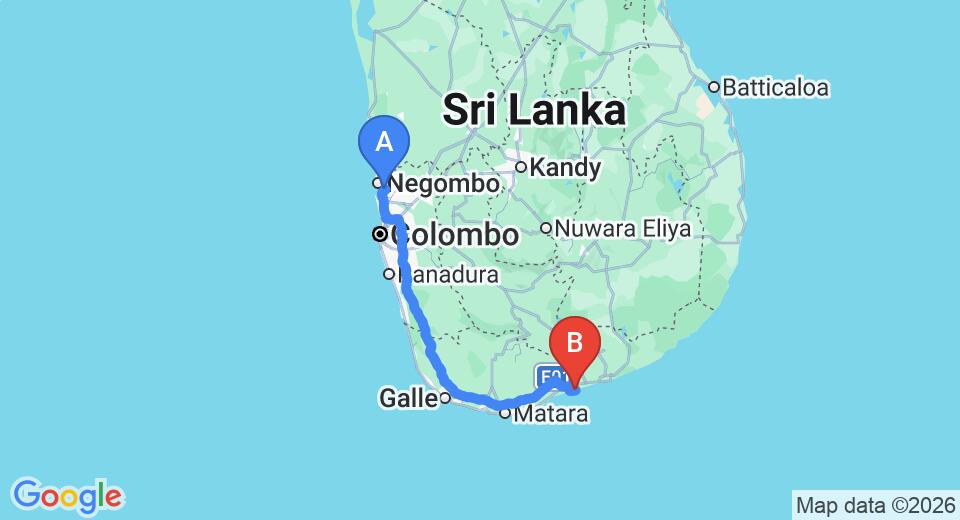
Kalametiya is a quiet coastal village on Sri Lanka's southern shore, positioned between Tangalle and Hambantota. It is best known for the Kalametiya Bird Sanctuary — one of the country's oldest protected wetlands — but the village itself offers something rarer: a genuine coastal ecosystem largely untouched by mass tourism. Mangrove channels, open lagoons, salt marshes, and a working fishing community coexist here in a way that is increasingly hard to find on the southern coast.
What is the Kalametiya Bird Sanctuary?
Established in 1938, the Kalametiya Bird Sanctuary is a mosaic of lagoon, mangrove forest, scrub jungle, and salt marsh covering a substantial stretch of the southern coastline. It is one of the longest-protected wetland areas in Sri Lanka and falls within the broader coastal corridor that links several important wildlife habitats in the Southern Province.
The sanctuary's varied microhabitats support more than 150 recorded bird species — a mix of year-round residents and seasonal migrants. Resident species include painted storks, purple herons, grey herons, little egrets, and the striking black-necked stork. The rare lesser adjutant stork is also documented here, making Kalametiya a meaningful stop for serious birders. Migratory waders arrive between roughly October and March, swelling the species count considerably during the northern winter.
Beyond birds, the sanctuary shelters saltwater crocodiles, water monitors, fishing cats, and several species of snakes and freshwater turtles. The crocodile watching opportunities along the lagoon channels are a genuine draw for wildlife photographers.
What can I do at Kalametiya?
The primary activity is a boat safari on the Kalametiya Lagoon. Flat-bottomed boats glide silently through the mangrove channels, giving visitors close views of roosting birds, basking reptiles, and the intricate root systems of the mangroves. Early morning departures — typically around dawn — offer the best light for photography and the highest bird activity. Late afternoon trips have their own appeal as large flocks return to roost.
- Birdwatching by boat: The classic Kalametiya experience. A knowledgeable local guide is essential for species identification; most operators include one.
- Kayaking: Some operators offer kayak access to the narrower channels where motorised boats cannot easily go.
- Cycling and walking: The roads and tracks around the lagoon fringes pass through coastal scrub and paddy fields, offering additional birding on foot.
- Fishing community visits: The villages around the lagoon are active fishing settlements. Watching the morning catch come in, or observing traditional net-making, provides a grounded sense of how this coastline has been lived in for generations.
For travellers already exploring the south, Kalametiya pairs naturally with a visit to Udawalawe National Park, roughly an hour and a half inland, making a combined wildlife day — wetland birds in the morning, savanna elephants in the afternoon — entirely feasible.
When is the best time to visit Kalametiya?
The sanctuary is accessible year-round, but the experience varies significantly by season. The peak birdwatching window runs from October to March, when migratory species from Central Asia and the Indian subcontinent join the resident population. Waders, terns, and several duck species concentrate on the open lagoon during this period.
The southern coast's dry season runs roughly from May to September, which means calmer conditions and clearer skies — useful for photography — but a reduced variety of bird species. Boat trips are generally not affected by weather during this period. The monsoon months (May to August on the south coast) can bring brief heavy showers, but morning trips usually escape the worst of it.
| Month range | Conditions | Birdwatching quality |
|---|---|---|
| October – March | Dry to mild; occasional north-east moisture | Excellent — migrants present |
| April – May | Transitional; warming | Good — some migrants still present |
| June – September | South-west monsoon; showers possible | Moderate — residents only |
How do I get to Kalametiya from Colombo?
Kalametiya lies approximately 210 kilometres south-east of Colombo along the Southern Expressway and coastal road. By private vehicle the drive takes around three to three and a half hours, with the expressway making the bulk of the journey comfortable and predictable. The nearest larger town is Tangalle, about 15 kilometres to the west, which has a good range of accommodation options. Hambantota is roughly 30 kilometres to the east.
There is no direct public bus service to the sanctuary itself; the closest buses stop in the villages along the main road, from where a tuk-tuk or bicycle is needed to reach the lagoon. For most visitors, a pre-arranged private transfer from Colombo or from a base in Tangalle is the most practical option.
Where should I stay near Kalametiya?
A small cluster of eco-lodges and guesthouses sits directly on or very close to the lagoon shore, offering early morning sanctuary access that larger hotels in Tangalle cannot match. Accommodation here tends to be simple but well-positioned: open-air dining, garden settings, and in some cases private lagoon frontage. Staying locally also means supporting the community economy directly.
Tangalle itself has a wider range of options, from boutique beach properties to budget guesthouses, and serves as a practical base for combining Kalametiya with the beaches and cultural sites of the broader southern coast.
Is Kalametiya suitable for families and children?
The boat safaris are calm and stable enough for children who are comfortable on water. The slow pace suits younger visitors curious about wildlife, and spotting a crocodile or a painted stork at close range tends to make a lasting impression. There are no steep trails or strenuous activities involved in the core sanctuary experience. Families should bring insect repellent, sun protection, and binoculars — and plan for an early start.
What else is near Kalametiya on the southern coast?
The southern coast between Galle and Hambantota is one of Sri Lanka's most rewarding stretches for nature and culture combined. Within a reasonable drive of Kalametiya:
- Tangalle beaches: Some of the least-developed and most scenic beaches on the island, good for swimming in calm conditions.
- Mulkirigala Rock Temple: A dramatic cave temple complex carved into a granite inselberg, often overlooked by itineraries focused on Galle or the Cultural Triangle.
- Bundala National Park: A Ramsar-listed wetland reserve east of Hambantota, recognised internationally for its flamingo sightings and diverse shorebird populations.
- Sinharaja Forest Reserve: The island's primary lowland rainforest, accessible from the northern edge of the south — see our guide to the Sinharaja Forest Reserve for detail on access and endemic species.
Travellers combining Kalametiya with the Madu River Safari near Balapitiya will find that the two wetland experiences complement each other well — Madu is more elaborately touristed but botanically rich, while Kalametiya offers a quieter, more bird-focused environment.
How does Lakpura support sustainable tourism at Kalametiya?
Lakpura works with locally based operators for all Kalametiya boat safaris, keeping economic benefit within the community. Guides used on our birdwatching departures are trained naturalists who understand the sanctuary's ecology and the importance of minimising disturbance to nesting and roosting birds. Group sizes on the boat are kept small to reduce noise and wash in the channels. We do not operate or recommend motorised speedboat tours of the lagoon, which damage the mangrove root systems and disturb wildlife.