
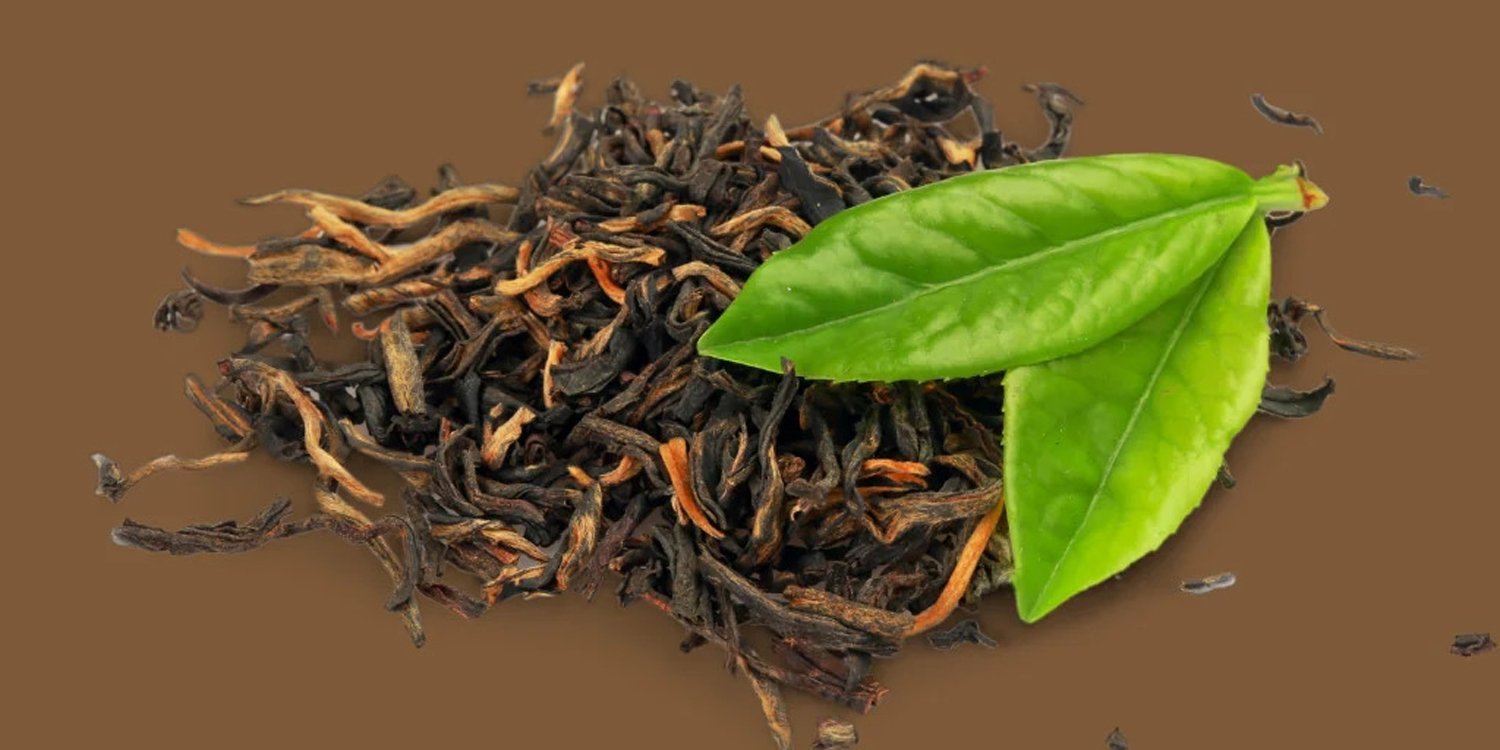
Flowery Broken Orange Pekoe, universally abbreviated to FBOP, sits among the most prized grades in the Ceylon Tea classification system. It combines the prized qualities of golden tips, rapid infusion, and a richly layered flavour profile that sets it apart from most other black tea grades produced in Sri Lanka's highland gardens.
What does FBOP mean, exactly?
Each word in the name carries a specific, technical meaning drawn from the orthodox tea-grading lexicon.
- Flowery — indicates the presence of young, golden-coloured tips (unopened leaf buds) in the blend. The more tips present, the more nuanced the sweetness in the cup.
- Broken — the leaves are intentionally fractured during processing rather than left whole. Smaller leaf pieces expose more surface area to hot water, accelerating the release of flavour and colour.
- Orange Pekoe — a grade descriptor, not a flavour indicator. "Pekoe" historically referred to the fine, downy hair on a young tea bud (from the Amoy Chinese word pek-ho, meaning white down). "Orange" was reputedly added by Dutch traders in the 17th century, possibly referencing the Dutch House of Orange, as a mark of prestige. In modern grading, Orange Pekoe denotes a specific leaf size and quality tier in the orthodox black tea hierarchy.
Taken together, FBOP describes a broken-leaf black tea that retains a meaningful proportion of golden tips — a combination that delivers both speed of brewing and complexity of flavour.
How does FBOP differ from other tea grades?
Ceylon tea is graded across two broad families: whole-leaf grades (OP, FOP, GFOP) and broken-leaf grades (BOP, FBOP, FBOPF). Within the broken category, FBOP occupies a premium position precisely because of its tip content.
| Grade | Leaf form | Tip content | Brew speed |
|---|---|---|---|
| BOP (Broken Orange Pekoe) | Broken | Minimal | Fast |
| FBOP (Flowery BOP) | Broken | Moderate to high | Fast |
| FBOPF (FBOP Finest) | Broken, finer cut | High | Very fast |
| OP (Orange Pekoe) | Whole leaf | Low | Slower, more gradual |
| FOP (Flowery OP) | Whole leaf | Moderate | Slower, more gradual |
FBOP occupies a practical middle ground: it brews almost as quickly as fannings-grade teas used in teabags, yet delivers the aromatic complexity associated with larger, tip-bearing leaves. That balance makes it a preferred choice for both standalone brewing and as a base in spiced tea blends.
What does FBOP tea taste like?
The flavour of FBOP depends heavily on the elevation and region of the estate where it is grown, but certain qualities recur consistently. Expect a full-bodied, malty character with a warm, slightly sweet finish — notes that experienced tasters sometimes describe as reminiscent of caramel or dried fruit. The golden tips contribute a delicate, almost floral undertone that softens the robust base.
High-grown FBOP from estates in areas like Nuwara Eliya or Dimbula tends to carry a brighter, more astringent character with citrus-like top notes. Mid-grown and low-grown FBOP, produced in estates closer to the central foothills, leans maltier and fuller in body. The colour of the liquor is a deep amber, often with copper-red highlights that indicate good oxidation during processing.
Because the broken leaf releases tannins quickly, steeping time matters: three to four minutes in water around 95°C is typically sufficient. Over-steeping will increase astringency without adding desirable complexity.
Where is FBOP produced in Sri Lanka?
FBOP is produced across multiple elevation zones in Sri Lanka's tea country. The central highlands — running through Kandy, Nuwara Eliya, and the estates visible from the famous railway line near Ella — are among the most significant production areas. The Dimbula and Uva valleys each contribute distinct regional characters shaped by their respective monsoon patterns and soil compositions.
Sri Lanka's tea industry has classified growing zones by altitude: high-grown (above approximately 1,200 m), mid-grown (600–1,200 m), and low-grown (below 600 m). FBOP is processed across all three zones, though the specific flavour expression shifts markedly with elevation. Visitors to the hill country can see orthodox processing at work in estate factories; a visit to Bluefield Tea Gardens offers an accessible introduction to how grades like FBOP are sorted and produced.
What are the health benefits associated with FBOP black tea?
Like all orthodox black teas, FBOP is a source of polyphenolic antioxidants, particularly theaflavins and thearubigins — compounds formed during the oxidation stage of processing. Research suggests these antioxidants may help neutralise free radicals and contribute to cardiovascular health, though individual results vary and black tea should not be treated as a medicinal product.
FBOP also contains naturally occurring caffeine, typically in the range of 40–70 mg per 200 ml cup depending on steeping time and leaf quantity. This makes it a meaningful energy-supporting beverage without the sharper caffeine spike associated with coffee. Additionally, the amino acid L-theanine, present in all Camellia sinensis-derived teas, is thought to moderate the stimulating effects of caffeine and support sustained mental focus.
The tannins in black tea have traditionally been associated with digestive support, and some studies indicate a modest prebiotic effect on gut microbiota from regular consumption, though more research is ongoing in this area.
How should FBOP tea be brewed for best results?
FBOP rewards simple, attentive preparation. The following approach works well for most FBOP teas from Sri Lankan estates:
- Use freshly boiled, filtered water allowed to cool for 30–45 seconds — targeting around 90–95°C.
- Measure approximately 2–2.5 g of loose FBOP per 200 ml of water.
- Steep for 3–4 minutes. The liquor darkens quickly; shorter steeping yields brightness, longer steeping adds body and depth.
- Remove the leaves promptly to avoid excess astringency.
- Serve plain to appreciate the full character, or with a small amount of full-fat milk, which softens the malt and rounds the tannins.
FBOP adapts particularly well to milk-based preparations. Its rapid, strong infusion stands up to dairy without becoming thin or insipid — a quality that also makes it a reliable base for spiced chai preparations where robust flavour is essential.
Is FBOP suitable as a gift from Sri Lanka?
Premium FBOP, especially single-estate or limited-flush versions, makes an excellent gift precisely because it is specific rather than generic. It tells a story about provenance, about the hands that plucked the tips, and about a tea culture that stretches back to the 1860s on the island. For recipients who appreciate quality but may not be familiar with tea grading, FBOP is approachable enough to enjoy immediately while offering depth for those who want to explore further.
Loose-leaf FBOP presented in a caddy or cylinder is the preferred format for gifting, as it preserves freshness better than sachets and makes a more considered visual impression. Several of Sri Lanka's heritage estates — including Mackwoods and Bluefield — produce gift-grade FBOP worth seeking out when travelling through the hill country.
Related reading
9 pages on closely related subjects.


