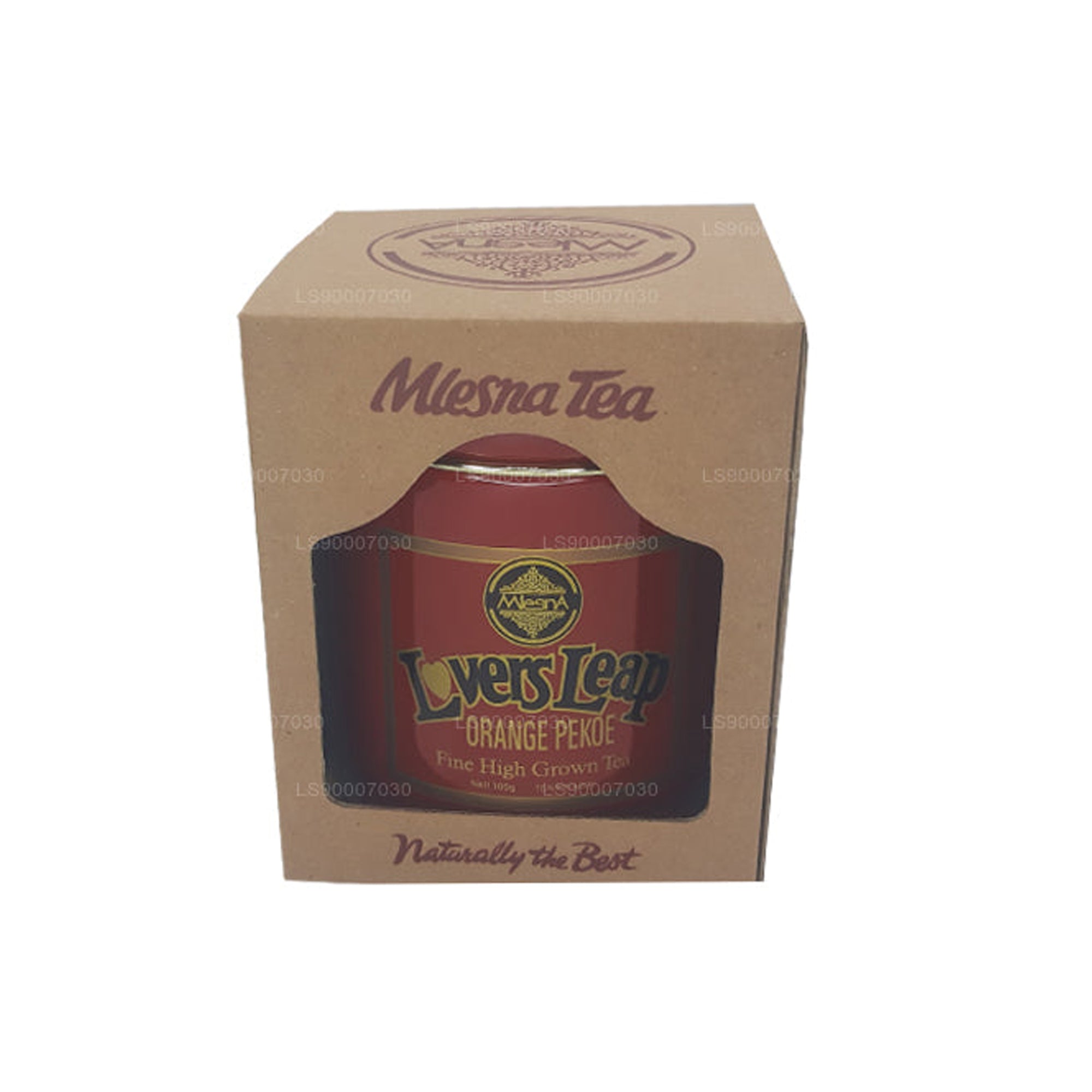
Flowery Orange Pekoe — abbreviated FOP — sits near the top of the Ceylon black tea grading ladder. It is a whole-leaf grade distinguished by the presence of young, tender tips alongside the full leaf, producing a cup that tends toward floral brightness and a clean, lingering finish. Understanding what the grade means, where it originates, and how best to brew it helps you choose the right tea for the cup you have in mind.
What does "Flowery Orange Pekoe" actually mean?
The term is frequently misunderstood. "Orange" does not refer to the citrus fruit or any added flavouring — it most likely derives from the Dutch House of Orange, the historical trading dynasty whose name became associated with quality goods in the European tea trade. "Pekoe" comes from the Chinese bai hao, meaning white hair or down, referring to the fine silvery hairs on young tea buds. "Flowery" indicates that the grade contains a notable proportion of those budding tips alongside the open leaf.
In the Orthodox grading system used across Sri Lanka, tea grades are determined by leaf size, uniformity, and tip content after the rolling and sorting stages at the factory. FOP sits above plain Orange Pekoe (OP) in terms of tip content, making it a sought-after grade among connoisseurs who want whole-leaf complexity with visible golden or silver tips in the dry leaf.
How does FOP differ from other Ceylon tea grades?
The Orthodox grading scale for black tea runs roughly as follows, from largest to smallest leaf size:
- SFTGFOP / FTGFOP — Special/Finest Tippy Golden Flowery Orange Pekoe (highest tip density, often from Darjeeling-style or high-elevation Ceylon estates)
- TGFOP / GFOP — Tippy/Golden Flowery Orange Pekoe (abundant golden tips)
- FOP — Flowery Orange Pekoe (good tip presence, whole leaf)
- OP / OPA / OP1 — Orange Pekoe grades (whole leaf, fewer tips)
- BOP / BOPF — Broken Orange Pekoe and its Fannings (smaller, broken leaf; stronger infusion, faster brew)
For everyday tea bags sold in supermarkets worldwide, factories typically use BOPF because smaller particles infuse quickly and uniformly. FOP, by contrast, is a loose-leaf grade best appreciated brewed slowly in a teapot, giving the full leaf room to unfurl.
Grading also interacts with the elevation at which the tea is grown. Sri Lanka's tea-growing regions are broadly classified as Ceylon tea low-grown (below roughly 600 m), mid-grown (600–1,200 m), and high-grown (above 1,200 m). FOP teas from high-grown areas such as Nuwara Eliya or Dimbula tend to produce lighter, more delicate liquors with pronounced floral and citrus notes. Low-grown FOP from Ratnapura or Sabaragamuwa districts is typically fuller-bodied and slightly earthier.
Where is Flowery Orange Pekoe produced in Sri Lanka?
FOP grade teas are produced across several of Sri Lanka's seven main tea-growing regions, though the grade is more prevalent where Orthodox (rather than CTC) processing methods dominate. Key areas include:
- Nuwara Eliya — the island's highest growing region, around 1,800–2,000 m, producing the lightest and most delicate FOP liquors with a pale golden colour.
- Dimbula — a high-grown district in the Central Highlands; FOP from here often shows a brisk, clean quality particularly striking during the January–March "Dimbula season."
- Uva — famous for its distinctive seasonal character (July–September), influenced by the dry Cachan winds. Uva FOP teas show a characteristic astringency and floral top note.
- Kandy / mid-grown — fuller-flavoured FOP teas that pair well with a small amount of milk.
Single-estate FOP teas, where the grade is traceable to one garden, are increasingly popular with specialty buyers. Estates near Ella and the Uva highlands in particular produce FOP lots that command premium prices at the Colombo Tea Auction.
How should you brew Flowery Orange Pekoe?
Because FOP is a whole-leaf grade, it rewards a slower, more attentive brew than a standard tea bag. A general guide:
- Water temperature: Use water just off the boil — around 90–95 °C. Boiling water poured directly onto delicate high-grown FOP can slightly scald the leaf and mute floral notes.
- Leaf quantity: Around 2–2.5 g per 200 ml of water (roughly one heaped teaspoon per cup).
- Steeping time: 3–4 minutes for a lighter cup; up to 5 minutes for more body. Remove the leaves promptly — over-steeping amplifies bitterness.
- Vessel: A warmed ceramic or glass teapot allows the whole leaf to open fully. Avoid tight mesh infusers that restrict unfurling.
- Serving: High-grown FOP is best drunk without milk to appreciate its floral character. Mid- and low-grown FOP can be served with a small measure of milk.
Re-steeping is possible with quality FOP — a second infusion of 3–4 minutes often yields a lighter, slightly sweeter cup.
What makes Sri Lankan FOP distinctive on the world market?
Sri Lanka is one of a handful of countries that still produces a significant volume of Orthodox-processed whole-leaf teas commercially. Much of the world's black tea is now produced by the CTC (Cut, Tear, Curl) method, which creates small, uniform pellets suited to tea bags but sacrificing the nuanced character of the original leaf. Ceylon FOP teas exported under the Lion Logo — Sri Lanka's certification mark for 100% Ceylon tea — are a guarantee of single-origin Orthodox leaf.
The Colombo Tea Auction, one of the world's oldest functioning tea auctions, is where most Ceylon FOP lots are traded. Exceptional estate lots occasionally reach record prices; the auction remains a live indicator of quality and demand for Ceylon's premium grades. If you are visiting Sri Lanka and want to see how tea moves from garden to cup, the Bluefield Tea Gardens near Nuwara Eliya offers a working estate tour that covers plucking, rolling, and grading.
How does FOP relate to green and other tea types?
FOP is a grading term applied primarily to black (fully oxidised) tea, though the same notation appears occasionally in green and white tea grading systems — particularly in Chinese and Darjeeling contexts. Ceylon Ceylon Green Tea has its own separate grading conventions and is not commonly described using the FOP terminology within Sri Lanka's domestic market. When you see FOP on a Ceylon tea label, it almost always refers to black tea produced through the Orthodox method.
Is Flowery Orange Pekoe the same as "high-quality" tea?
Grade and quality are related but not identical. The FOP grade guarantees leaf size, tip content, and processing method — it does not automatically guarantee that the tea is free of defects or was grown under optimal conditions. A well-made BOPF from a single estate in peak season can outperform a mediocre FOP from a lesser garden. Grade is a useful starting point, not a final verdict. When purchasing FOP, look for teas carrying the Lion Logo certification, a named estate or region on the label, and a harvest season indicator where available.
Related reading
5 pages on closely related subjects.