
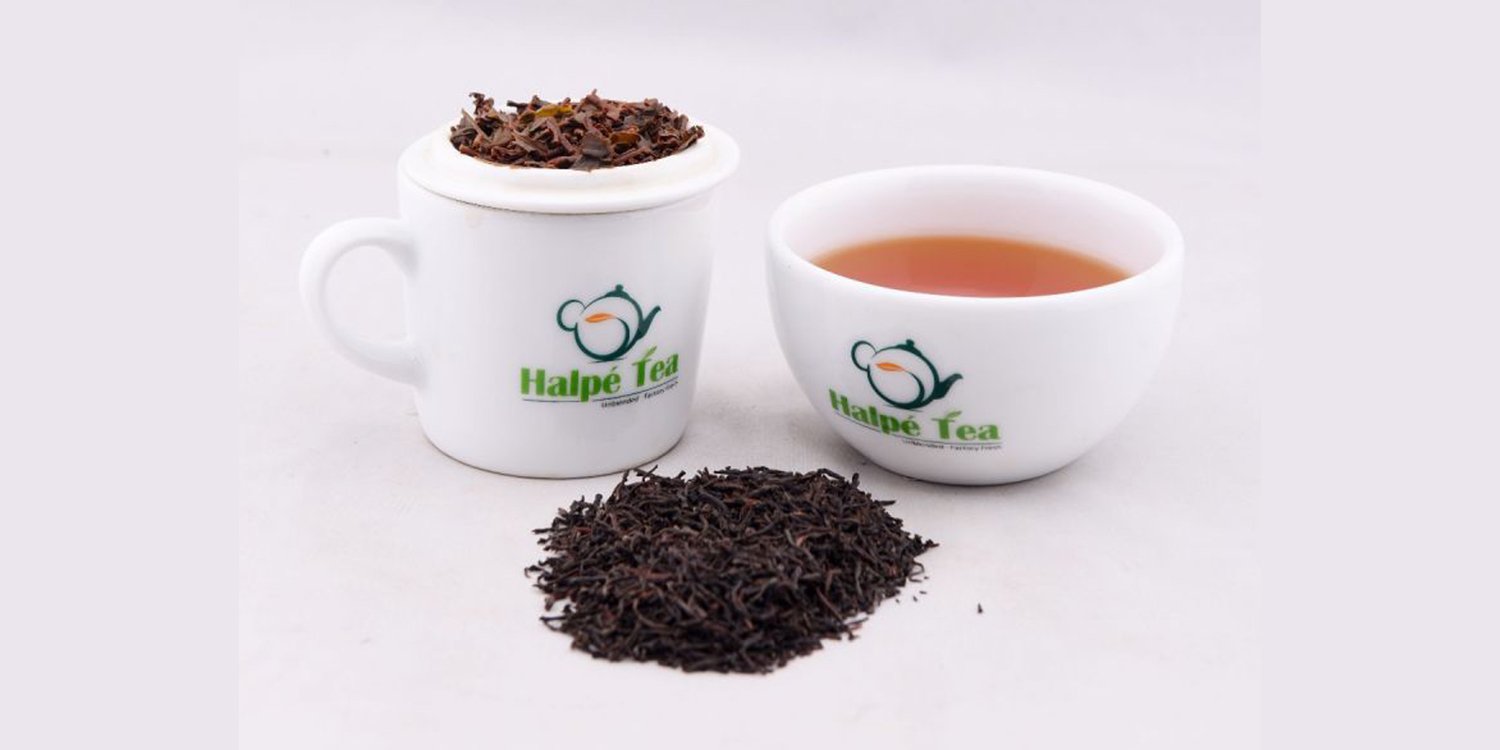
Broken Orange Pekoe 1, universally abbreviated to BOP1, sits at the top of the broken-grade hierarchy in Ceylon tea. The leaves are golden in colour, wiry in appearance, and generally of medium length — unmistakable on the tasting table and highly sought after by specialist buyers across Europe and Central Asia. Its flavour profile is clean and malty with a brightness that sets it clearly apart from lower-elevation broken grades.
What exactly is BOP1, and how does it differ from BOP?
Ceylon tea is graded into two broad families: whole-leaf grades and broken grades. Within the broken family, Ceylon Tea factories produce several sub-grades — BOP, BOP1, BOPF, and FBOP among them. BOP1 sits one step above standard BOP: the particles are slightly larger, more uniform, and contain a higher proportion of golden tip, which contributes both visual appeal and a gentler, fuller flavour. BOPF (Broken Orange Pekoe Fannings), by contrast, produces a faster, stronger infusion and is typically used in tea bags. BOP1 is generally sold as loose-leaf tea for discerning retail or blending markets.
Where in Sri Lanka is BOP1 grown?
BOP1 falls predominantly into the high-grown and mid-grown categories, harvested from estates positioned between roughly 2,000 ft and 6,000 ft above sea level in the central hill country. The elevation matters because cooler temperatures slow the growth of the tea bush, allowing flavour compounds to concentrate in each small leaf. The result is a brighter liquor and a fresher, more complex taste than teas grown closer to sea level.
Districts such as Nuwara Eliya, Dimbula, and Uva supply much of the high-grown BOP1 production. The city of Ella, perched in the Uva highlands, sits at the heart of this tea-growing landscape — a useful orientation point for visitors who want to see estate country first-hand. Nearby, the Bluefield Tea Gardens offer guided tours that walk visitors through the full process from plucking to grading.
What does BOP1 taste like?
The infused liquor is bright amber to coppery gold — tea tasters often describe the colour itself as a quality indicator. On the palate, BOP1 is mild to medium-bodied with a clean malty note and a slightly brisk finish. It lacks the astringency that can characterise lower-grade broken teas, making it approachable without milk, though it pairs well with both. The rarity of genuine high-grown BOP1 — the best batches command premium prices at the Colombo Tea Auction — means that flavour consistency from estate to estate is a genuine point of pride for Sri Lankan producers.
Which markets favour BOP1?
Russia and Germany have historically been the largest import markets for high-grown BOP1. Russian consumers traditionally prefer a strong, full-flavoured loose-leaf brew, and BOP1 delivers that without the over-astringency of lower grades. German specialty tea retailers value its clarity of flavour and traceability to specific estates. Demand from the Middle East and Japan has also grown steadily as single-origin Ceylon teas gain recognition among specialty buyers globally.
How is BOP1 produced — from leaf to grade?
The journey from bush to bag follows the standard Ceylon black-tea process, but grading is where BOP1 is defined:
- Plucking: The two leaves and a bud are hand-plucked, typically by experienced workers who can judge leaf maturity by touch and sight.
- Withering: Fresh leaf is spread on troughs and dried by warm air to reduce moisture content, making the leaf pliable for rolling.
- Rolling or CTC: Most BOP grades come from the CTC (Cut, Tear, Curl) process, which breaks the leaf into consistent small particles and releases cell sap for a faster, fuller infusion.
- Oxidation (fermentation): The rolled leaf is spread in a cool, humid environment where enzymatic oxidation turns it from green to copper-brown, developing the characteristic black-tea flavour.
- Firing: High-temperature drying halts oxidation and locks in moisture at around 2–3%.
- Sorting and grading: Dried tea passes through a series of vibrating sieves and sorters. BOP1 is separated by particle size and tip content; the golden, wiry character emerges at this stage as tip-rich particles are identified and separated from the standard BOP stream.
How should BOP1 be brewed?
Because BOP1 particles are finer than whole-leaf grades, they infuse quickly. Use freshly boiled water (around 95–100 °C) and steep for two to three minutes. Over-brewing risks drawing out tannins that can overwhelm the malty base note. A fine-mesh infuser or a traditional Ceylon teapot with a built-in strainer works well. BOP1 is versatile enough to drink plain or with a small amount of milk; adding sugar is a matter of personal preference, though purists tend to drink it without.
How does BOP1 compare with other Ceylon tea grades?
| Grade | Particle size | Tip content | Infusion strength | Typical use |
|---|---|---|---|---|
| OP (Orange Pekoe) | Long, whole leaf | Low to moderate | Slow, delicate | Specialty loose-leaf |
| BOP (Broken Orange Pekoe) | Medium broken | Low | Medium-fast | Blending, loose-leaf |
| BOP1 | Medium broken, wiry | High (golden) | Medium, clean | Premium loose-leaf, export |
| BOPF (Fannings) | Fine | Very low | Very fast, strong | Tea bags |
| Dust | Very fine | None | Instant, very strong | Commercial tea bags |
Is BOP1 suitable as a gift tea?
High-grown BOP1 from a named Sri Lankan estate — particularly those that have achieved record prices at the Colombo auction — makes a compelling and relatively rare gift. It occupies a middle ground between the accessible everyday broken grades and the exclusive whole-leaf single-estate teas, offering genuine flavour quality in a format that most tea drinkers will find approachable. Presented in a caddy or cylinder with estate provenance clearly labelled, it tends to be well received by tea enthusiasts in Europe, Japan, and the Gulf.
For visitors to Sri Lanka, purchasing BOP1 direct from a highland estate — or from a reputable Colombo retailer — guarantees provenance and freshness. Tea purchased close to its production date, before extended warehouse storage, will deliver the brightness and maltiness that define the grade at its best.
Related reading
5 pages on closely related subjects.


