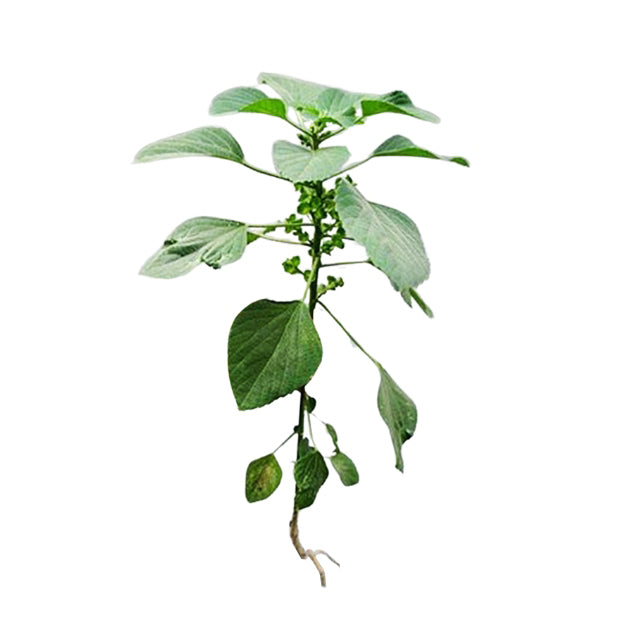




Eleusine indica, commonly known as goosegrass or Indian goosegrass, is a widespread annual grass that holds a quiet but meaningful place in Sri Lanka's catalogue of Ayurvedic medicinal plants. While it is often dismissed elsewhere in the world as a roadside weed, traditional Sinhala and Ayurvedic practitioners have long recognised its therapeutic potential. Found across low-elevation grasslands, cultivated fields, and disturbed soils throughout the island, this plant is far more than it first appears.
What is Eleusine indica?
Eleusine indica belongs to the family Poaceae — the same broad family that includes rice, wheat, and other cultivated grasses. It is a low-growing, tufted annual grass that typically reaches 15–60 cm in height. Its most recognisable feature is the finger-like arrangement of its seed spikes, which radiate from the top of the stem in a pattern reminiscent of an open hand. The leaves are flat, linear, and slightly folded along the midrib, while the stems are flattened and often spreading along the ground before turning upward.
In Sri Lanka, the plant is known in Sinhala as Manel Kudu or Embakiriya. It grows prolifically in the warm, humid lowlands and mid-country regions, thriving in open, sunny conditions where soil has been disturbed by agriculture or foot traffic. Its ability to colonise poor, compacted soils makes it one of the most adaptable plants on the island.
What are the traditional Ayurvedic uses of Eleusine indica?
Within Sri Lanka's living tradition of Ayurvedic plant medicine, Eleusine indica is valued primarily for its cooling and detoxifying properties. The whole plant — roots, leaves, and stems — is used in various preparations. Traditional practitioners have applied it in the following ways:
- Fever management: Decoctions prepared from the whole plant are used to help reduce febrile conditions, particularly in children.
- Diuretic action: The plant is believed to support kidney function and promote urine flow, making it useful in formulations targeting urinary tract complaints.
- Wound care: Poultices made from the crushed plant have been applied topically to minor cuts, skin irritations, and swellings.
- Digestive support: In some regional traditions, preparations from the plant are used to ease stomach discomfort and mild intestinal issues.
- Anti-inflammatory applications: The plant's cooling nature is drawn upon in compound formulas intended to address inflammation-related conditions.
It is worth noting that these uses reflect traditional ethnobotanical knowledge passed down through generations of Sri Lankan healers. Modern pharmacological research has begun to investigate the plant's bioactive compounds — including flavonoids, alkaloids, and phenolic acids — with preliminary studies suggesting antioxidant and antimicrobial properties, though rigorous clinical trials are still limited.
Where does Eleusine indica grow in Sri Lanka?
The plant has no single concentrated habitat — it grows throughout Sri Lanka, from sea-level coastal zones to mid-elevation agricultural areas. You are likely to encounter it along roadsides, on the margins of paddy fields, in home gardens, and in open scrubland. It tolerates a wide range of soil conditions and is particularly common in the Wet Zone and intermediate zones of the island.
Because it grows so readily in cultivated environments, Eleusine indica is often found alongside food crops. Farmers in the dry zone sometimes regard it as a competitive weed, yet the same plant is harvested by traditional healers who know its value. This duality — agricultural nuisance and medicinal resource — is common among many of Sri Lanka's most useful ethnobotanical species, including Pongamia pinnata, another plant with deep roots in local medicine and land use.
How is Eleusine indica used in Ayurvedic formulations?
In classical Ayurvedic practice, plant medicines are rarely used in isolation. Eleusine indica typically appears as one component within compound preparations — decoctions, pastes, or herbal powders — rather than as a standalone remedy. The whole plant is harvested, cleaned, and either used fresh or dried for later use. Drying preserves the active constituents and extends shelf life considerably.
Decoctions are the most common preparation: the plant material is boiled in water, strained, and taken orally in measured quantities. For topical use, fresh plant material is pounded into a paste and applied directly. In some formulations, the plant is combined with other cooling herbs to amplify its effect on heat-related conditions.
Sri Lanka's traditional medical system — which integrates Ayurvedic principles with indigenous Deshiya Chikitsa practices — has documented a wide range of such compound uses. Plants like Eleusine indica sit within a broader network of botanical knowledge that continues to be taught in government-recognised Ayurvedic colleges and practised in traditional medical institutions across the country.
Is there scientific research supporting its medicinal properties?
Academic interest in Eleusine indica has grown over recent decades, particularly in South and Southeast Asia where the plant is most commonly used. Researchers have identified several potentially bioactive compounds in the plant, including polyphenols and flavonoids known for antioxidant activity. Some laboratory studies have demonstrated antimicrobial effects against certain bacterial strains, and anti-inflammatory activity has been observed in animal model studies.
However, it is important to contextualise these findings carefully. Most studies are in vitro (conducted in laboratory conditions) or based on animal models, and do not yet constitute clinical evidence for therapeutic use in humans. The gap between traditional use and evidence-based medicine remains significant for many plants in this category. Anyone considering using Eleusine indica or preparations containing it for health purposes should consult a qualified Ayurvedic physician or medical practitioner.
How does Eleusine indica fit into Sri Lanka's broader herbal tradition?
Sri Lanka's Ayurvedic heritage is among the richest in South Asia, supported by ancient medical texts, a network of trained practitioners, and a biodiversity that gives the island an unusually large pharmacopoeia of native and naturalised medicinal plants. Eleusine indica occupies a modest but genuine position within this tradition — not among the most celebrated herbs, but consistently present in regional ethnobotanical records and practitioner knowledge.
The plant's inclusion in official Sri Lankan Ayurvedic plant catalogues reflects a broader institutional effort to document, preserve, and study the island's traditional medical knowledge before it is lost to modernisation. Institutions such as the Department of Ayurveda under the Ministry of Health maintain registries of such plants, providing a formal framework for their continued recognition and research.
Alongside better-known medicinal plants such as Syzygium aromaticum (cloves) and Ceylon black pepper, Eleusine indica represents the quieter, less commercialised layer of Sri Lanka's botanical wealth — plants that matter deeply within local communities even if they rarely feature in international markets.
Other species in this genus
1 more, sharing the same genus.