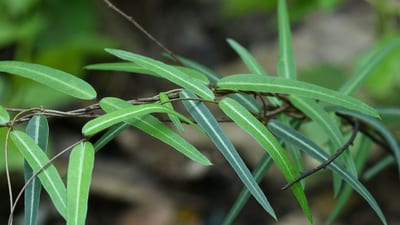
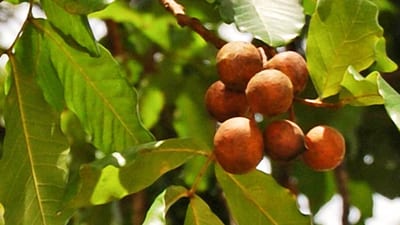
Cyperus rotundus, widely known as nutgrass or nutsedge, is a perennial sedge with a long history of use in traditional medicine across South and Southeast Asia. Despite its common name, it is not a true grass — it belongs to the family Cyperaceae and is easily distinguished by its triangular stem, dark brown spikelets, and the small, hard tubers (nuts) attached to its roots. In Sri Lanka, it is known as කලාදුරු (Kaladuru) in Sinhala and has been documented in Ayurvedic texts for centuries.
What does Cyperus rotundus look like?
The plant typically grows between 20 and 50 cm in height, though it can exceed this under particularly favourable conditions. Its slender, dark green leaves emerge from the base, and the stem cross-section is distinctly triangular — a hallmark of the sedge family. The underground portion is its most distinctive feature: a network of rhizomes that terminate in small, oval tubers, which give the plant its common name and account for much of its medicinal value. These tubers are also why nutgrass is considered a persistent weed in agricultural settings, as even a small fragment left in the soil can regenerate a new plant.
Globally, Cyperus rotundus is considered one of the world's most troublesome weeds due to its vigorous underground spread. In Sri Lanka, however, it is cultivated and collected with care specifically for its traditional medicinal applications.
What are the Ayurvedic uses of Cyperus rotundus?
In Ayurveda, Cyperus rotundus is classified as having a cooling (shita) potency, making it particularly valued for conditions associated with heat and inflammation. The root tubers are the primary part used medicinally; they are dried, powdered, or extracted and incorporated into a range of classical formulations. Preparations such as Kaishore Guggulu and related compound medicines frequently list nutgrass root among their ingredients.
- Anti-inflammatory action: The cooling nature of the tubers is applied to reduce internal and external inflammation, including redness and skin irritation.
- Digestive support: Classical texts cite its use in supporting digestion, alleviating nausea, and reducing bloating.
- Fever management: Nutgrass is traditionally included in formulas aimed at reducing fever, owing to its cooling properties.
- Skin and complexion: Powdered root extracts are used topically and internally to address fungal skin conditions, rashes, and uneven pigmentation.
- Hair care: Preparations containing nutgrass are applied to strengthen hair and improve its texture and sheen.
Another notable Ayurvedic compound that incorporates Cyperus rotundus is Pushyanuga Churna, a classical powder blend traditionally used for gynaecological support.
What are the skin benefits of Cyperus rotundus?
Modern research has begun to corroborate several of the skin-related claims found in traditional Ayurvedic practice. The root tubers are rich in flavonoids, fatty acids, and phenolic compounds — all of which contribute antioxidant activity.
- Antioxidant protection: Flavonoids and phenolics in the tubers help neutralise free radicals, which are associated with premature skin ageing. Regular topical application is thought to reduce the appearance of fine lines over time.
- Melanin regulation: Compounds in nutgrass root are believed to inhibit the enzyme tyrosinase, which controls melanin production. This mechanism underpins its traditional use for brightening uneven skin tone and reducing hyperpigmentation.
- Soothing irritated skin: Its anti-inflammatory constituents help calm redness, breakouts, and inflamed or reactive skin types.
- Antimicrobial properties: Laboratory studies indicate activity against certain fungi and bacteria, supporting traditional use for fungal skin infections.
Because of these properties, nutgrass root extract has found its way into a growing number of cosmetic formulations globally, particularly in serums and creams targeting pigmentation and skin sensitivity.
How is Cyperus rotundus used in hair care?
In traditional Sri Lankan and South Indian hair-care practices, oil infused with nutgrass root is applied to the scalp to strengthen hair from the follicle and add natural shine. The fatty acids present in the tubers nourish the scalp, while the antioxidant compounds protect hair from environmental damage. Powdered nutgrass is also blended with other botanical ingredients — such as those found in preparations alongside Syzygium aromaticum (clove) — to create conditioning hair masks used in traditional rituals before bathing.
Where does Cyperus rotundus grow in Sri Lanka?
Nutgrass is found across much of Sri Lanka in a wide range of habitats: cultivated fields, roadsides, disturbed ground, and the margins of wetlands. It is particularly common in the dry and intermediate zones. Because it thrives in open, sunny conditions and tolerates a degree of drought once established, it appears in many parts of the island's agricultural landscape. Collectors typically harvest the tubers during dry periods when the soil is easier to work and the starch and oil content of the tubers is higher.
The plant also grows naturally alongside other ecologically and medicinally important species. In the drier northern and eastern plains, it shares habitat with trees such as Acacia chundra, whose bark is similarly used in traditional medicine.
How is nutgrass root prepared for medicinal use?
Preparation varies by application, but the general process follows a sequence familiar in Ayurvedic pharmacognosy:
- Tubers are dug up, washed thoroughly, and any fibrous root material is removed.
- They are sun-dried until fully desiccated — this typically takes several days in good weather.
- Dried tubers are ground into a fine powder (churna) or decocted in water or oil.
- The powder is either used alone or blended with other botanicals to form compound medicines.
- For topical use, the powder may be mixed with a carrier oil or incorporated into a paste with water and other herbs.
In all cases, Ayurvedic practitioners recommend sourcing material from clean, uncontaminated agricultural land, as Cyperus rotundus readily absorbs soil contaminants when grown near chemical-intensive farms.
Is Cyperus rotundus safe to use?
In traditional practice, nutgrass preparations are generally considered safe when used in appropriate quantities under the guidance of a qualified Ayurvedic practitioner. The plant is classified as having low acute toxicity in standard preparations. However, concentrated extracts should be used with care, particularly by pregnant women, as certain preparations have traditional contraindications during pregnancy. Self-medication with any concentrated herbal extract, including those derived from Cyperus rotundus, is best approached cautiously and ideally under professional supervision.