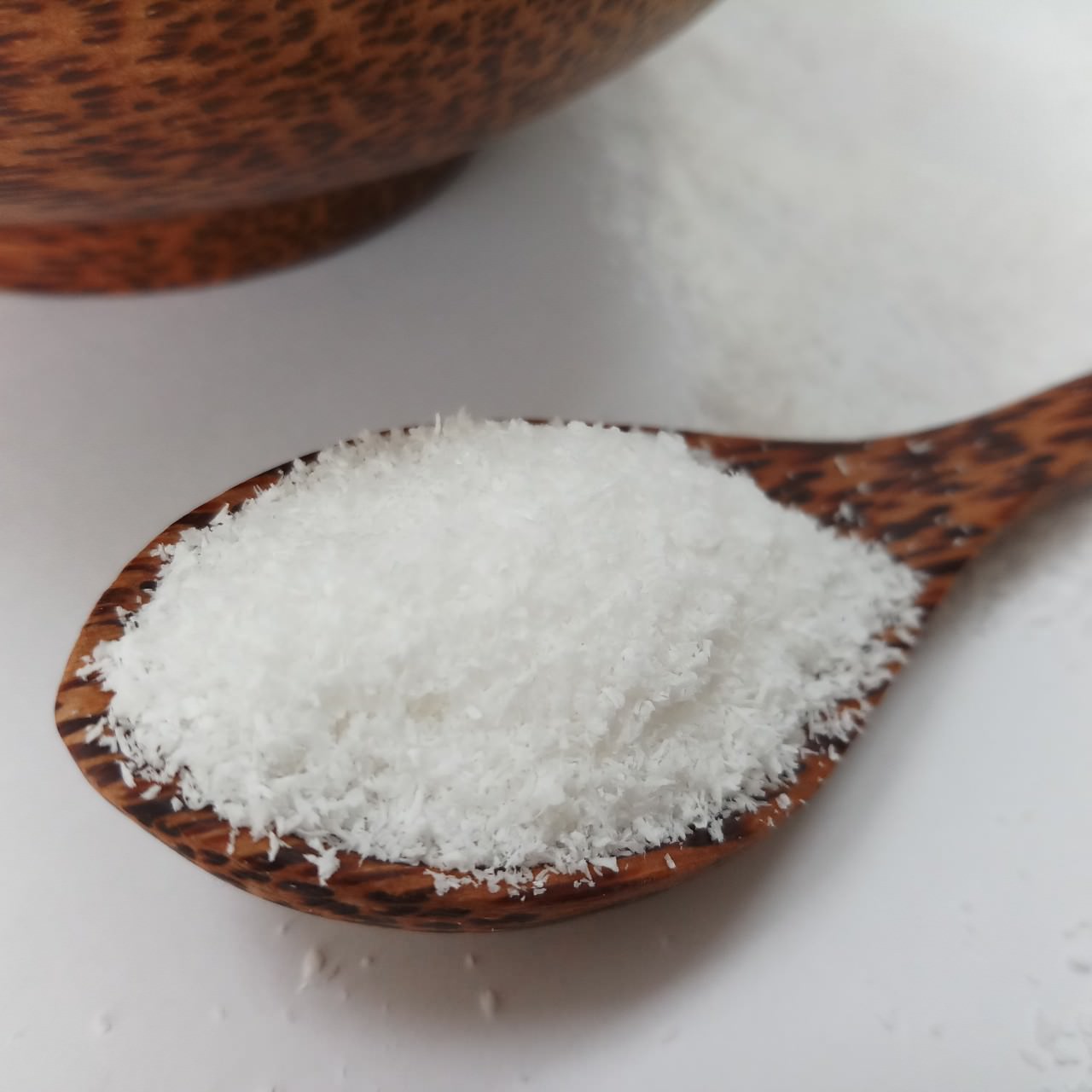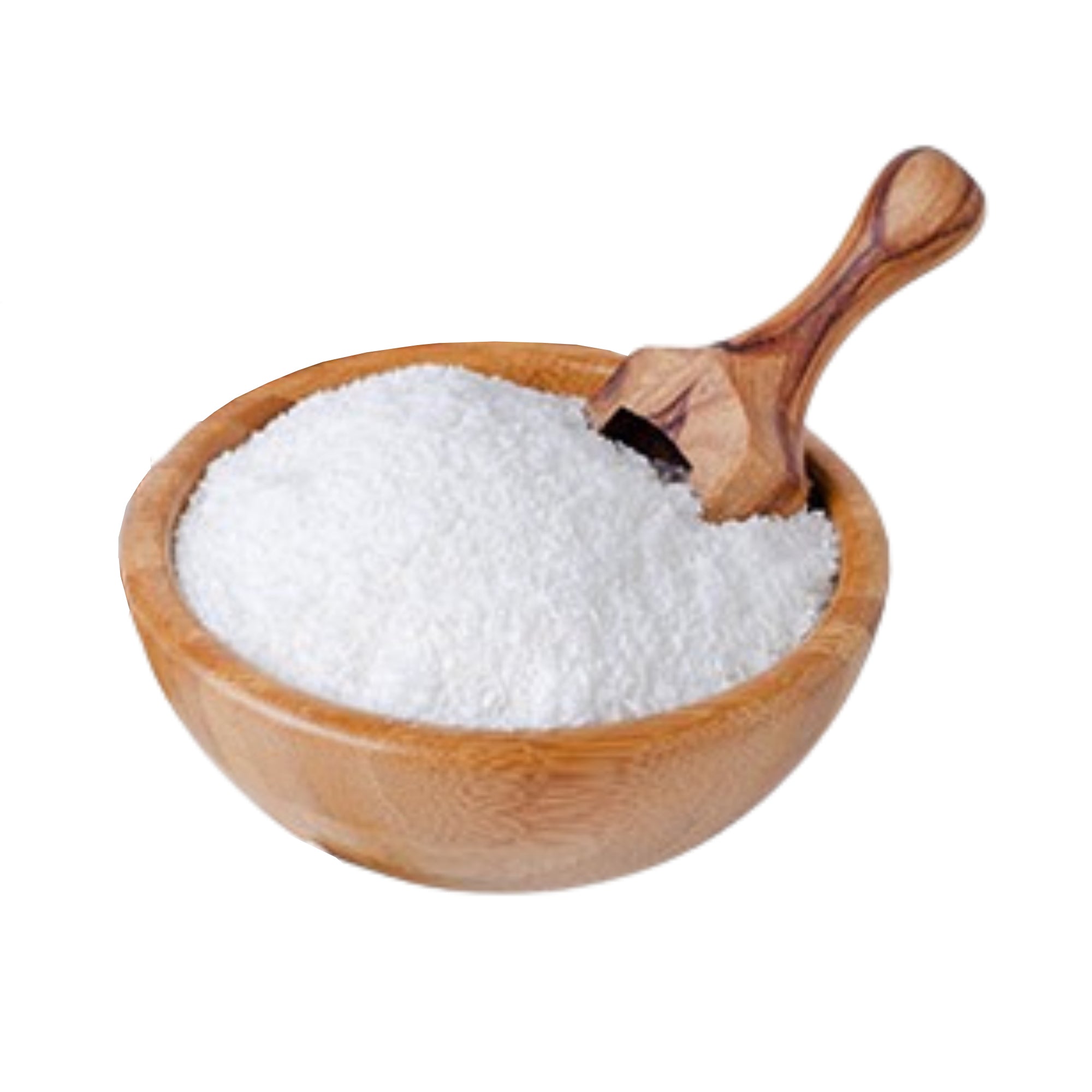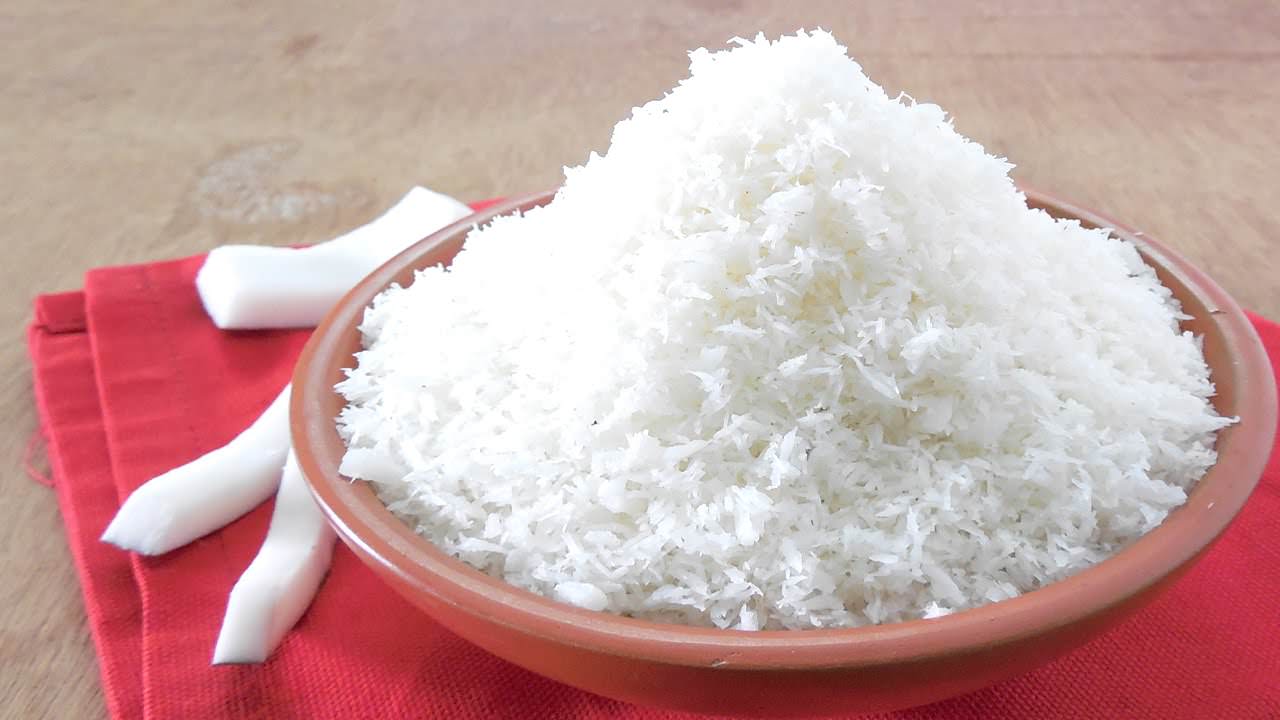
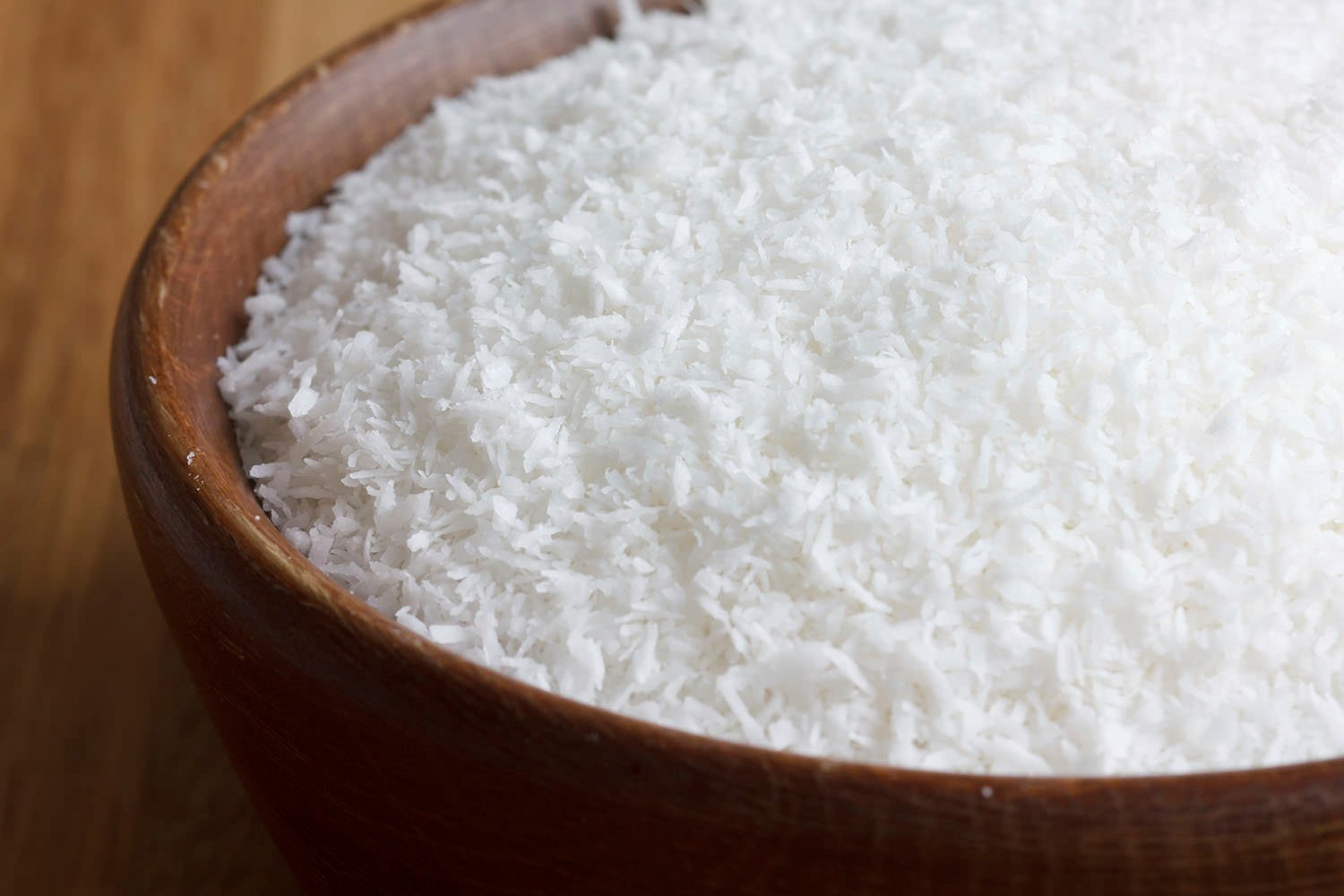
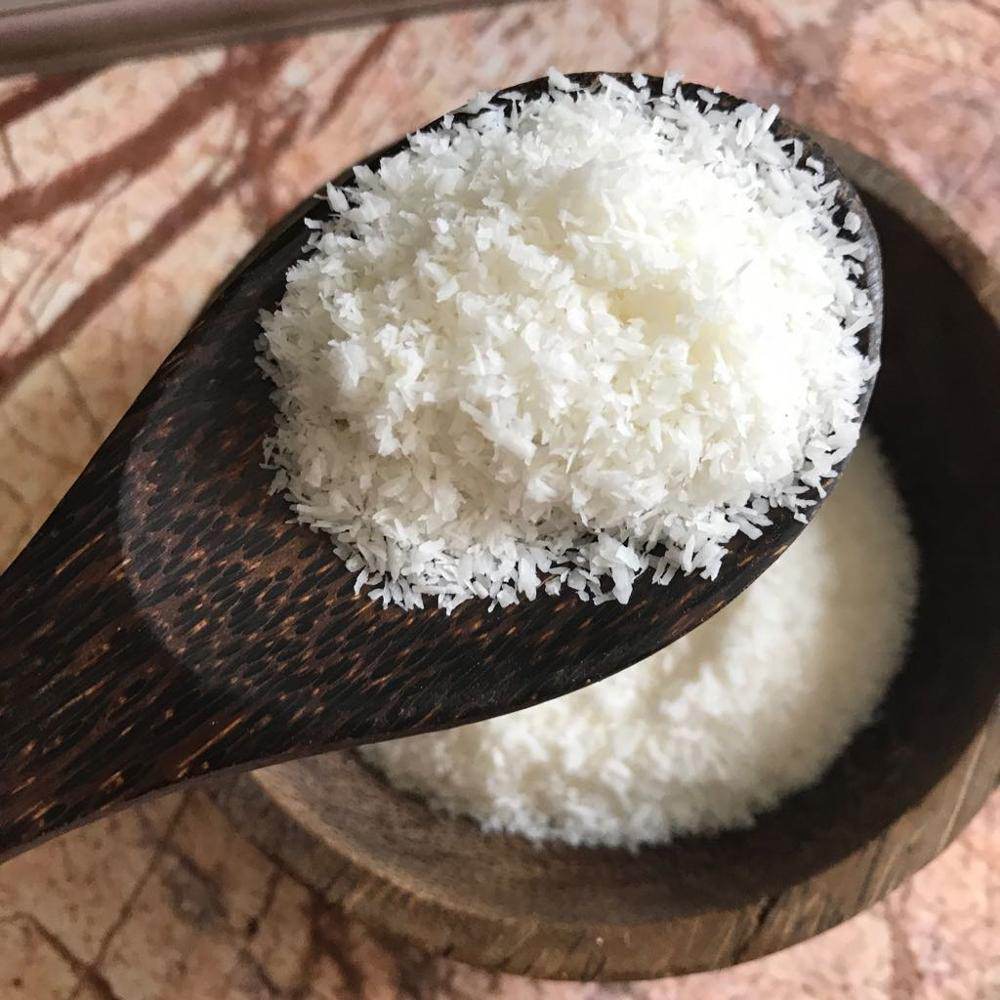
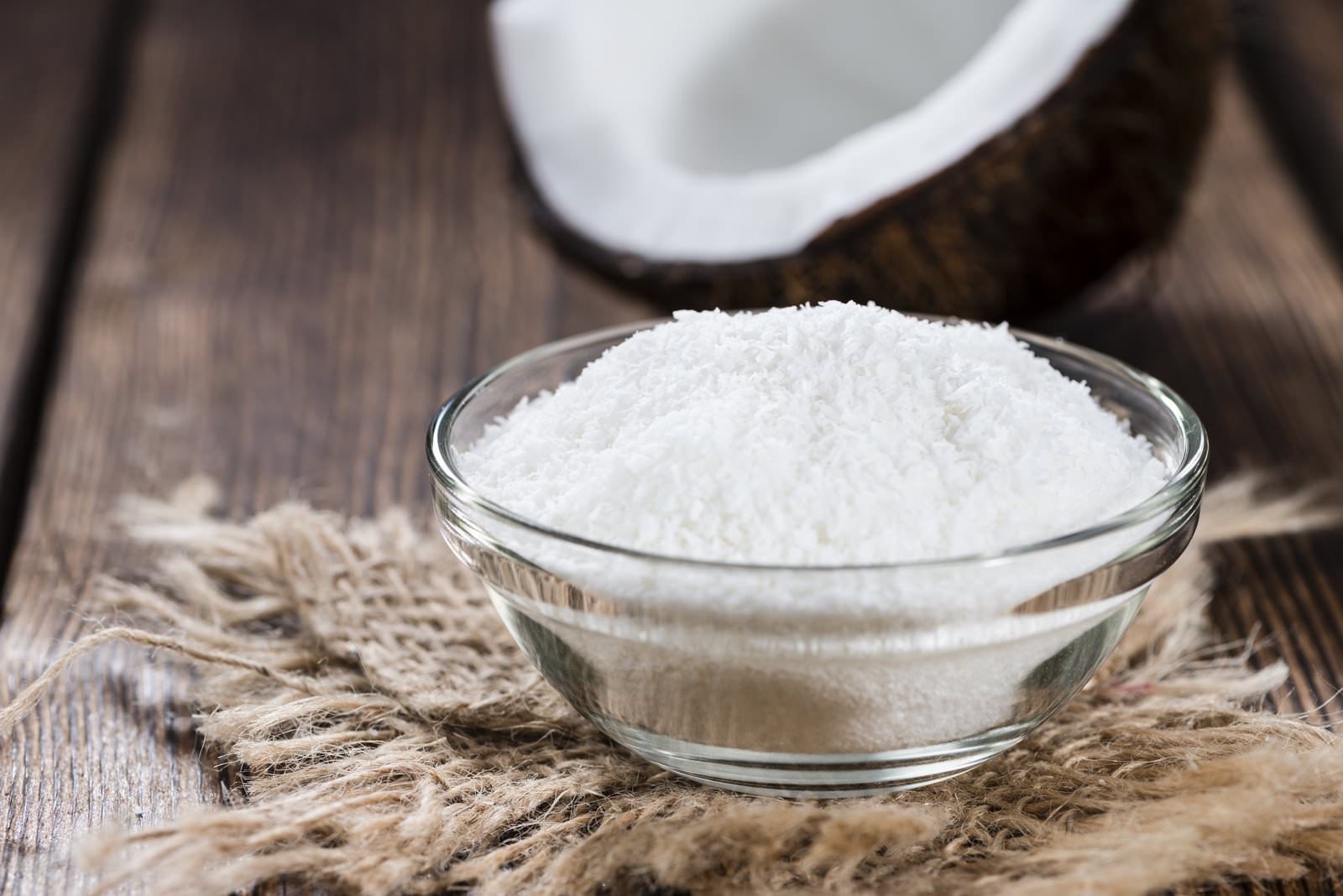
Desiccated coconut is one of Sri Lanka's oldest and most respected export commodities. Produced by removing the natural moisture from freshly grated coconut flesh, it transforms a perishable fruit into a shelf-stable ingredient prized by food manufacturers, home cooks, and confectioners worldwide. Ceylon Desiccated Coconut — the name drawn from Sri Lanka's former colonial designation — carries a reputation for consistently rich flavour, clean white colour, and rigorous quality standards that few producing countries can match.
What is Ceylon Desiccated Coconut and how is it made?
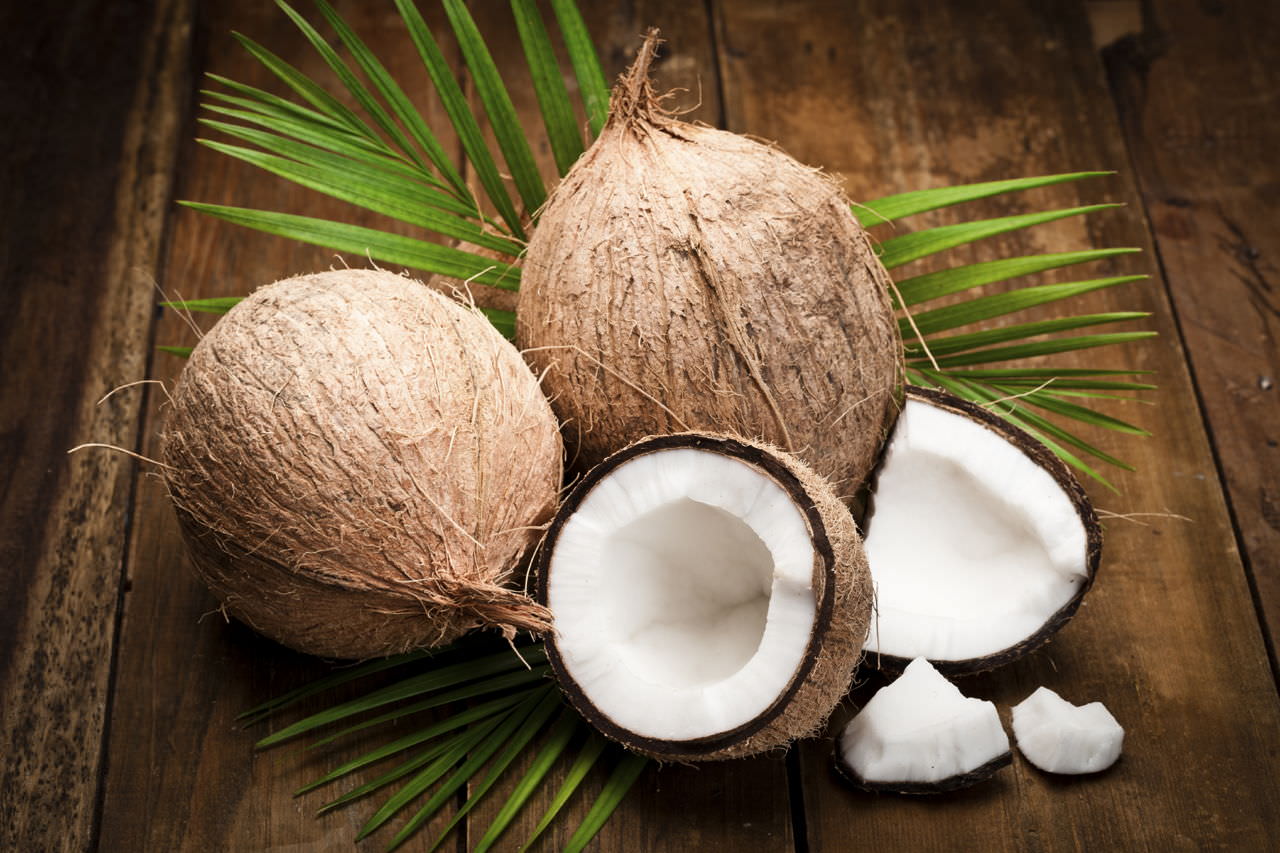
The process begins with mature coconuts harvested from Cocos nucifera palms — the tall, slender variety that thrives along Sri Lanka's coastal lowlands. Each nut is dehusked, its hard shell removed, and the brown skin carefully pared away to leave pure white kernel. That kernel is then grated and fed through industrial or semi-automated dryers that reduce moisture content to a level typically no higher than 3%, which inhibits bacterial growth and extends shelf life without any artificial preservatives or sulphur dioxide (SO₂) treatment.
One of the clearest indicators of how labour-intensive this product is: it takes roughly one thousand coconuts to yield approximately 100 kg of finished desiccated coconut. Dehusking, shelling, and paring are still largely carried out by hand in smaller mills, preserving traditional craft even as larger facilities adopt semi-automated lines for greater consistency.
What grades and cuts of desiccated coconut are available?
Ceylon Desiccated Coconut is produced in several particle sizes and fat levels to suit different applications:
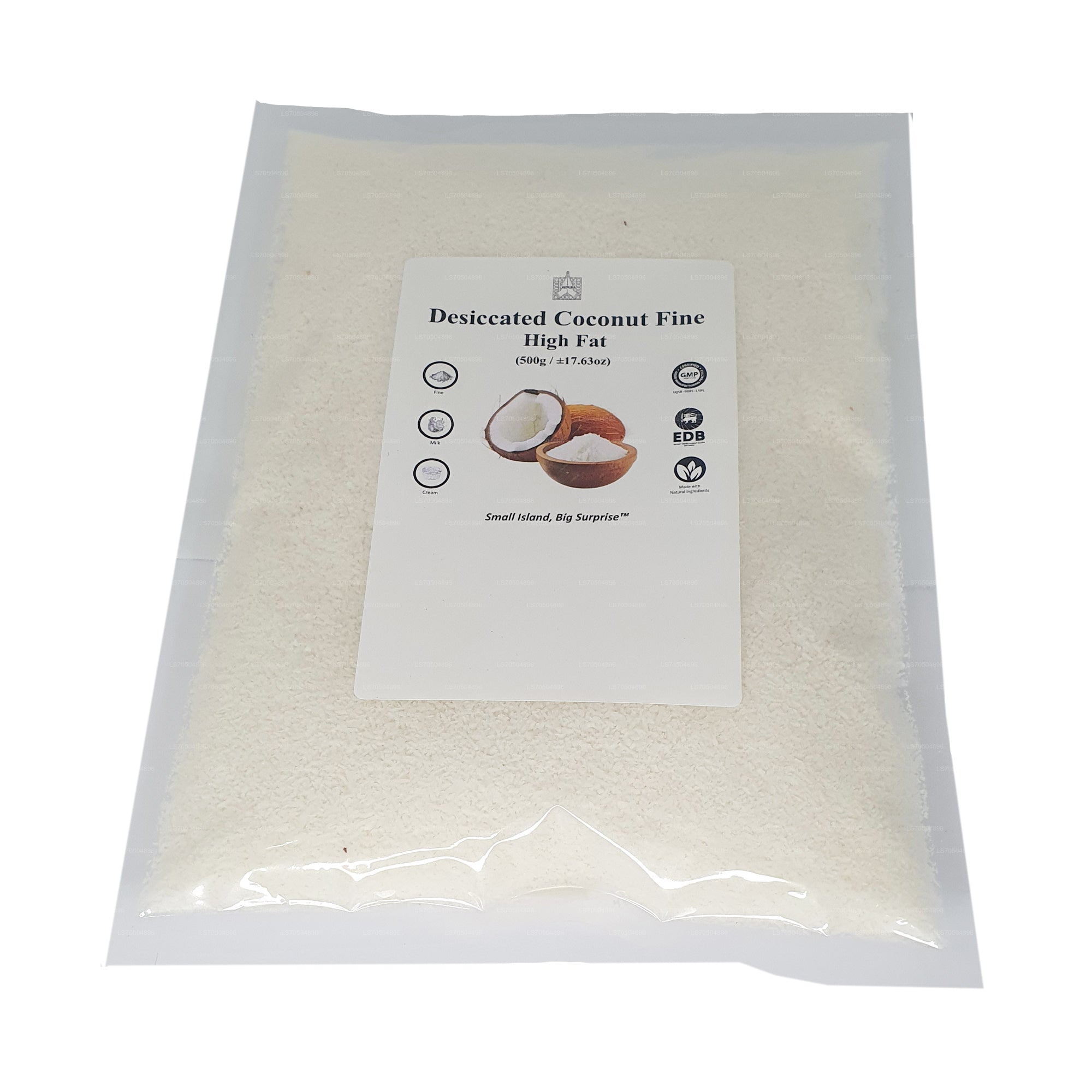
- Fine: Very small, powdery particles. Commonly used in biscuits, chocolate coatings, and moulded confectionery where a smooth texture is required.
- Medium: The most widely used grade. Suitable for cakes, cookies, muesli, and savoury dishes.
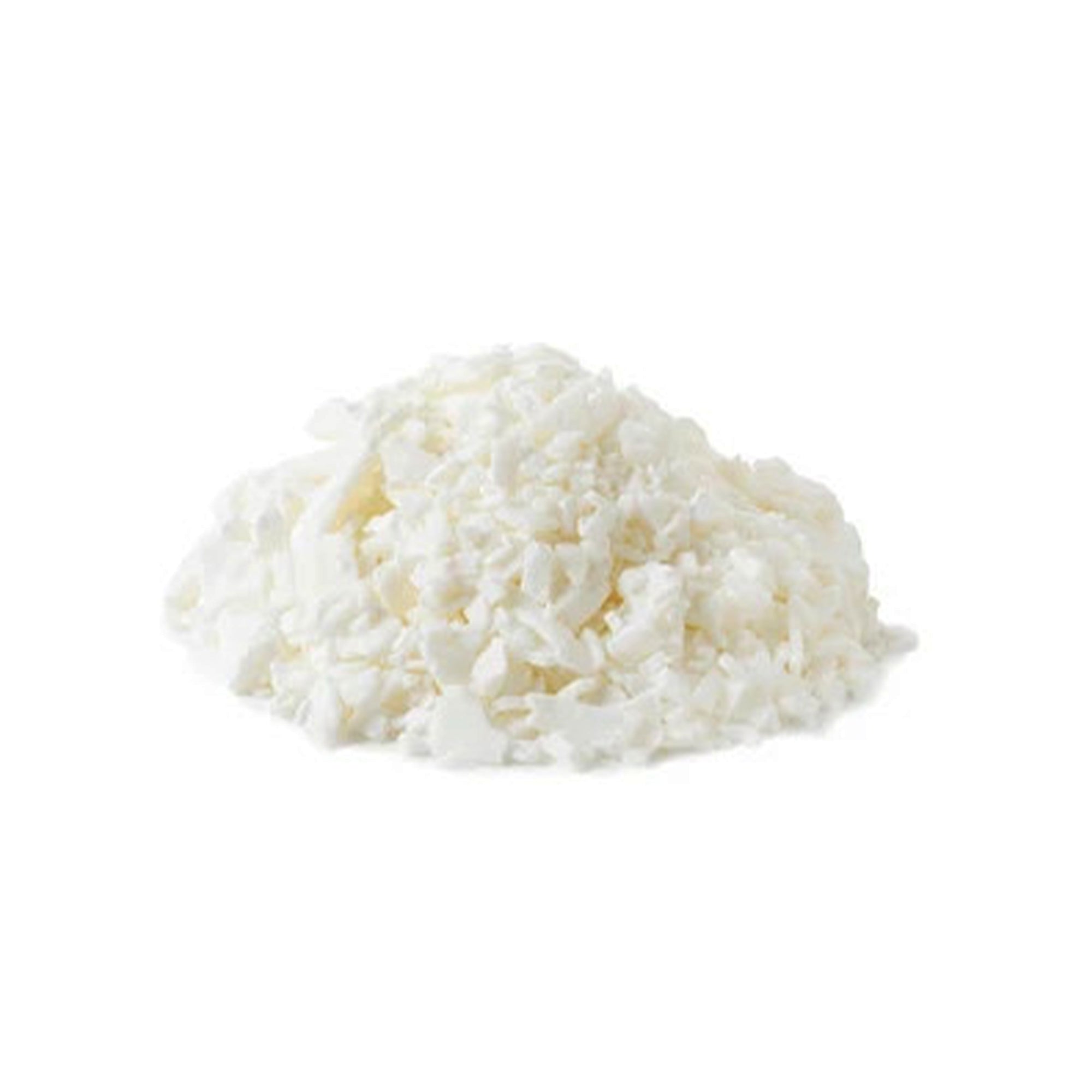
- Coarse / Thread / Chips: Larger shreds or flakes used as toppings, garnishes, and trail-mix ingredients.
Fat content is an equally important specification. High-fat desiccated coconut retains most of the natural coconut oil, giving richer flavour and a moist texture. Low-fat grades have had much of the oil pressed out, making them lower in calories and preferred for certain health-food and bakery applications where less greasiness is desired.
How does Ceylon Desiccated Coconut differ from coconut flour or flaked coconut?
These terms are often confused in supermarkets and recipe books. Desiccated coconut is dried grated coconut with its natural fat largely intact (in high-fat grades) or partially removed. Coconut flour, by contrast, is a by-product of coconut milk production — the dried, defatted pulp left after pressing — and has a much higher fibre content and absorbency. Flaked or shredded coconut (common in North American products) is typically sweetened and contains added moisture, making it unsuitable as a like-for-like substitute in recipes calling for Ceylon Desiccated Coconut.
What are the main culinary uses of desiccated coconut?
In Sri Lankan cuisine, desiccated coconut is an everyday staple. It is toasted and stirred through rice dishes, ground into coconut sambol, and blended into sweet confections such as coconut toffee and kokis. Internationally, it appears in lamington sponge cakes, German Bounty-style chocolate bars, macaroons, granola bars, and Thai curries. The medium-grade, high-fat variety is generally the default for home cooking; fine grades dominate industrial food manufacturing.
Beyond the kitchen, desiccated coconut is pressed to produce coconut oil, and spent coconut material finds use in animal feed and agricultural compost — making it a near-zero-waste ingredient in a well-managed supply chain.
Why is Sri Lanka considered a premium source?
Sri Lanka's coconut cultivation belt — a broad arc running through the North Western, Western, and Sabaragamuwa provinces — benefits from well-distributed rainfall, sandy loam soils, and centuries of agronomic knowledge. The country has maintained strict export quality standards through the Sri Lanka Coconut Development Authority, and Ceylon Desiccated Coconut produced for export must meet specifications covering moisture, fat content, particle size, microbiological limits, and freedom from artificial additives.
The absence of SO₂ treatment is a meaningful distinction. Sulphur dioxide is sometimes used in food processing as a preservative and whitening agent. Ceylon Desiccated Coconut achieves its characteristic clean white colour through careful selection of mature nuts and controlled drying — not chemical intervention. This makes it compatible with clean-label and organic product formulations that are increasingly demanded by European and North American food brands.
How should desiccated coconut be stored?
Stored in an airtight container away from direct sunlight and humidity, desiccated coconut will remain fresh for many months. Exposure to moisture is the main enemy: even a small amount of ambient humidity can raise water activity, encourage mould, and cause clumping. Commercially, bulk product is packed in moisture-barrier laminate bags or lined cartons. For home use, a sealed glass jar or resealable zip pouch kept in a cool cupboard is sufficient. Refrigeration is not necessary but can extend shelf life further in tropical climates.
What makes Lakpura's Ceylon Desiccated Coconut range reliable?
Lakpura sources and supplies Ceylon Desiccated Coconut through established Sri Lankan producers who adhere to food-safety and quality benchmarks aligned with international export standards. Products in the range contain no artificial preservatives, no added colouring, and are SO₂ free. Moisture content is held to 3% or below to ensure the long shelf life expected by both retail customers and foodservice buyers. Available grades include fine high-fat, medium high-fat, and medium low-fat options, allowing buyers to select the specification that fits their recipe or product brief precisely.
Sri Lanka's coconut industry sits alongside Ceylon black pepper and Ceylon tea as one of the island's most celebrated agricultural exports — a lineage that underpins both the quality culture and the international credibility behind the Ceylon label.
Related reading
2 pages on closely related subjects.