

Sri Lanka is one of the world's leading producers of coconut and coconut-derived products, and desiccated coconut is among its most widely exported ingredients. Made from the white meat of mature coconuts grown across the island's coconut triangle — the low-country districts of Kurunegala, Puttalam, and Gampaha — Sri Lankan desiccated coconut is valued by food manufacturers and home cooks alike for its clean flavour, consistent texture, and long shelf life.
How is desiccated coconut made?
The production process begins with freshly harvested mature coconuts. The outer husk and brown skin are removed, leaving the firm white kernel. This kernel is then blanched to arrest enzymatic activity, shredded or milled to the required cut size, and carefully dried in low-temperature ovens until the moisture content is reduced to around 3%. The result is an unsweetened, shelf-stable product that retains the natural flavour and aroma of fresh coconut without additives or preservatives.
Quality control at Sri Lankan processing facilities typically includes testing for moisture, fat content, free fatty acid levels, and microbial counts before export. This rigorous process is why Sri Lankan desiccated coconut consistently meets the specifications demanded by food-grade buyers across Europe, North America, and the Middle East.
What cuts and grades are available?
Desiccated coconut is produced in several cuts to suit different applications:
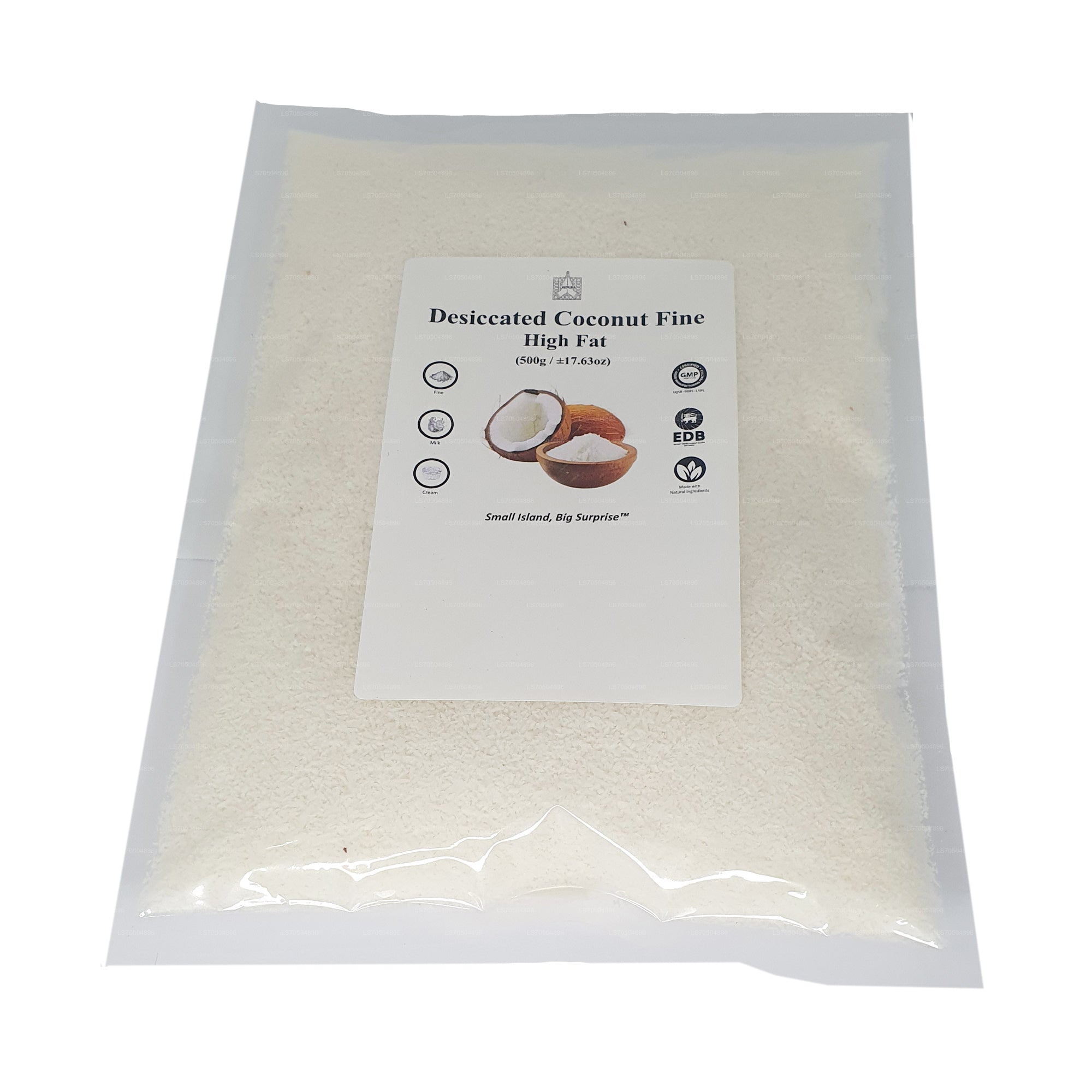
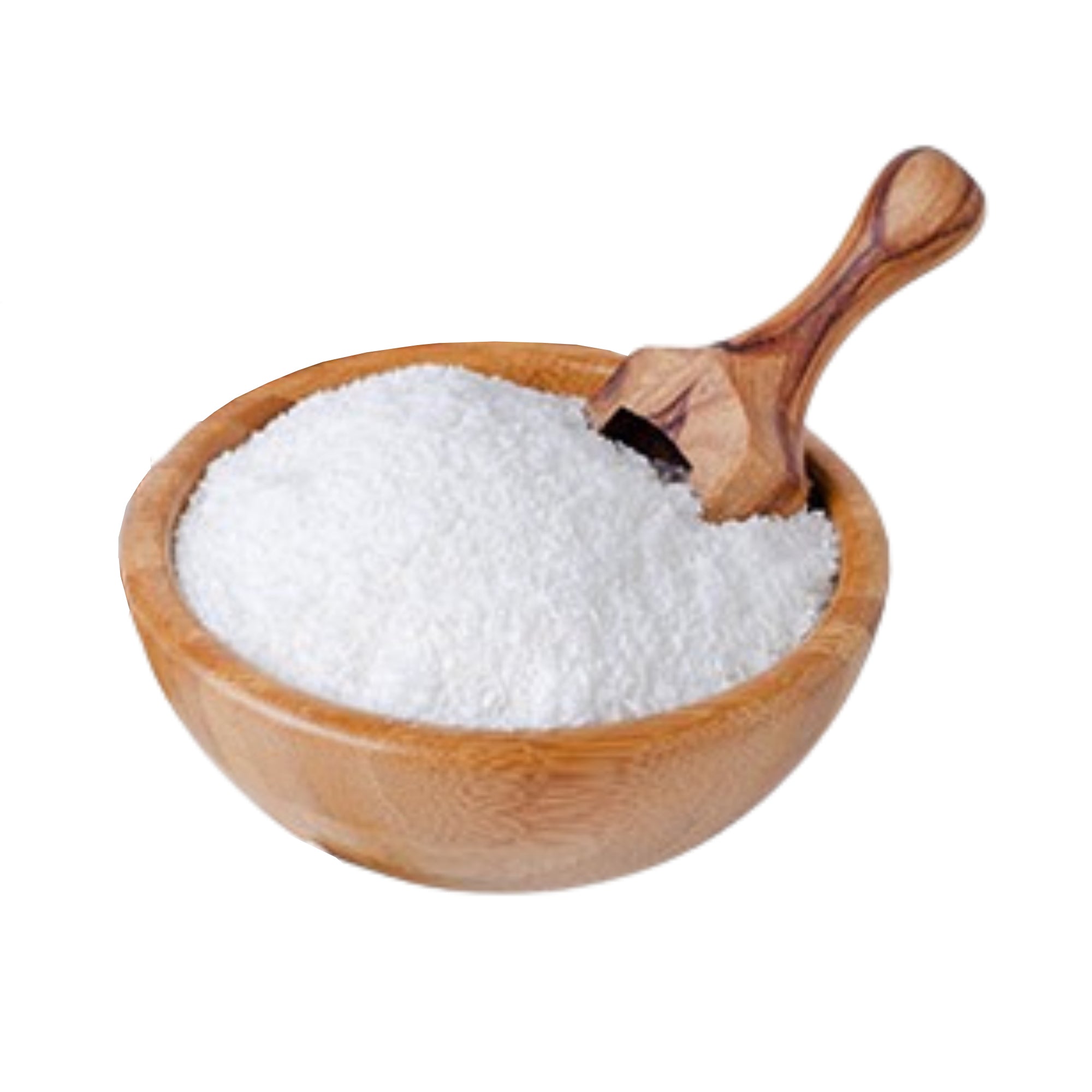
- Fine cut: A finely milled powder-like texture, ideal for coating confectionery, blending into doughs, and producing a smooth finish on cakes and pastries.
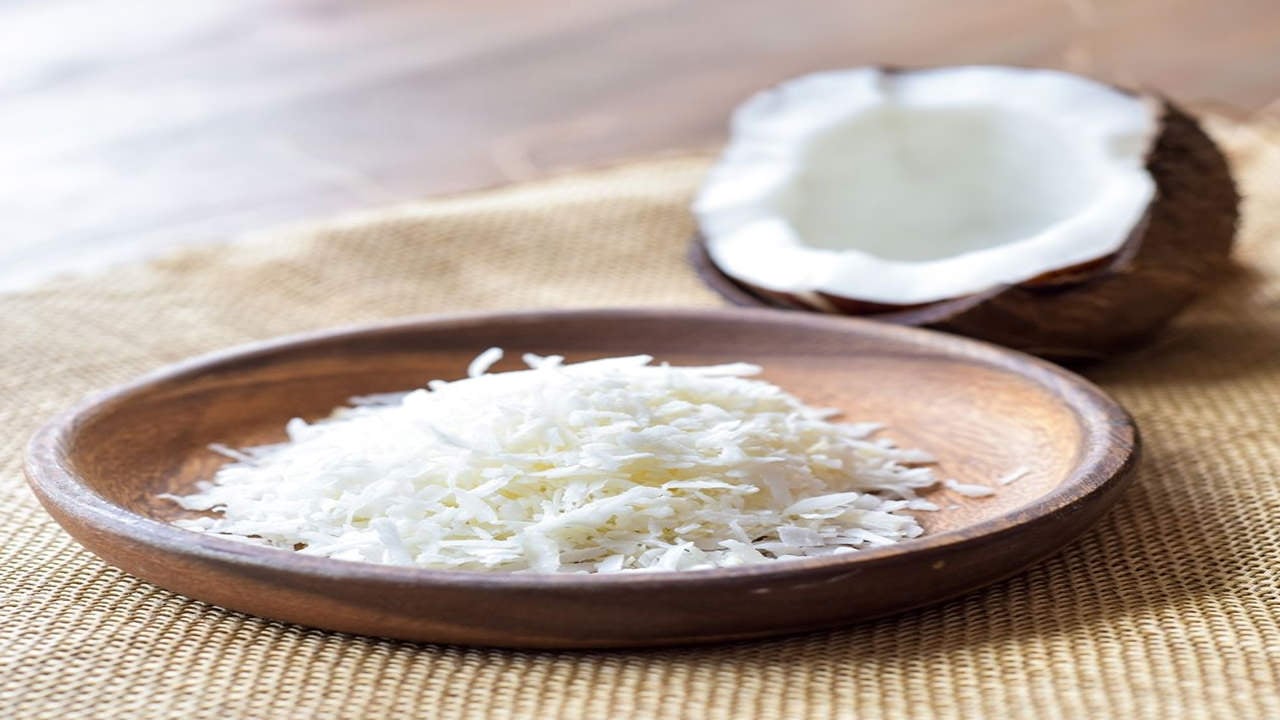
- Medium cut: A slightly coarser shred with more visible texture. Commonly used as a topping for baked goods, in granola bars, and in Asian and Middle Eastern desserts.
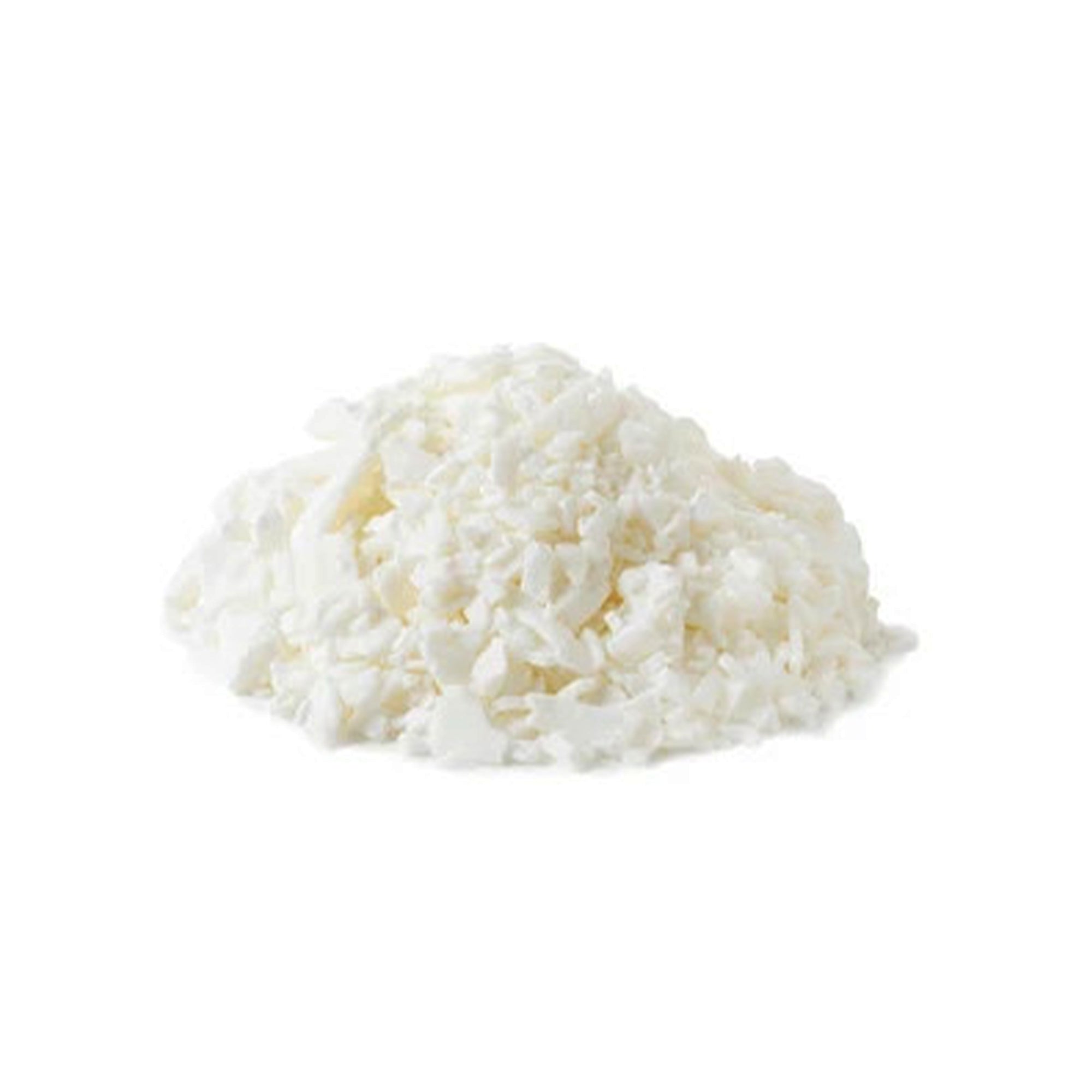
- Chips / flakes: Larger, irregular pieces that deliver a more pronounced chew and visual appeal. Often toasted and used as a snack ingredient or garnish.
Within each cut, product specifications divide further by fat content — high fat (typically 60–68% fat on a dry basis) and low fat (typically 50–55%), with the low-fat variant produced by partially pressing the coconut before drying. Organic-certified grades are also available, produced from coconuts grown without synthetic fertilisers or pesticides.
What are the common uses of desiccated coconut?
In commercial food manufacturing, desiccated coconut appears in chocolate bars, biscuits, flapjacks, energy bars, muesli, and cereal mixes. It acts simultaneously as a flavouring, a texturiser, and a fat source, making it a versatile functional ingredient.
In home cooking and pastry, it serves as a coating for truffles and lamingtons, a filling for macaroons, and a garnish for curries, rice dishes, and tropical desserts. In South and Southeast Asian cuisines, freshly grated or rehydrated desiccated coconut is a foundation ingredient in chutneys, sambol, and sweets such as Sri Lanka's own kokis and pani walalu.
Desiccated coconut can also be rehydrated by soaking briefly in warm water, partially recovering the texture of fresh grated coconut — a useful substitution when fresh coconut is not available.
What is the nutritional profile of desiccated coconut?
Desiccated coconut is energy-dense, with the bulk of its calories coming from fat. The saturated fat it contains is primarily composed of medium-chain fatty acids — notably lauric acid — which behave differently in the body compared with the long-chain saturated fats found in animal products. It contains no cholesterol.
Beyond fat, desiccated coconut provides dietary fibre, copper, manganese, and selenium. Selenium supports enzyme production and contributes to normal thyroid and immune function. Manganese plays a role in bone formation and carbohydrate metabolism. Because of its high fat and fibre content, desiccated coconut is calorie-rich in small quantities, so portions in processed foods are typically small — generally between 10 and 30 grams per serving.
How should desiccated coconut be stored?
An unopened pack stored in a cool, dry place away from direct sunlight will typically keep for 12 months or longer. Once opened, transfer to an airtight container and use within a few weeks for best flavour. Desiccated coconut absorbs moisture from the air readily, which can cause clumping and eventually turn the oils rancid. Refrigeration can extend shelf life after opening, particularly in humid climates.
What makes Sri Lankan desiccated coconut different?
Sri Lanka's tropical climate — consistent warmth, high humidity, and well-distributed rainfall — produces coconuts with a high oil content in the kernel, which translates directly to richer flavour and a higher fat yield in the finished product. Sri Lanka was among the earliest countries to export desiccated coconut commercially, and local processing expertise, built over more than a century, results in a product that is widely regarded as a benchmark for quality in international commodity markets.
The Sri Lanka Coconut Development Authority regulates and promotes coconut cultivation and processing across the industry, supporting quality standards from farm to export.
Fine vs. medium cut — which should you choose?
| Attribute | Fine Cut | Medium Cut |
|---|---|---|
| Texture | Powdery, soft | Slightly coarse, visible shreds |
| Best uses | Coatings, doughs, smooth fillings | Toppings, granola, bars, sambols |
| Mouth feel | Blends into background | Adds noticeable chew |
| Fat option | High fat | High fat or low fat |
Sourcing desiccated coconut from Lakpura
Lakpura sources desiccated coconut directly from Sri Lankan processors, offering both retail packs for individual buyers and bulk quantities for food businesses. Available options include fine and medium cuts in high-fat and low-fat grades, as well as organically certified product. Each batch is produced to food-export standards, and packing can be customised for private-label requirements. Whether you are looking for a small quantity to try at home or a consistent supply for commercial production, the range covers most specifications.
Related reading
2 pages on closely related subjects.