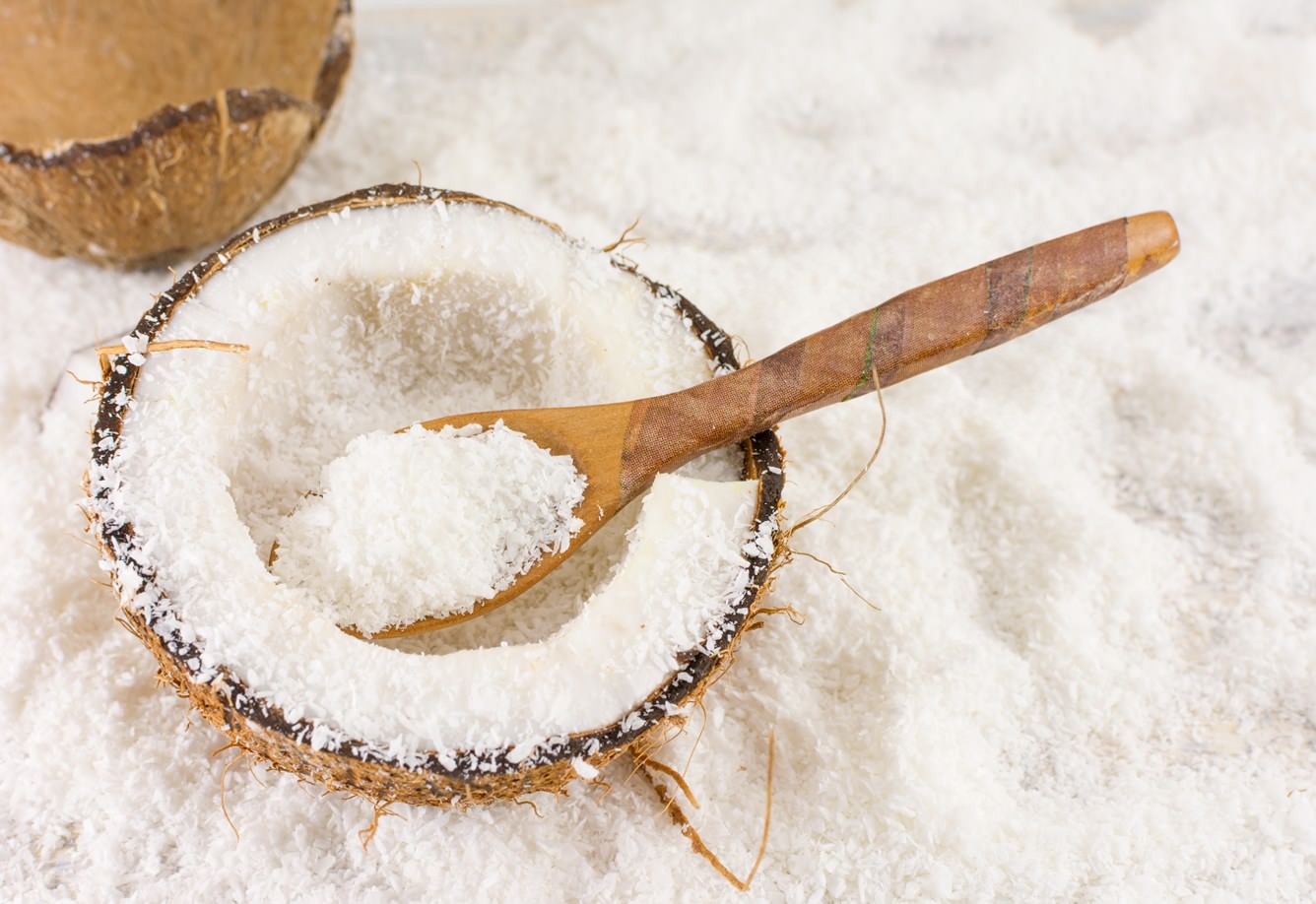


Desiccated coconut is one of Sri Lanka's most enduring export commodities, processed from the white kernel of the mature coconut palm (Cocos nucifera) and sold to food manufacturers, bakeries, confectioners, and home cooks across the world. What separates one batch from another is not simply freshness or origin — it is grade. Grade determines particle size, fat content, moisture level, and the texture a finished product will carry. Understanding these distinctions helps buyers choose the right specification and ensures consistent results in everything from a lamington coating to a coconut-cream filling.
What does "grade" mean for desiccated coconut?
Grading in desiccated coconut refers primarily to cutting size — how finely or coarsely the dried kernel is milled after the brown skin has been pared away. Secondary grading criteria include fat content (high-fat vs. low-fat) and, in some commercial specifications, colour and moisture level. The Sri Lanka Standards Institution (SLSI) defines these grades under national standards that align broadly with Codex Alimentarius guidelines for desiccated coconut.
All grades start from the same raw material: mature coconuts harvested typically between 11 and 12 months, husked, shelled, pared, washed, and then dried to a moisture content of around 3 percent or less before milling.
What are the main cutting grades of desiccated coconut?
The industry recognises several standard cuts, each suited to specific culinary or industrial applications. The table below summarises the most common grades you will encounter from Sri Lankan processors.
| Grade | Particle Description | Typical Use |
|---|---|---|
| Extra Fine | Very small, powdery particles; almost flour-like texture | Ice cream, chocolate fillings, flavoured coatings |
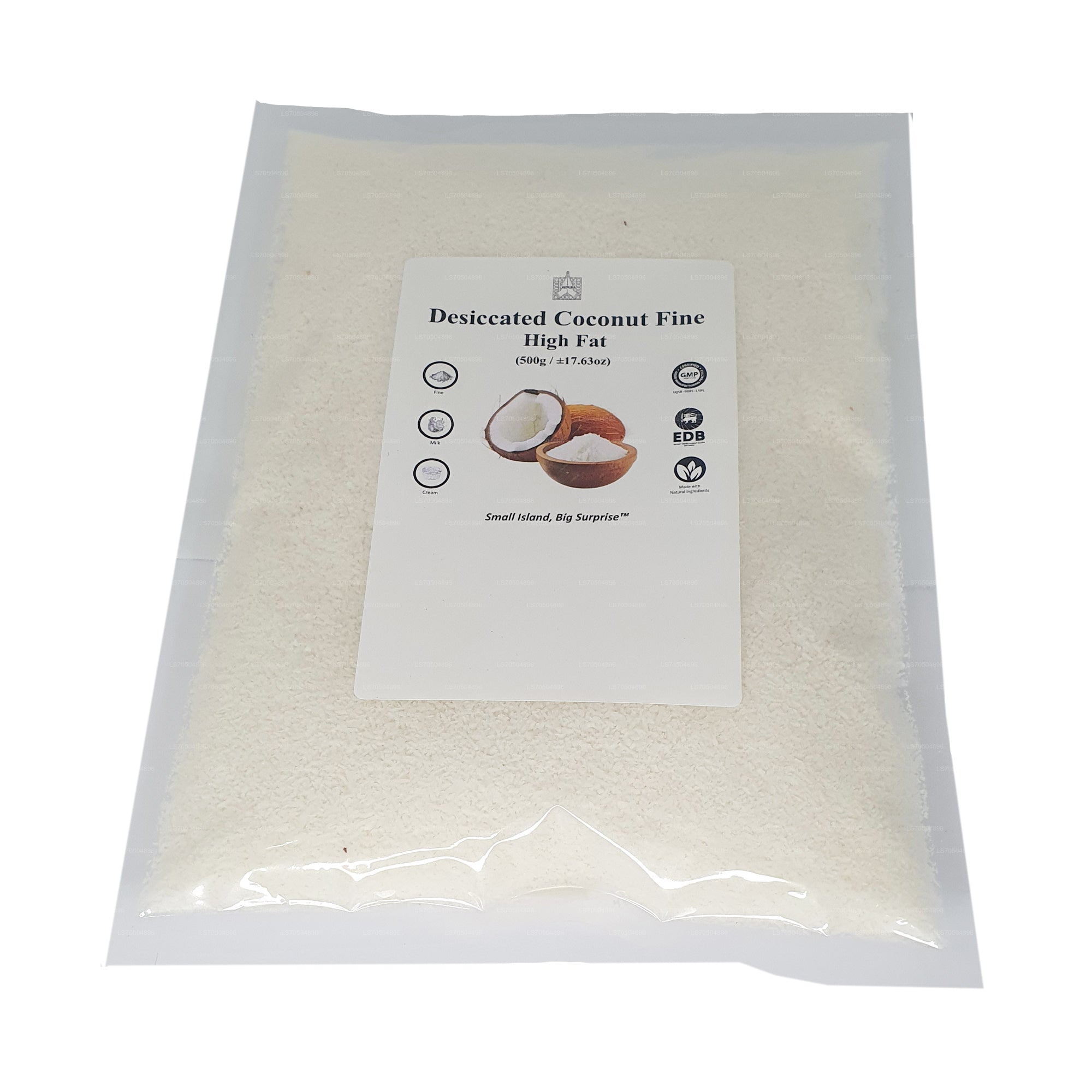
| Fine | Small, even particles; smooth, dry feel | Biscuits, cakes, confectionery, lamingtons |
| Medium | Mid-sized shreds; the most versatile cut | Granola bars, coconut macaroons, curry pastes |
| Coarse / Threads | Longer, ribbon-like strands | Decorative toppings, trail mixes, dessert garnishes |
| Chips / Flakes | Flat, irregular pieces; visible texture | Snack mixes, muesli, artisan baking |
| Shredded (long thread) | Extended strands, sometimes toasted | Specialty baking, tropical-themed confectionery |
Fine and medium grades together account for the largest share of Sri Lanka's desiccated coconut exports. Chip and flake grades have grown in popularity as the artisan baking and health-snack markets have expanded.
What is the difference between high-fat and low-fat desiccated coconut?
Fat content is the second major axis of classification. High-fat desiccated coconut retains the natural oil of the kernel — typically around 60–68 percent fat on a dry-weight basis — which gives it a richer flavour and a slightly moist, clumping texture. It is the preferred choice for traditional confectionery where coconut flavour intensity matters.
Low-fat desiccated coconut is partially defatted after drying, reducing fat content to roughly 45–50 percent or lower depending on the specification. This grade is lighter, freer-flowing, and more shelf-stable, making it the standard choice for industrial food production lines where controlled fat levels are required.
Lakpura stocks both variants in medium cut — the export-quality benchmark most international buyers request — allowing buyers to compare both fat profiles in the same particle size before committing to larger volumes.
How is Ceylon desiccated coconut processed and quality-controlled?
Sri Lankan processors follow a tightly controlled production chain. After paring, the white kernel is mechanically rasped into the target particle size, then dried in tunnel or tray dryers to bring moisture below 3 percent — an important threshold for shelf stability and microbial safety. The dried product is sieved to remove particles outside specification, passed through metal detection, and packed into food-grade polythene-lined sacks or, for retail, into sealed consumer pouches.
Reputable Sri Lankan exporters hold HACCP, ISO 22000, and often organic or fair-trade certifications. Some operations also comply with BRC or SQF food-safety standards required by major European and North American retail chains.
Why does Sri Lanka produce some of the world's best desiccated coconut?
The Sri Lankan coconut belt — a coastal and low-country zone spanning the Western, North Western, and Southern provinces — benefits from deep sandy loam soils, consistent rainfall, and a growing season calibrated by centuries of smallholder cultivation. Varieties such as Sri Lanka Tall and the Dwarf hybrids developed by the Coconut Research Institute in Lunuwila produce kernels with high fat content and well-balanced sweetness, qualities that translate directly into the flavour profile of finished desiccated coconut.
Sri Lanka has been exporting desiccated coconut commercially since the late 19th century, giving local processors a depth of technical expertise that few other origins can match. The Ceylon brand still carries weight in European and Middle Eastern food manufacturing, where buyers associate it with consistent particle size, clean colour, and reliable microbiological standards.
Which grade should I choose for baking and cooking?
For home baking — cookies, slices, cakes, and dessert toppings — fine or medium high-fat is the most practical starting point. It disperses evenly through batters and doughs and delivers the characteristic coconut flavour without leaving coarse texture. For decorative purposes such as rolling truffles or finishing a cake exterior, a coarse or thread grade gives better visual definition. For health-focused snacks or granola, medium or chip grade low-fat works well because the lower oil content prevents clumping during mixing.
In Sri Lankan home cooking, freshly grated coconut is almost always preferred over desiccated, but desiccated coconut is widely used as a pantry shortcut in sambol, coconut roti, and milk-based curries when fresh coconuts are not immediately available.
How should desiccated coconut be stored?
Once opened, all grades should be stored in an airtight container away from direct sunlight and heat. High-fat grades are more susceptible to rancidity because of their elevated oil content; a cool, dry pantry extends shelf life to several months. Low-fat grades are marginally more forgiving. Refrigeration is not necessary under normal conditions but can extend freshness in humid tropical climates. Freezing is an option for bulk quantities — the product thaws without textural degradation.
Related reading
2 pages on closely related subjects.