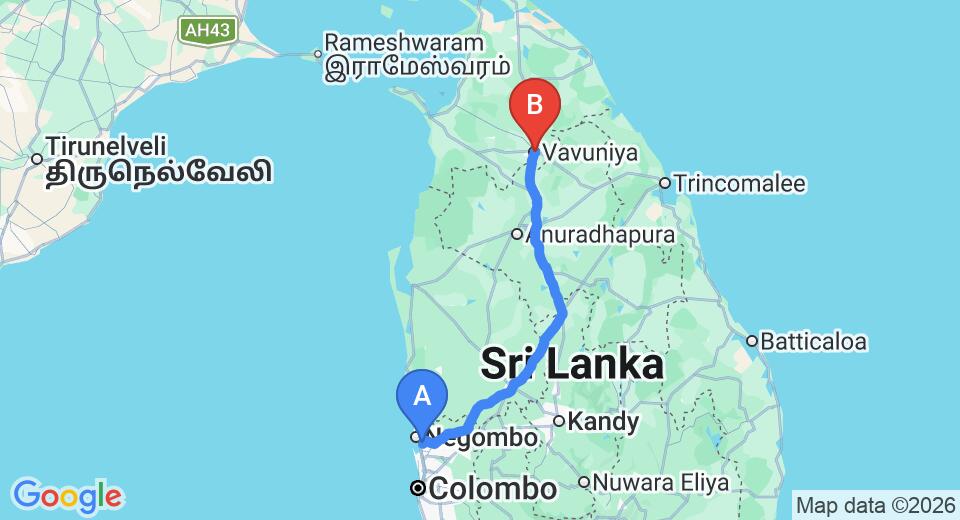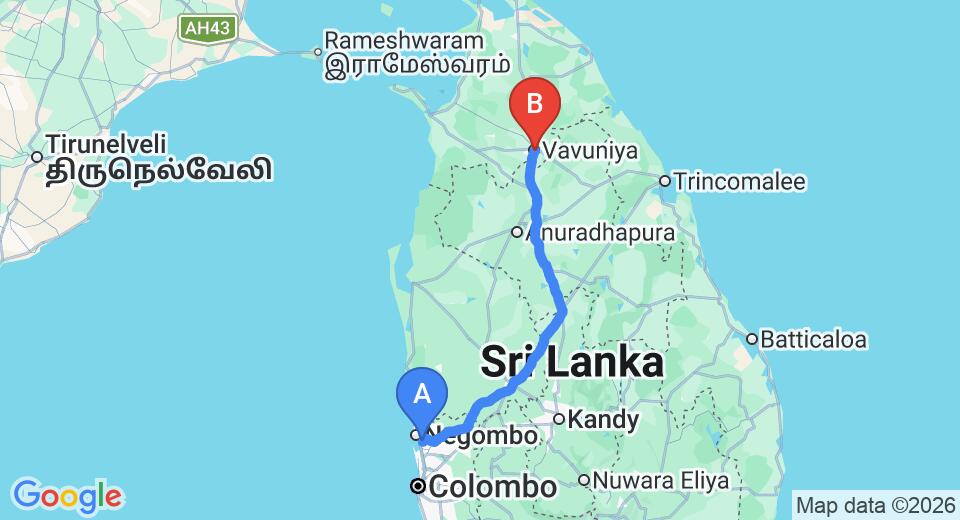
Vavuniya sits at a geographic and historical crossroads in Sri Lanka's Northern Province. As the principal town of Vavuniya District and the effective entry point to the Vanni region, it connects the south of the island to the far north — and for travellers heading to Jaffna, Mannar, or Kilinochchi, the city is a natural first stop. After decades marked by the country's civil conflict, Vavuniya has steadily rebuilt its civic life and is now a functional, hospitable base for exploring this historically layered part of Sri Lanka.
Where exactly is Vavuniya, and how do I get there?
Vavuniya lies roughly in the middle of the island's northern half, around 250 kilometres north of Colombo along the A9 highway — the Kandy–Jaffna road that cuts through the Vanni. The city is served by the Northern Railway Line, which runs from Colombo Fort station through Anuradhapura and on to Kankesanthurai near Jaffna. For much of the civil war era, Vavuniya was the northern terminus of that line; trains now run all the way to the peninsula, but the station remains a busy interchange point.
Road travellers arriving from Colombo typically pass through Wilpattu National Park territory in the west or through Anuradhapura in the north-central region. The drive from Colombo takes roughly four to five hours depending on traffic. Vavuniya also has a domestic airport that doubles as an air force base, though scheduled civilian flights are limited — check current availability before planning an air connection.
What is there to see and do in Vavuniya?
Vavuniya is not a conventional tourist destination packed with monuments, but it rewards curious travellers who take time to look beneath the surface. The city's identity is shaped by its multicultural population — Sinhalese, Tamil, and Muslim communities have coexisted here for generations — and its strategic role as the northern gateway lends it a distinct, frontier-town energy.
Vavuniya Archaeological Museum
The most significant cultural institution in the city is the Regional Archaeological Museum, established and operated by the Department of Archaeology of Sri Lanka. The museum houses artefacts recovered from excavations in Vavuniya District and the surrounding Vanni region, including terracotta figurines, ancient coins, inscribed stones, and objects that speak to the area's connections with early South Asian trade networks. It offers one of the few organised windows into the pre-medieval archaeology of the north-central interior — a region that remains relatively under-excavated compared to the ancient cities further south.
Exploring the Vanni Hinterland
Beyond the town itself, the countryside around Vavuniya holds scattered tank reservoirs, paddy landscapes, and forest patches characteristic of the dry zone. The ancient hydraulic civilisation that built the great reservoirs at Polonnaruwa extended its influence northward, and smaller irrigation tanks dot the district. Birdwatchers find the scrub jungle and tank margins productive, particularly during the northern winter months when migratory species supplement the resident population.
Places of Worship
Vavuniya's multicultural fabric is visible in its religious landscape. Hindu kovils serving the Tamil community stand alongside Buddhist temples and mosques. The Kandaswamy Kovil is among the better-known Hindu shrines in the area. These sites are active places of worship, so visitors are expected to dress modestly and behave respectfully — shoes off at the entrance is standard practice at both kovils and temples.
What is the best time to visit Vavuniya?
Vavuniya falls within Sri Lanka's dry zone, which means it receives less rainfall than the wet zone hill country or the southwest coast. The northeast monsoon, active roughly from October to January, brings some rain to this region. The driest and most comfortable months for travel are generally February through August, when daytime temperatures are warm but manageable. If you are planning an extended northern circuit, aligning your Vavuniya stop with the dry season makes logistics easier, particularly if you intend to venture into rural areas on unsealed roads.
How does Vavuniya fit into a wider Sri Lanka itinerary?
Most travellers pass through Vavuniya as a waypoint rather than a destination in itself, and there is nothing wrong with that — the city is well set up for an overnight stop or a half-day exploration before pushing north to Kilinochchi, Mannar, or Jaffna. Heading south, the ancient sacred city of Anuradhapura is roughly an hour away, making it straightforward to combine both on a northern loop. The journey between the deep south and the far north — by train especially — passes through Vavuniya and offers a compelling sense of the island's geographic and cultural range.
Travellers with a particular interest in wildlife can detour west toward Wilpattu, Sri Lanka's largest national park, which lies within a few hours' drive and is accessible from the A12 road running through Anuradhapura. Wilpattu is known for its villus — natural, saucer-shaped lakes — and supports healthy populations of leopard, sloth bear, and elephant.
What practical things do I need to know about Vavuniya?
- Language: Tamil is the dominant language in Vavuniya; Sinhala and English are also understood in most hotels and government offices.
- Currency: Sri Lankan rupees are the only currency accepted in local transactions. ATMs are available in the town centre.
- Connectivity: Mobile data coverage from major Sri Lankan networks is generally reliable in Vavuniya town.
- Accommodation: The city has a range of guesthouses and mid-range hotels. Standards are improving but do not yet match what you would find in Colombo or Kandy.
- Food: Tamil cuisine dominates — expect rice and curry with strong South Indian influences, hoppers, and kottu. Street food near the market is worth exploring.
- Safety: Vavuniya is safe for tourists. The legacy of conflict is visible in memorial sites and infrastructure, but the city functions normally and locals are generally welcoming of visitors.
What transport options connect Vavuniya to the rest of Sri Lanka?
The Northern Railway Line offers one of the most scenic and comfortable ways to travel between Colombo and the north. Intercity express trains stop at Vavuniya, and the journey from Colombo Fort takes around five to six hours. Air-conditioned carriages are available on the better services, and booking in advance is strongly recommended during holiday periods. Long-distance buses operate frequently along the A9 highway and are a cheaper if less comfortable alternative. For flexibility, a private transfer from Colombo — particularly from the airport — removes the need to navigate intercity transport with luggage.