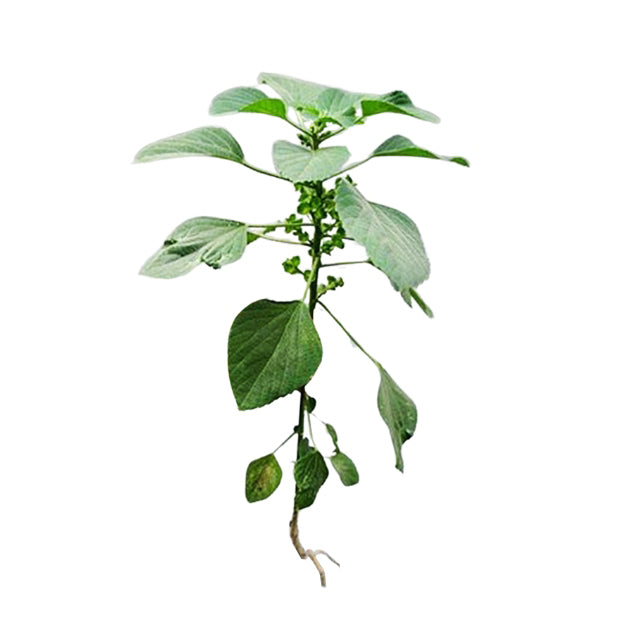




Stachytarpheta indica, commonly known as Indian snakeweed or bastard vervain, is a flowering herbaceous plant long recognised within Sri Lanka's ayurvedic and traditional medicinal traditions. Found growing across roadsides, disturbed land, and forest margins throughout the island, it may appear at first glance like an unremarkable weed — yet its documented therapeutic applications span centuries of South and Southeast Asian herbal practice.
What is Stachytarpheta indica?
Stachytarpheta indica belongs to the family Verbenaceae. It is a perennial herb that typically grows up to around one metre in height, producing slender, erect spikes of small blue-purple flowers. The plant is pantropical in distribution, occurring across Sri Lanka, India, Southeast Asia, and parts of Africa, but it has been particularly well catalogued within Sri Lanka's rich inventory of ayurvedic medicinal plants.
The leaves are rough-textured, ovate, and prominently toothed along the margins — a feature that makes the plant relatively easy to identify in the field. Its long, whip-like flower spikes, which bloom sequentially from base to tip, are characteristic of the genus.
What are the traditional medicinal uses of Stachytarpheta indica?
In Sri Lankan ayurvedic practice, Stachytarpheta indica has been applied across a range of conditions. Traditional practitioners have used preparations made from its leaves, stems, and roots, typically in the form of decoctions, poultices, or expressed juice.
- Anti-inflammatory use: Leaf poultices have historically been applied to swellings, wounds, and skin conditions to reduce inflammation.
- Fever management: Decoctions from the plant are noted in traditional texts as febrifugal — used to bring down elevated body temperature.
- Gastrointestinal support: The plant has been employed to ease digestive complaints, including stomach pain and intestinal worms.
- Pain relief: Topical applications are recorded as analgesic, particularly for joint and muscular pain.
- Wound healing: Fresh leaf juice has been used as an antiseptic application on minor cuts and abrasions.
It is worth noting that while these uses are well-documented in ethnobotanical literature, any therapeutic application should be undertaken under the guidance of a qualified ayurvedic or medical practitioner.
How does Stachytarpheta indica fit into Sri Lanka's ayurvedic tradition?
Sri Lanka's rich biodiversity has long supported one of the world's most detailed traditions of plant-based medicine. The island's ayurvedic system, which draws from ancient Sanskrit texts as well as indigenous Sinhala medical manuscripts known as ola leaf books, catalogues hundreds of plant species with specific therapeutic designations. Stachytarpheta indica holds a recognised place within this canon, classified according to its dominant qualities and medicinal actions.
Alongside better-known ayurvedic plants such as Pongamia pinnata and Acacia chundra, Stachytarpheta indica represents the depth and diversity of Sri Lanka's herbal pharmacopoeia. The integration of such plants into formalised ayurvedic compounds — including classical preparations like Yogaraja Guggulu — reflects the systematic nature of this healing tradition.
Where does Stachytarpheta indica grow in Sri Lanka?
The plant is widely distributed across Sri Lanka's low to mid-elevation zones. It is commonly found in the island's dry and intermediate climatic zones, favouring disturbed habitats such as roadsides, abandoned agricultural land, and the margins of cultivated fields. It is less prevalent in dense closed-canopy forest environments and at higher elevations.
Its tolerance for poor soils and its ability to colonise disturbed ground make it a resilient and adaptable species — characteristics that have likely contributed to its long availability as a locally sourced medicinal resource across the island's rural communities.
What do scientific studies say about Stachytarpheta indica?
Modern phytochemical research has begun to investigate the biological basis for the plant's traditional uses. Studies have identified the presence of bioactive constituents including iridoid glycosides, flavonoids, and alkaloids, which may account for reported anti-inflammatory, antimicrobial, and analgesic properties. Research published in ethnobotanical and pharmacognosy journals has noted activity against certain bacterial strains and suggested antioxidant potential in plant extracts.
However, large-scale clinical trials in humans remain limited, and the scientific investigation of this species is still at a relatively early stage compared to more extensively studied medicinal plants. Ethnobotanical databases maintained by institutions such as the Royal Botanic Gardens, Kew, continue to document its traditional applications across its range.
How is Stachytarpheta indica related to other plants in Sri Lanka's herbal catalogue?
Sri Lanka's ayurvedic materia medica encompasses an extraordinary range of species, from large timber trees to modest roadside herbs like Stachytarpheta indica. The plant shares a role within this system with other well-documented species, each contributing distinct therapeutic properties. Practitioners skilled in traditional formulation draw on this diversity to create compound remedies tailored to individual patient needs.
The broader tradition also intersects with Sri Lanka's spice heritage — plants such as Syzygium aromaticum (clove) and Ceylon black pepper carry both culinary and medicinal significance, illustrating how Sri Lanka's botanical richness has historically served both the kitchen and the dispensary.
Is Stachytarpheta indica safe to use?
As with any plant used medicinally, appropriate dosage, preparation method, and individual health context all matter significantly. Traditional ayurvedic systems prescribe such plants within carefully calibrated formulas, rarely as isolated single-herb treatments. Self-medication using plants identified from field sources is not advisable without professional guidance.
Pregnant or breastfeeding individuals, those on pharmaceutical medications, and anyone with underlying health conditions should consult a qualified ayurvedic physician or general practitioner before using any herbal preparation derived from this or related species.