


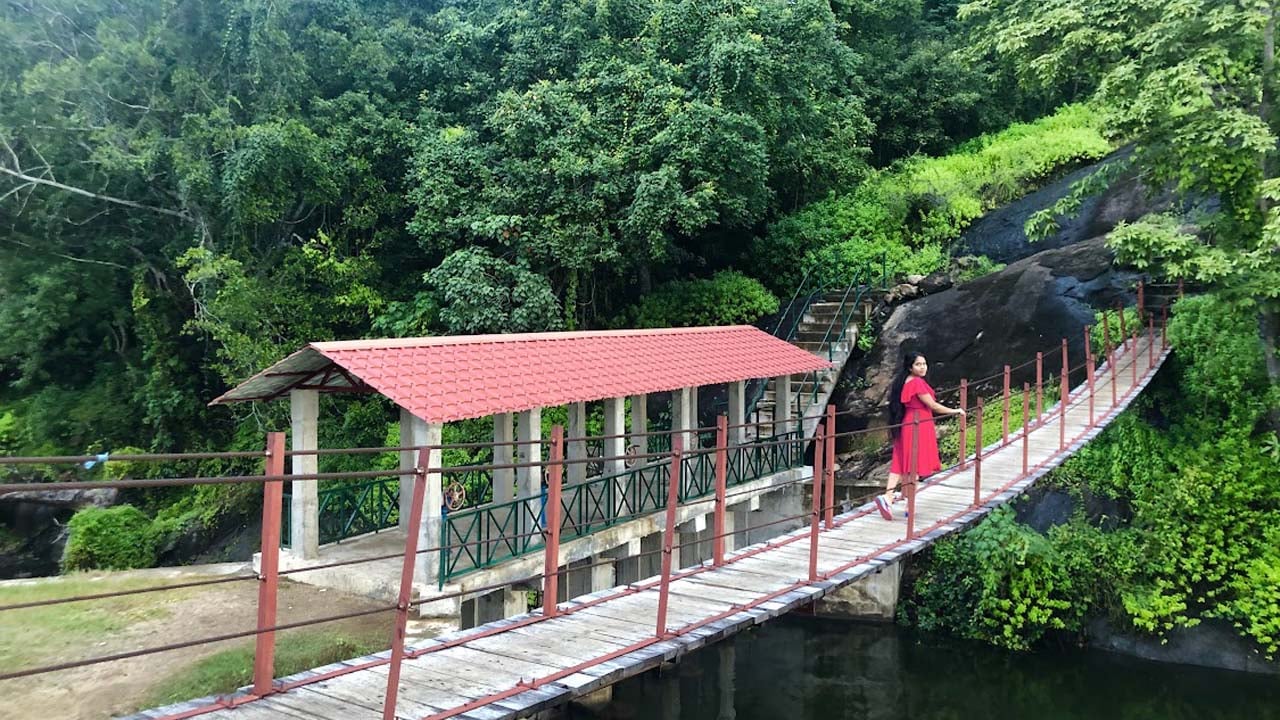

Sorabora Lake sits quietly in Sri Lanka's Uva Province, a short distance from the town of Mahiyanganaya. At roughly 4,500 acres in extent, it is one of the larger ancient irrigation reservoirs in the country, yet it remains far less visited than the tank complexes of Anuradhapura or Polonnaruwa. That relative quietness is part of its appeal: the shoreline is unhurried, the birdlife is abundant, and the engineering story behind the lake is genuinely remarkable.
What makes Sorabora Lake historically significant?
The defining feature of Sorabora Lake is its natural sluice gate — a channel carved directly through solid rock to regulate the flow of water into the surrounding irrigation canals. Unlike the timber or masonry sluices found at many other ancient tanks, this one exploits the existing geology, demonstrating a sophisticated understanding of hydrology and drainage that engineers still find worth studying. The canals it feeds continue to irrigate paddy fields in the region today, meaning this ancient system has functioned without interruption for well over a thousand years.
Archaeologists associate the tank's construction with the early Anuradhapura period, though the oral tradition of Mahiyanganaya attributes it to a figure named Bulatha — a giant overseer of elephants said to have served under King Dutugemunu. According to local legend, Bulatha completed the reservoir in a single night. Whether taken literally or as a measure of the feat's scale, the story reflects how deeply the lake is woven into the cultural memory of the region.
The lake holds a storage capacity of approximately 11 million cubic metres of water, supporting paddy cultivation and related agricultural activity across a wide area. For farming communities around Mahiyanganaya, it is not a heritage site in the abstract sense — it is a working resource that shapes daily life.
What wildlife can you see at Sorabora Lake?
The lake and its margins support a diverse range of bird species. Cormorants, egrets, and kingfishers are present year-round, while the quieter reaches of the shoreline attract herons and painted storks. During the northern-hemisphere winter, the lake also serves as a resting point for migratory waterbirds moving along the Indo-Asian flyway, making November through February a particularly rewarding time for birdwatchers.
The surrounding woodland is typical dry-zone forest — a mix of thorny scrub, riverine vegetation, and open canopy — which provides habitat for smaller mammals, reptiles, and a variety of insects. Visitors who arrive at dawn or dusk stand the best chance of seeing wildlife before the midday heat sets in.
What can you do at Sorabora Lake?
- Boat rides: Local operators offer short boat trips on the lake, giving a different perspective on the shoreline and an opportunity to observe waterbirds at close range without disturbing them.
- Hiking and walks: The flat terrain around the lake is manageable on foot. A walk along the bund (embankment) provides open views across the water, particularly striking in the early morning light.
- Camping: Camping near the lake has grown in popularity among Sri Lankan visitors, particularly on weekends. Facilities are basic, so self-sufficient campers fare best.
- Photography: The combination of open water, dry-zone forest, and consistent birdlife makes Sorabora a productive location for nature photography throughout the day.
What attractions are near Sorabora Lake?
Mahiyanganaya, the nearest town, is home to the Mahiyanganaya Raja Maha Viharaya — one of the oldest Buddhist temples in Sri Lanka, traditionally said to have been visited by the Buddha himself. The stupa at its centre is considered among the most sacred on the island and is well worth a visit before or after time at the lake.
Around 7 km from Mahiyanganaya lies Dambana, the principal settlement of the Veddah people — Sri Lanka's indigenous community. The Veddah have maintained a distinct culture, language, and relationship with the surrounding forest for thousands of years. Visiting Dambana with a knowledgeable guide offers a genuinely educational encounter; it is not the place for uninvited or unannounced visits.
For those extending their stay in the Uva Province, the Ella area lies roughly two hours to the south, offering a very different landscape of tea estates and mountain walks. The Randenigala Dam, another significant water infrastructure project in the region, is also accessible from Mahiyanganaya.
When is the best time to visit Sorabora Lake?
The Uva Province experiences two distinct dry seasons: the main dry period runs roughly from May to September, and a shorter dry spell occurs from January to March. Either window is suitable for visiting Sorabora Lake, as access tracks become muddy and less reliable during the inter-monsoon rains of October and November.
Early morning visits are recommended regardless of season. The light is softer, temperatures are cooler, and the birdlife is most active in the hour after sunrise. By mid-morning, the lake settles into a quieter rhythm that suits a relaxed walk along the bund.
How do I get to Sorabora Lake from Colombo?
Sorabora Lake is approximately 200 km from Colombo, with the most direct road route passing through Kandy and then descending to Mahiyanganaya via the Kandy–Mahiyanganaya highway. The journey takes around four to five hours by car depending on traffic through Kandy. A private vehicle or hired driver is the most practical option, as public bus connections require changes and considerably more time. Mahiyanganaya itself has basic guesthouses and rest-houses for those who prefer to base themselves locally overnight.
Is Sorabora Lake suitable for families?
The lake is well-suited to family visits. The terrain is largely flat and accessible, the boat rides are gentle, and the combination of water, wildlife, and the nearby temple and Veddah village gives children a varied and genuinely educational day out. There are no formal entrance fees for the lake itself. Boat operators and local guides work informally, so agreeing on a rate before setting out is standard practice.
