



Shirodhara is one of Ayurveda's most recognised therapeutic rituals — a slow, continuous stream of warm liquid poured over the forehead in a precise, rhythmic motion. Rooted in classical Indian medicine, it has been practised for centuries as a way to settle the nervous system, ease mental tension, and restore equilibrium between the body and mind. In Sri Lanka, where Ayurveda has deep cultural roots, Shirodhara is offered at dedicated wellness retreats and Ayurvedic clinics across the island, often as part of a broader yoga and wellness programme.
What does Shirodhara involve?
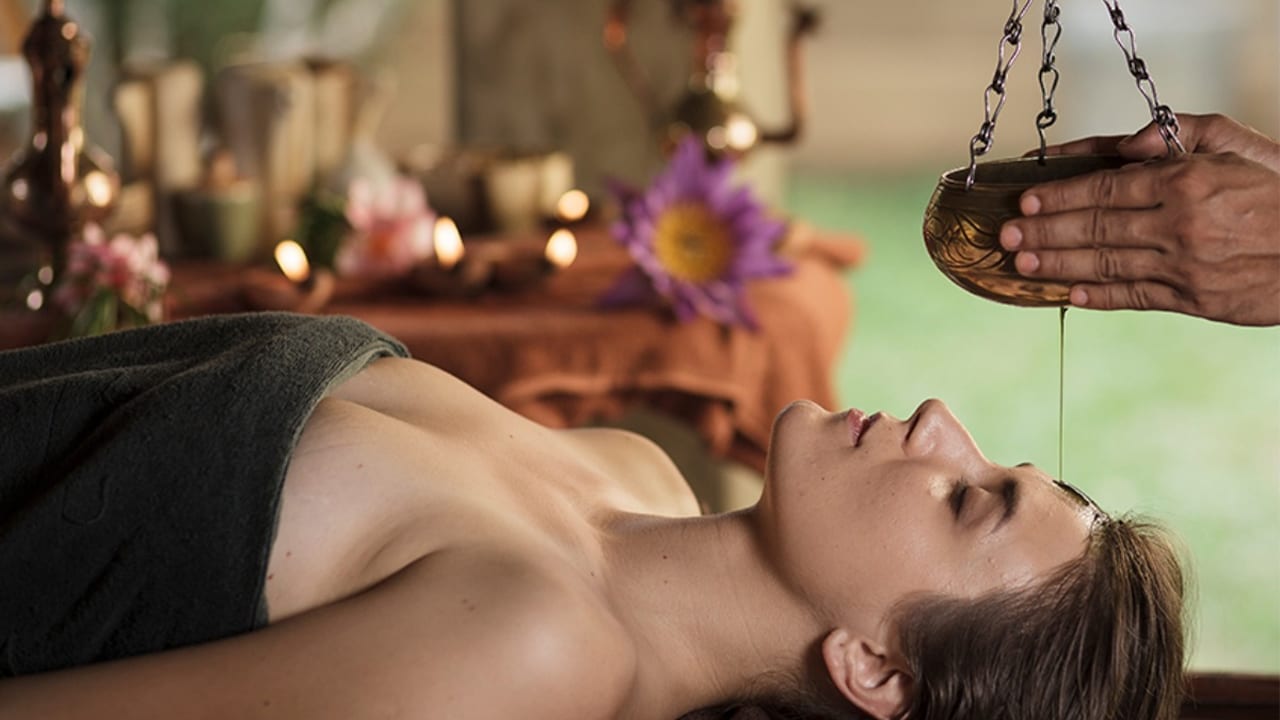
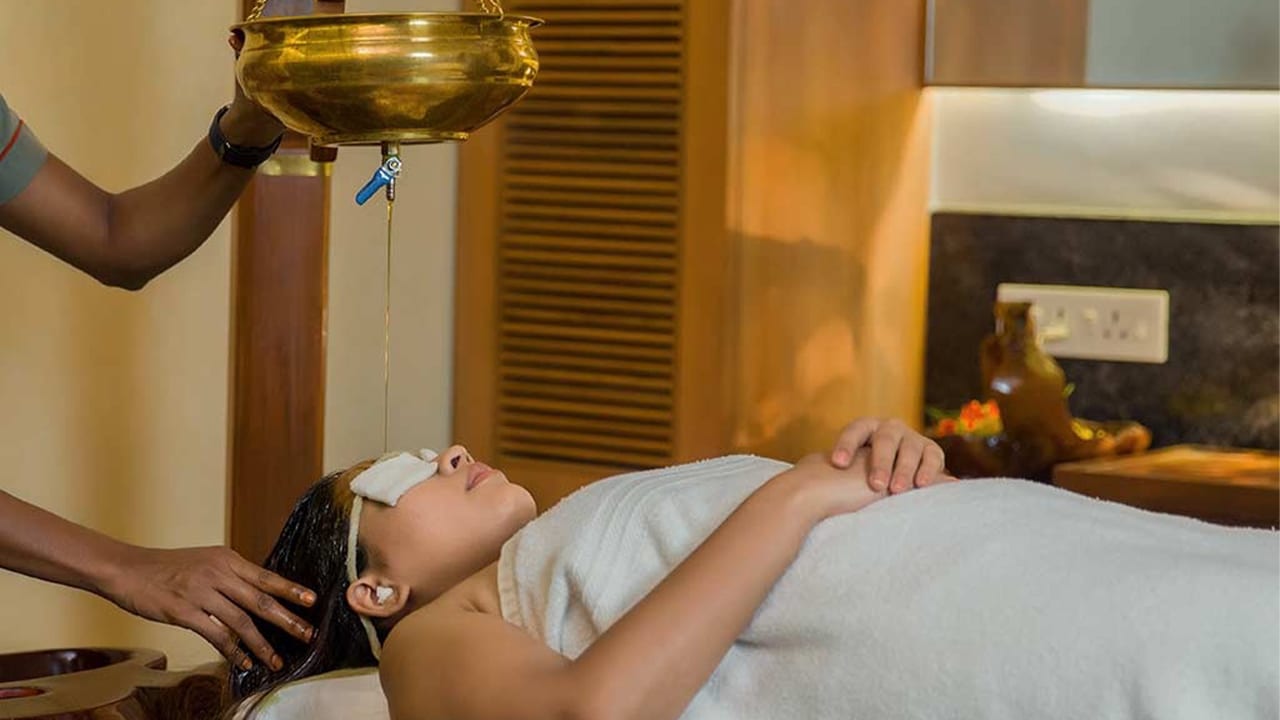
The word itself comes from the Sanskrit shiro (head) and dhara (flow). The procedure is straightforward in principle, though it requires careful preparation. The client lies on a purpose-built treatment table while a wide-mouthed vessel — suspended roughly two inches above the forehead — releases a thin, steady stream of liquid through a wick. That stream falls onto the centre of the forehead, the area associated with the ajna (third-eye) marma point.
The liquid used varies according to the client's constitution and the condition being addressed:
- Medicated oils — the most common choice, typically sesame-based and infused with Ayurvedic herbs
- Milk or medicated milk — used for conditions involving excess heat (Pitta imbalance)
- Buttermilk — favoured for certain skin and digestive conditions
- Herbal decoctions — employed where a lighter, non-oily medium is appropriate
The liquid is warmed, collected in a basin beneath the head, reheated to a consistent temperature, and recirculated throughout the session. Cotton pads protect the eyes. A session typically runs between 60 and 90 minutes, with the duration adjusted by the practitioner based on the client's dominant dosha.
What are the benefits of Shirodhara?
Ayurvedic tradition attributes a wide range of benefits to the practice. Clinical and observational studies have begun to investigate several of these claims, though the evidence base is still developing. The benefits most consistently reported by practitioners and recipients include:
- Stress and anxiety reduction — the rhythmic sensation of warm liquid on the forehead encourages a deeply meditative state, quieting the overactive mind.
- Improved sleep — Shirodhara is frequently recommended for insomnia and disrupted sleep patterns, particularly where an aggravated Vata dosha is implicated.
- Dosha balancing — the treatment is considered especially effective at calming Vata, the dosha governing movement and the nervous system.
- Enhanced mental clarity — many clients report sharper concentration and reduced mental fatigue in the days following a session.
- Headache and migraine relief — regular Shirodhara sessions are used as a supportive therapy for tension headaches and migraines.
- Scalp and hair nourishment — medicated oils penetrate the scalp during treatment, conditioning the hair and supporting circulation in the scalp tissue.
How does Shirodhara fit into Panchakarma?
Panchakarma is Ayurveda's flagship detoxification and rejuvenation protocol — a structured series of therapies designed to clear accumulated toxins (ama) from the body's tissues. Shirodhara can be incorporated as one step in this sequence, usually after preliminary oleation and sweating therapies have prepared the body to release deeper-seated imbalances. When offered as a standalone treatment, it functions primarily as a Shamana (palliative) therapy, soothing rather than purging.
Who should be cautious about Shirodhara?
Shirodhara is generally well-tolerated, but there are situations where a consultation with both an Ayurvedic physician and a conventional healthcare provider is advisable before proceeding:
- Acute sinusitis or severe nasal congestion — pooling of oil may worsen symptoms
- Active skin conditions, cuts, or abrasions on the forehead
- High fever or acute infectious illness
- Pregnancy — some medicated oils contain herbs contraindicated during pregnancy
- Sensitivity to heat — the temperature of the liquid must always be checked carefully; it should feel pleasantly warm, never hot
A reputable Ayurvedic centre will conduct an intake consultation before any treatment to screen for these conditions and adjust the protocol accordingly.
What should you expect after a Shirodhara session?
Immediately after the flow of liquid stops, the practitioner allows the client to rest quietly for a few minutes before gently wiping residual oil from the hair. Most people feel deeply relaxed — occasionally drowsy — so it is advisable to avoid driving immediately after the session. Practitioners typically recommend resting at home for at least two to three hours, keeping warm, and avoiding loud or stimulating environments for the remainder of the day. The hair may retain some oil; washing it gently the following morning is generally preferred over washing immediately, as this allows further absorption overnight.
Experiencing Shirodhara in Sri Lanka
Sri Lanka's wellness tourism sector has grown considerably, with dedicated Ayurvedic resorts concentrated in the hill country, the southwest coast, and around Colombo. Many of these centres draw on a combination of classical South Indian Ayurvedic traditions and indigenous Sri Lankan herbal knowledge. When selecting a centre, look for one that employs qualified Ayurvedic physicians (Vaidyas) who conduct initial consultations and personalise the treatment medium — rather than offering a fixed menu regardless of the client's constitution.
Medicinal herbs native to Sri Lanka — including those derived from Pongamia pinnata — feature in some of the oil formulations used in local Shirodhara preparations, giving the Sri Lankan version of the treatment a distinctly regional character. Similarly, Ceylon black pepper and other endemic botanicals appear in compound Ayurvedic oils blended by experienced practitioners on the island.
If you are planning a longer wellness itinerary, Shirodhara pairs well with yoga, meditation, and nature-based activities. A stay near the highlands or the southwest coast — both areas with a high concentration of quality Ayurvedic retreats — can provide the quieter environment that allows the treatment's effects to settle properly.
Preparing your own Shirodhara oil at home
While the full Shirodhara ritual requires a trained practitioner and proper equipment, the medicated oils used in the treatment are available for self-care use — typically applied in smaller quantities as a nightly scalp massage (Abhyanga). This simplified practice, known as Shiro Abhyanga, carries some of the same calming benefits and can be incorporated into a regular evening routine. A purpose-formulated Shirodhara treatment oil, blended to replicate the classical herb combinations, is the most convenient starting point for home use.


