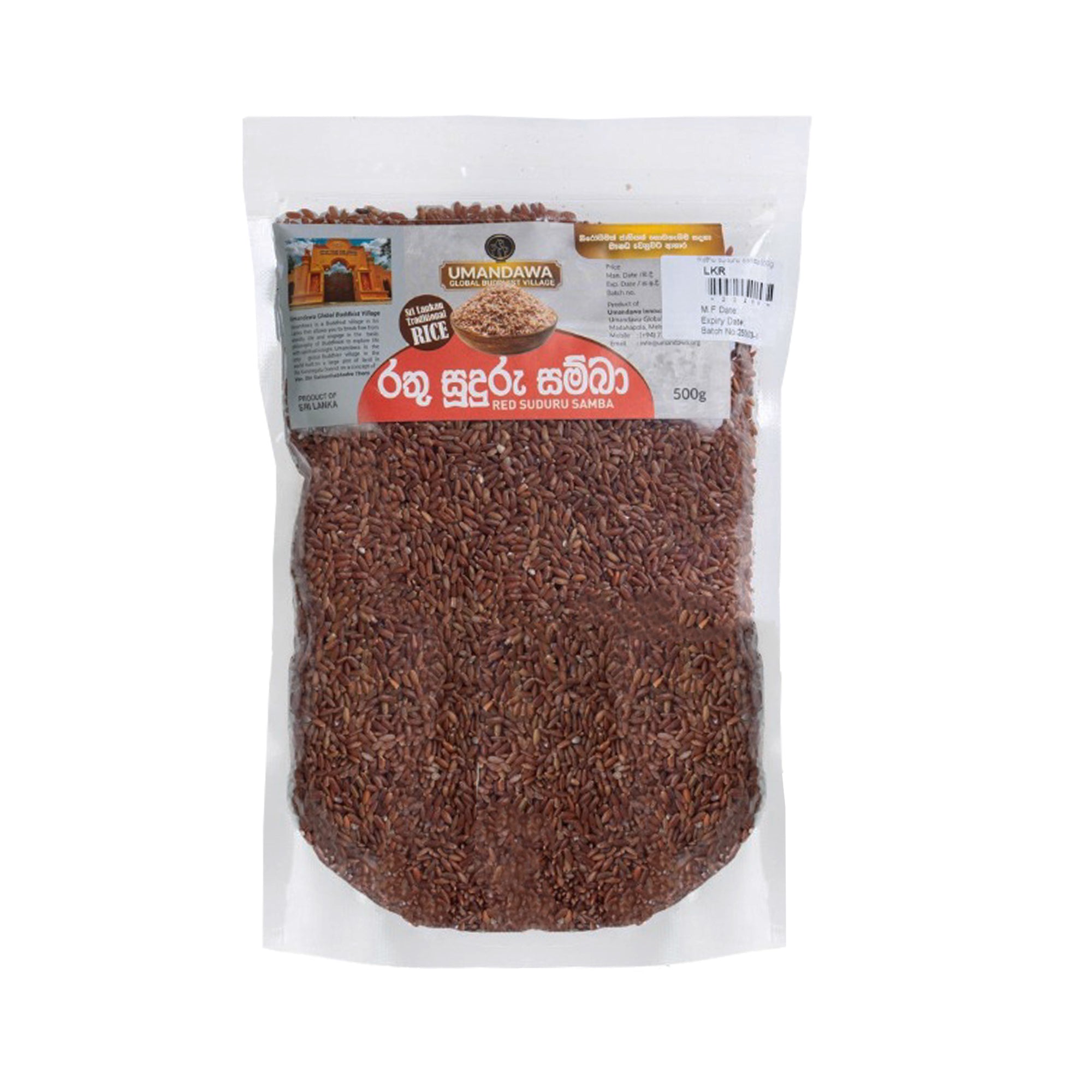


Rathu Kekulu — known in Sinhala as රතු කෙකුලු හාල් — is one of Sri Lanka's oldest and most widely consumed rice varieties. Milled minimally to retain its reddish-brown bran layer, it sits between fully polished white rice and whole-grain brown rice in terms of texture and preparation. For generations it has been a staple in rural households, valued as much for its distinctive earthy flavour as for its nutritional profile.
What makes Rathu Kekulu different from ordinary white rice?
The defining characteristic of Rathu Kekulu is that it is unpolished — or only lightly polished — so the outer bran and germ layers remain largely intact. This is where most of the grain's fibre, minerals, and phytosterols are concentrated. One phytosterol found in the bran, beta-sitosterol, has been studied for its role in supporting healthy cholesterol levels by competing with dietary cholesterol for absorption in the gut.
By contrast, standard white rice is milled repeatedly until the bran is stripped away, leaving mainly starch. The result is a softer grain with a longer shelf life but a markedly reduced nutritional density. Rathu Kekulu trades some of that shelf-life convenience for a grain that retains B-vitamins, iron, magnesium, and dietary fibre.
What are the nutritional benefits of Rathu Kekulu?
Rice is Sri Lanka's primary staple food, contributing roughly 45% of the average daily calorie intake and around 40% of dietary protein requirements. Choosing an unpolished variety such as Rathu Kekulu shifts that nutritional baseline noticeably. The higher fibre content slows glucose absorption, which contributes to a more gradual rise in blood sugar after a meal — a meaningful consideration for people managing or monitoring blood sugar levels.
- Dietary fibre: Supports digestive regularity and promotes a feeling of fullness.
- Beta-sitosterol: A plant sterol associated with modulating blood cholesterol absorption.
- B-vitamins (thiamine, niacin, B6): Retained in the bran layer; largely lost during white-rice polishing.
- Minerals: Notably magnesium and phosphorus, both important for bone and muscle function.
- Lower glycaemic impact: The bran slows starch digestion compared with polished rice.
It is worth noting that Rathu Kekulu is not a medical remedy. Its benefits come from consistent inclusion in a balanced diet rather than from occasional use.
How do you cook Rathu Kekulu rice?
Because the bran layer is still present, Rathu Kekulu absorbs water more slowly than polished rice and benefits from a slightly longer cooking time. A simple method: rinse the rice thoroughly, soak for 20–30 minutes if time allows, then cook with roughly 2 to 2.5 parts water to one part rice. The finished grain should be tender but retain a gentle chew — noticeably more textured than white rice.
In Sri Lankan cooking it pairs naturally with the bold flavours of coconut-based curries, dhal, and pol sambol. The nuttier, slightly ferrous taste of the bran holds its own against spiced meat dishes in a way that plain white rice sometimes cannot. Leftover cooked Rathu Kekulu also works well in rice-based porridges (congee), fried rice, and salads.
Red rice hopper flour — made from finely ground Rathu Kekulu — is also used to prepare hoppers (appa), a traditional Sri Lankan pancake that has become popular well beyond its southern and coastal origins. A paddy field visit in rural Sri Lanka often reveals just how deeply varieties like Rathu Kekulu are woven into the agricultural landscape.
Where does Rathu Kekulu rice come from in Sri Lanka?
Rathu Kekulu is cultivated across Sri Lanka's wet and intermediate zones, with notable production in the North Central Province — the ancient granary of the island — as well as in the Southern and Sabaragamuwa provinces. The variety belongs to a broad family of traditional Sri Lankan rice cultivars that predate colonial-era agricultural reforms, some of which were documented as far back as the Anuradhapura and Polonnaruwa kingdoms.
Modern cultivation continues alongside improved high-yielding varieties, and Rathu Kekulu remains commercially available both as raw unpolished grain and in parboiled form. Parboiling — steaming the paddy before milling — partially gelatinises the starch, which drives some surface nutrients into the grain's core and produces a firmer, less sticky texture after cooking.
How does Rathu Kekulu fit into Sri Lankan food culture?
Traditional Sri Lankan meals are built around rice and an array of vegetable, lentil, and meat or fish curries. Unpolished varieties like Rathu Kekulu were the norm in rural households long before milled white rice became widely affordable. Ceremonial dishes such as kiribath (milk rice) are typically made with white raw rice, but everyday meals — particularly in farming communities — have historically relied on less-processed grains.
Interest in traditional rice varieties has grown considerably over the past decade, partly driven by wider awareness of nutritional science and partly by a cultural movement to preserve indigenous grain biodiversity. Sri Lanka is thought to have once cultivated hundreds of distinct rice varieties, and organisations working on agro-biodiversity conservation are documenting and reviving many of them. Rathu Kekulu sits comfortably within both the heritage and the contemporary wellness conversation around whole grains.
For visitors, trying Rathu Kekulu at a local restaurant or guesthouse is an accessible way to engage with authentic Sri Lankan food culture — more grounded in daily life than the polished white rice typically served at tourist-oriented buffets. Sri Lankan condiments such as lunu dehi (lime pickle) complement the earthier flavour particularly well.
Is Rathu Kekulu the same as red rice sold in health food stores?
The term "red rice" covers several distinct varieties grown in different parts of the world, including Camargue red rice from France, Bhutanese red rice, and various Asian heirloom varieties. Rathu Kekulu is specifically a Sri Lankan cultivar with its own flavour profile and agronomic history. While the nutritional principles are broadly similar across lightly milled red rice varieties — higher fibre, retained phytosterols, lower glycaemic index than white rice — the taste, cooking behaviour, and cultural context of Rathu Kekulu are particular to Sri Lanka. It is not simply a generic "brown rice" renamed for local marketing.
Where can you buy Rathu Kekulu rice?
Rathu Kekulu is stocked at most supermarkets and organic food stores across Sri Lanka, as well as at local markets in rice-growing regions. It is sold both as raw unpolished grain and in parboiled form. International shoppers can source it through specialist Sri Lankan grocers or online platforms that carry Lankan produce. Lakpura offers a selection of Sri Lankan rice varieties, including red and parboiled options, which can be ordered for home delivery.