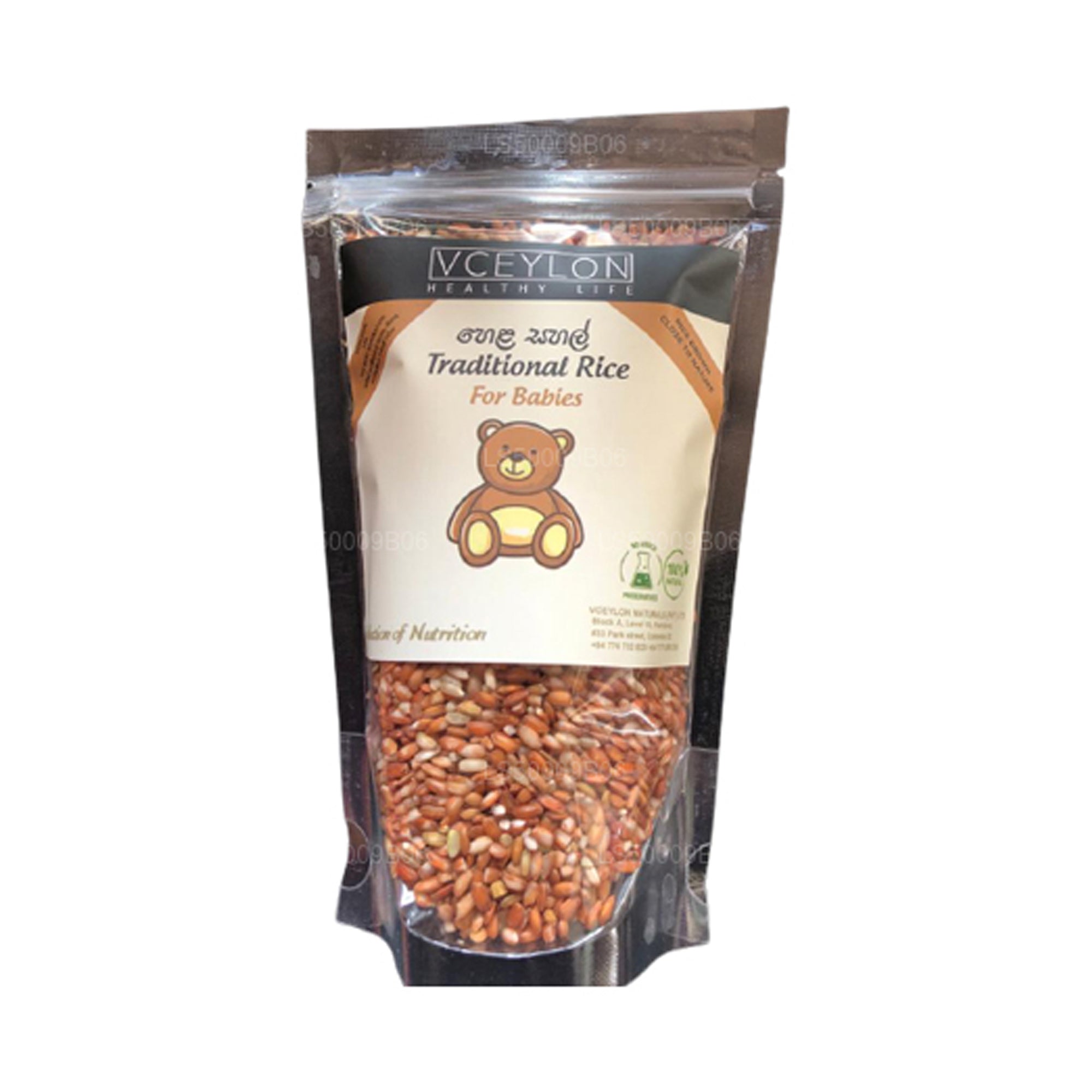
Kalu Heenati is one of Sri Lanka's oldest indigenous rice varieties, distinguished by its deep brownish-purple grain and a nutritional profile that far exceeds that of commercially milled white rice. The name translates directly from Sinhala — kalu meaning black and heenati denoting a classical category of short-grain rice long cultivated on the island. While its cousin paddy cultivation remains central to Sri Lankan rural life, Kalu Heenati occupies a special place as a variety that survived generations of agricultural change largely because communities valued it too much to abandon it.
What makes Kalu Heenati different from ordinary rice?
Most rice sold in supermarkets today has been milled to remove the bran and germ layers, stripping away much of its fibre, B vitamins, and trace minerals. Kalu Heenati is typically sold and consumed in a minimally processed form that retains these outer layers. The grain's dark pigmentation comes from anthocyanins — the same class of antioxidant compounds found in blueberries and red cabbage — which are absent in white rice altogether.
The texture after cooking is noticeably firmer than polished white rice, and the flavour carries a mild nuttiness with earthy undertones. It does not turn mushy, which makes it well suited to dishes where the rice needs to hold its shape.
- Fibre: Higher than white rice, supporting digestive health.
- Anthocyanins: Antioxidant pigments concentrated in the bran layer.
- Glycaemic response: The less-processed grain is generally considered to produce a slower blood-sugar rise than refined white rice, though individual responses vary.
- Minerals: Retains naturally occurring iron, zinc, and magnesium from the bran.
How is Kalu Heenati used in Sri Lankan cooking?
Traditional Sri Lankan cuisine has always been built around rice, and Kalu Heenati appears in several ceremonial and everyday preparations. Its firm texture and pronounced flavour make it a considered choice rather than a simple substitute for white rice.
Kiribath (milk rice): Cooked with coconut milk until creamy, Kalu Heenati kiribath carries a deeper colour and richer taste than the standard version. It is commonly prepared for auspicious occasions — New Year celebrations, full-moon days, and family milestones.
Pittu: The steamed cylinders of rice flour and grated coconut absorb Kalu Heenati's earthier notes well, pairing naturally with fish curry or coconut sambol.
Plain rice with curries: Served as the centrepiece of a rice-and-curry spread, the grain's firmness holds up against heavily spiced dishes where softer rice would become unpleasantly wet. It pairs particularly well with Ceylon black pepper-based preparations and dhal.
Rice porridge (kola kenda and congee-style dishes): Ground or lightly broken Kalu Heenati is simmered slowly with water and sometimes herbal additives to make a restorative porridge, a preparation common in Ayurvedic dietary traditions.
Where is Kalu Heenati grown in Sri Lanka?
This variety thrives in the wet and intermediate zones of the island, where rainfall patterns and soil conditions resemble those under which it was first cultivated centuries ago. The North Central Province — a region with an unbroken history of irrigation-based rice farming stretching back to the ancient kingdoms centred at Polonnaruwa — is among the areas where traditional varieties like Kalu Heenati have been preserved by smallholder farmers.
Cultivation is often carried out using traditional methods: direct seeding or transplanting by hand, reliance on seasonal monsoon rains supplemented by tank irrigation, and limited chemical inputs. Some growers pursue certified organic production to meet growing demand from health-conscious consumers both within Sri Lanka and in export markets.
Because Kalu Heenati is not a high-yield variety by modern commercial standards, it commands a premium price relative to hybrid white rice. That price reflects both the lower per-acre output and the labour-intensive harvesting methods still used on many farms.
What is the historical significance of Kalu Heenati?
Sri Lanka's ancient chronicles and royal agricultural records reference dozens of indigenous rice varieties adapted to specific microclimates and soil types across the island. Heenati rices — a family of short-grain varieties — are among those mentioned in connection with royal granaries and temple offerings. They were not simply staple foods but carried ritual importance, appearing in offerings at temples and as prescribed foods in traditional medicine.
The Green Revolution of the mid-twentieth century introduced high-yield hybrid varieties that dramatically increased output but gradually displaced many traditional types. Kalu Heenati and related heritage varieties survived mainly in isolated farming communities and through the efforts of agricultural researchers and seed banks. In recent decades, renewed consumer interest in nutrition and food heritage has brought these varieties back into wider circulation.
How does Kalu Heenati fit into Ayurvedic and traditional health practice?
Sri Lankan Ayurvedic practitioners have long classified rice varieties according to their qualities — heating or cooling, heavy or light, medicinal or purely nutritive. Heenati rices in general are regarded as varieties with beneficial properties for digestion and sustaining energy, making them a recommended choice in convalescent diets and for infants transitioning to solid food.
Kalu Heenati porridge, prepared with minimal additives, is a traditional first food in many Sri Lankan households. The grain's relatively easy digestibility in porridge form and its nutrient retention made it a practical choice long before modern nutritional science confirmed the benefits of whole-grain consumption.
Where can you buy Kalu Heenati rice?
Kalu Heenati is available from specialist health-food retailers, organic farm shops, and a growing number of online suppliers that ship within Sri Lanka and internationally. When purchasing, look for packaging that specifies the variety by name and ideally indicates the region and farming method. Minimally processed or lightly milled versions will retain more of the nutritional benefit than heavily polished grain.
Storage is straightforward: keep in an airtight container away from moisture and direct light. Because the bran layer is retained, Kalu Heenati has a slightly shorter shelf life than white rice and is best used within six to twelve months of milling.
How do you cook Kalu Heenati at home?
The firmer grain absorbs water more slowly than white rice. A general approach is to rinse the rice, soak it for thirty minutes to an hour, then cook at a ratio of approximately one part rice to two-and-a-half parts water. Cooking time is longer than for white rice — typically around thirty to thirty-five minutes on a low simmer. The finished grain should be tender but still have a slight bite. Adjust water and timing to personal preference, as actual results vary with grain age and milling degree.
- Rinse the rice in cold water until the water runs reasonably clear.
- Soak for 30–60 minutes, then drain.
- Add fresh water in a roughly 1:2.5 ratio and bring to the boil.
- Reduce heat to a low simmer, cover, and cook for 30–35 minutes.
- Remove from heat and rest, covered, for 10 minutes before serving.
Related reading
1 pages on closely related subjects.