


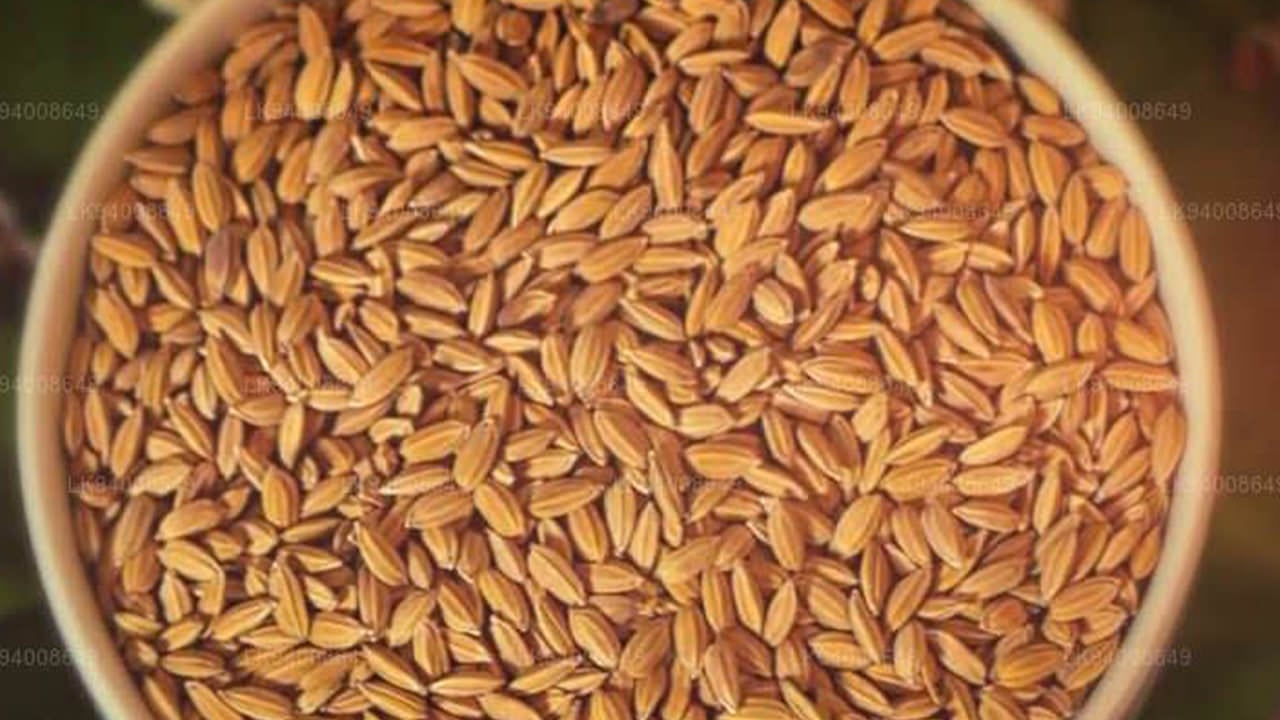


Pokkali is one of Sri Lanka's oldest cultivated rice varieties — a red-grain, salt-tolerant crop that has sustained coastal farming communities for generations. Long before modern agronomy developed saline-resistant hybrids, smallholder farmers along Sri Lanka's south-western coast had already mastered the art of growing rice in brackish soils. Today, Pokkali occupies a quiet but important place in the country's agricultural heritage, drawing interest from nutritionists, plant scientists, and travellers curious about traditional food systems.
What Makes Pokkali Different From Other Rice Varieties?
Most commercially grown rice varieties struggle when soil salinity rises — roots are damaged, yields collapse, and the crop fails. Pokkali is a notable exception. Its tolerance to saline conditions allows it to thrive in low-lying coastal fields that experience seasonal flooding and saltwater intrusion, environments where few other staple crops can survive.
The plant itself is relatively tall, with culms reaching around 130 cm, and typically produces about ten tillers per plant. The crop matures quickly — roughly three and a half months from seeding — which matters in coastal zones where land management windows are narrow. Its grain is a distinctive reddish-brown colour, a characteristic shared with other traditional red rice varieties valued across South Asia.
Pokkali has also proven valuable to plant breeders. It is used as a parent variety in rice improvement programmes, with scientists drawing on its salt-tolerance genes to develop new cultivars suited to challenging growing conditions globally.
Where Is Pokkali Grown in Sri Lanka?
Cultivation is concentrated along the south-western coastal belt, with the Hambantota and Puttalam districts being the primary growing areas. Both districts experience naturally high soil salinity — a result of their proximity to the coast and, in Puttalam's case, the extensive lagoon system that defines much of its geography. Puttalam is also close to Wilpattu National Park, and travellers passing through the area often encounter Pokkali paddies alongside the road.
Smallholder farmers in these districts have traditionally alternated Pokkali cultivation with prawn or fish farming in the same flooded fields — a sustainable, integrated system that has attracted growing interest from researchers studying low-input agriculture. The yield potential is around 60 to 80 bushels per acre under good conditions, modest by the standards of high-input modern varieties but respectable given the difficulty of the growing environment.
What Are the Nutritional and Medicinal Properties of Pokkali?
Red rice varieties in general are associated with higher levels of antioxidants, fibre, and micronutrients compared to white polished rice, and Pokkali is no exception. Scientific studies have identified evidence of medicinal properties relevant to the management of oxidative stress — a cellular process linked to a wide range of chronic conditions. Research has also indicated that Pokkali extracts can inhibit the growth of certain harmful bacteria, suggesting potential antimicrobial applications.
The grain is comparatively protein-rich for a rice variety, making it a more nutritionally complete staple than many alternatives. Crucially, these benefits are most accessible when the rice is consumed with its bran layer intact. Milling Pokkali into white rice removes much of the fibre, antioxidants, and protein concentrated in the outer layers, so whole-grain or lightly milled Pokkali delivers significantly greater nutritional value.
- Antioxidant activity: linked to oxidative stress reduction in early studies
- Antimicrobial properties: inhibition of certain harmful bacterial strains identified in laboratory research
- Protein content: higher than many commercially grown white rice varieties
- Dietary fibre: significant when consumed as whole-grain or brown rice
It is worth noting that most published research is still at an exploratory stage. Pokkali should be understood as a nutritionally valuable traditional food, not a medically prescribed treatment.
How Does Pokkali Fit Into Sri Lanka's Wider Agricultural Heritage?
Rice cultivation is inseparable from Sri Lankan identity. The island's ancient hydraulic civilisations, centred on cities like Polonnaruwa, built vast irrigation networks specifically to support paddy farming, and rice remains the country's primary staple crop. Within that long tradition, salt-tolerant varieties like Pokkali represent a form of accumulated ecological knowledge — an understanding of local soils, hydrology, and seasonal rhythms built up over centuries.
To understand what a traditional Sri Lankan paddy field looks like and the cultural significance of rice farming more broadly, the Paddy Field (Kumbura) is a good reference — the kumbura, or paddy field, is a cultural institution as much as an agricultural one, central to village life and the rhythm of the Sinhala farming calendar.
Pokkali's story also connects to a wider movement in Sri Lanka towards reviving heritage grains. Alongside other traditional products such as Ceylon black pepper and Ceylon tea, Pokkali is part of a growing conversation about food sovereignty, biodiversity conservation, and the economic value of geographically distinctive agricultural products.
Can Travellers Experience Pokkali Farming Directly?
Agritourism in Sri Lanka is still developing, but visitors to the Puttalam and Hambantota regions during the cultivation or harvest season (typically around October to January for the main season, though this varies by year and location) may be able to observe Pokkali paddies and speak with farming communities. The landscape in these coastal areas — flat, salt-glazed fields edged by lagoons and coconut groves — is distinctive and unlike the terraced hill-country paddy familiar from tourist photography.
The Puttalam lagoon area, near which much of the north-western Pokkali cultivation occurs, is also home to the wetlands and mangrove systems around Madu Ganga further south, giving visitors an opportunity to explore the broader coastal ecology that shapes this farming tradition.
How Should Pokkali Be Prepared and Eaten?
Whole-grain Pokkali takes longer to cook than white rice — typically around 40 to 50 minutes with soaking beforehand — and has a slightly nutty, earthy flavour that pairs well with coconut-based curries, lentil dishes, and the bold spicing characteristic of Sri Lankan cooking. It holds its texture well after cooking and does not become as sticky as many white rice varieties.
For maximum nutritional benefit, the rice should be consumed with the bran intact, meaning minimally milled or sold as brown Pokkali rather than polished white. Some specialty food retailers and health-food stores in Colombo and other urban centres stock Pokkali, though availability varies seasonally and by supplier.
Is Pokkali Certified or Formally Protected?
As of the time of writing, Pokkali has not received formal geographical indication (GI) protection in Sri Lanka in the way that, for example, certain Indian agricultural products have been certified. However, there is ongoing interest among researchers and policymakers in recognising and protecting traditional rice varieties like Pokkali under intellectual property and biodiversity frameworks. The Department of Agriculture of Sri Lanka maintains records of traditional varieties and has included Pokkali in germplasm conservation efforts.
