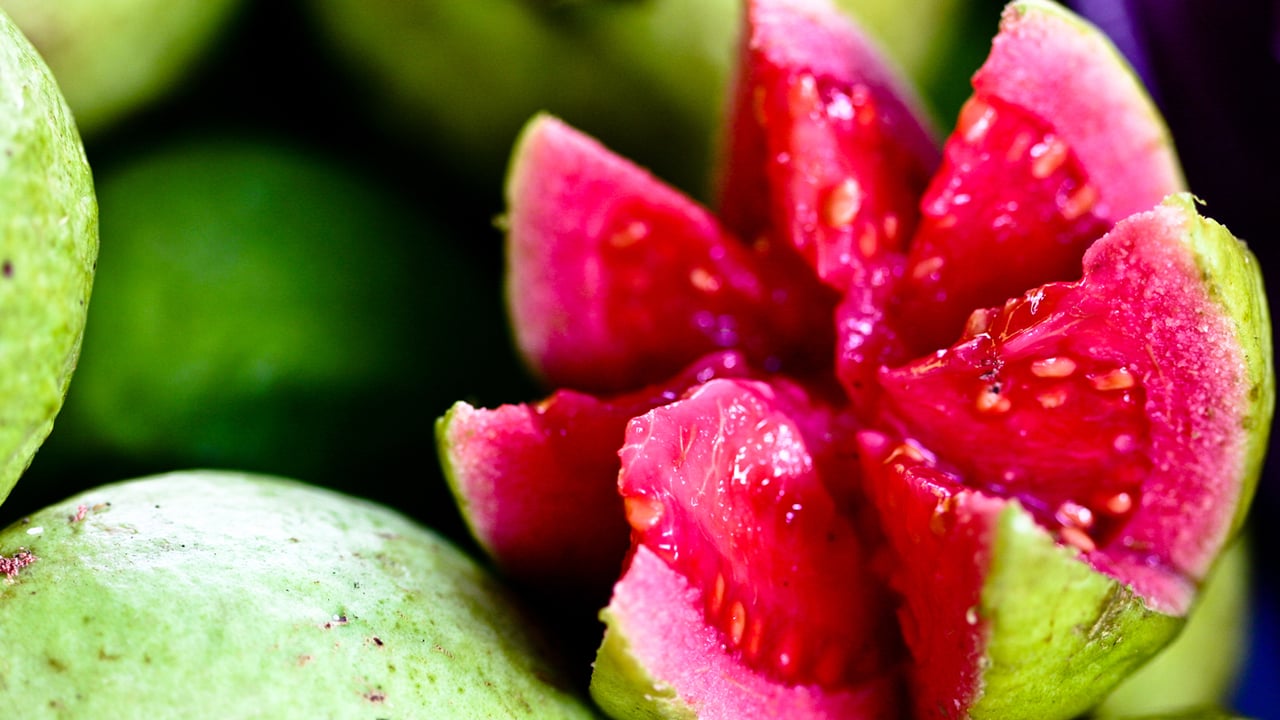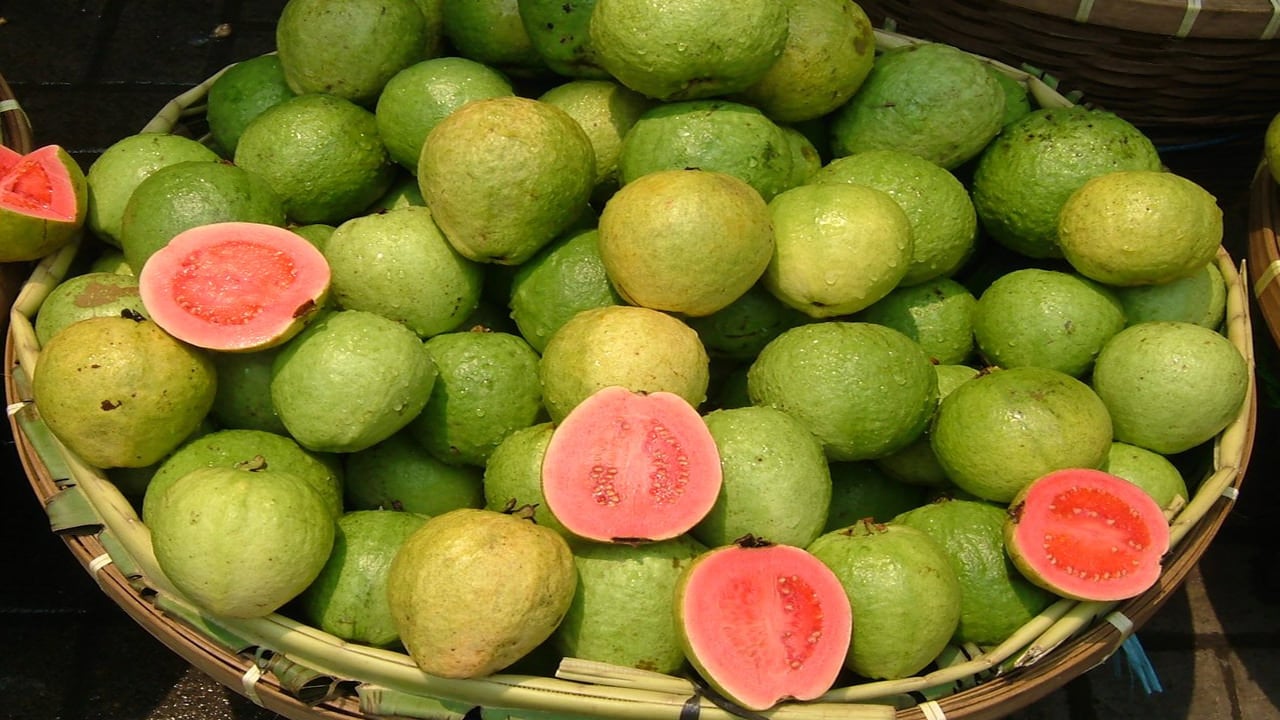


Guava — known in Sri Lanka as pera (පේර) — is one of the most widely grown tropical fruits in the world, valued equally for its flavour, nutritional density, and medicinal properties. The species Psidium guajava, commonly called tropical guava, is the most commercially significant member of the guava family and the variety you will most often encounter in Sri Lankan gardens, markets, and herbal preparations.
What Are the Main Varieties of Guava?
Botanically, guavas belong to the myrtle family (Myrtaceae). Three primary species cover the fruit you are most likely to come across:
- Psidium guajava (Tropical guava) — the most widely cultivated species, producing round to pear-shaped fruit with flesh ranging from white and cream through to deep pink and red.
- Psidium cattleianum (Strawberry guava) — smaller, rounder fruit with a tartly sweet strawberry flavour and cream-coloured interior. A yellow-skinned variant, sometimes called lemon guava (Psidium littorale), carries a distinctly citrusy note.
- Acca sellowiana (Pineapple guava / Feijoa) — yellow-green, oval fruit with a fragrant floral aroma; less common in South Asia but grown in cooler highland zones.
Within Psidium guajava alone, decades of cultivation have produced numerous cultivars suited to different climates and palates. Key tropical guava types include:
- Red Malaysian (Thai Maroon) guava — reddish-brown skin over bright pink flesh, with a high moisture content reminiscent of watermelon.
- Mexican Cream (Tropical Yellow) guava — yellow skin, soft cream flesh, and a sweet-zesty profile with hints of pineapple and passionfruit.
- China White guava — yellow-green skin, creamy white interior, and a markedly sweet flavour with low acidity.
- Ceylon Red guava — a locally favoured variety grown across Sri Lanka's low- and mid-country zones, prized for its deep colour and firm flesh.
What Nutritional Benefits Does Guava Offer?
Guava is one of the more nutritionally complete fruits available in the tropics. A medium raw fruit (Psidium guajava) provides roughly 37 kilocalories while delivering an exceptional range of micronutrients:
| Nutrient | Role |
|---|---|
| Vitamin C | Antioxidant, immune function, collagen synthesis — guava typically contains several times the vitamin C of a citrus fruit by weight |
| Dietary fibre | Supports digestive regularity and gut microbiome health |
| Vitamin A | Eye health, skin integrity, immune support |
| Potassium | Cardiovascular function, fluid balance |
| Magnesium | Muscle and nerve function, energy metabolism |
| Calcium | Bone and dental health |
| Antioxidant compounds | Lycopene (especially in pink-fleshed varieties), quercetin, and carotenoids |
The leaves of Psidium guajava carry their own documented profile of bioactive compounds — including tannins, flavonoids, and essential oils — and have a long history of use in Ayurvedic and traditional South Asian medicine, particularly for digestive complaints and blood-sugar management.
How Is Guava Used in Sri Lankan Culture and Cuisine?
In Sri Lanka, guava is far more than a snack fruit. It appears across a wide spectrum of uses:
- Fresh fruit — eaten sliced with salt and chilli, or blended into juice and smoothies.
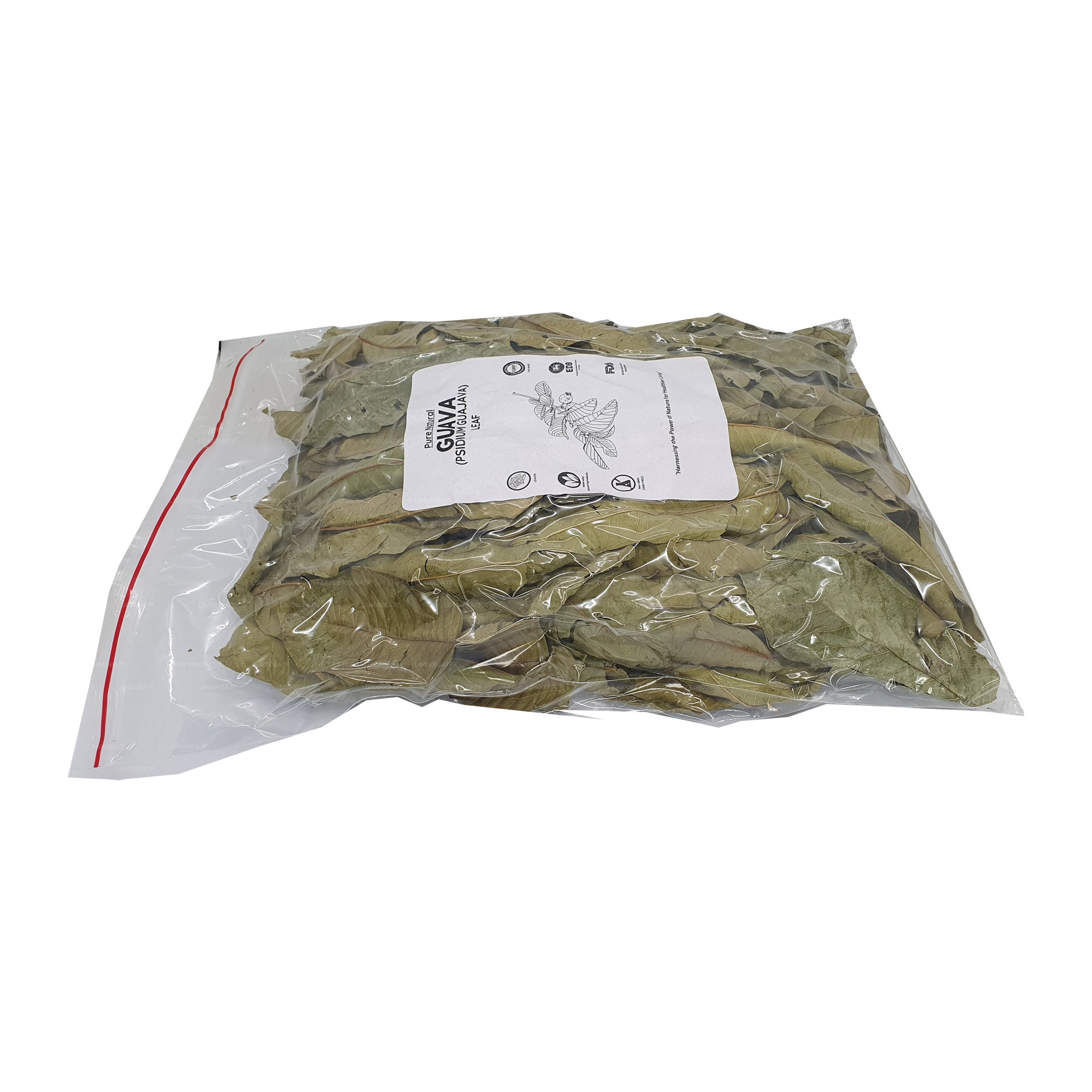
- Herbal teas — guava leaf tea, often blended with lemongrass, lime, moringa, or pineapple, is a popular wellness beverage. Dehydrated guava leaves, either whole or powdered, are used to brew infusions at home.
- Preserves and confectionery — guava jam, jelly, and cheese (a firm paste) are common household preparations.
- Medicinal use — guava leaf decoctions are a traditional remedy for diarrhoea, mouth ulcers, and minor inflammation in Sri Lankan households.
- Home gardening — compact guava trees are a fixture in Sri Lankan home gardens. Layered and grafted plants allow faster fruiting, making them practical for smaller plots.
How and Where Does Guava Grow in Sri Lanka?
Guava is highly adaptable and grows well across Sri Lanka's low-country wet and dry zones, from sea level up to around 1,000 metres elevation. It tolerates periods of drought once established, making it a resilient choice for home orchardists in the dry and intermediate zones. The tree is relatively fast-growing and can begin bearing fruit within two to three years from seed, or sooner when started from a layered or grafted plant.
Varieties such as the Ceylon Red, White Apple, Yellow Chinese, and Purple guava are cultivated for both commercial and domestic purposes across districts including Kurunegala, Kandy, Gampaha, and Mawanella — where the fruit's association with small estate agri-tourism has grown in recent years.
What Are the Key Differences Between Guava Leaf Tea and Fresh Guava Juice?
Both the fruit and the leaf of Psidium guajava are used as wellness products, but they serve different purposes and carry different nutritional profiles. Fresh fruit juice is rich in vitamin C, natural sugars, and dietary fibre, making it a nourishing everyday drink. Guava leaf tea, by contrast, is low in calories and is consumed primarily for its plant compounds — tannins and flavonoids — rather than for macronutrient value. It is most often taken as a post-meal digestive aid or as part of a daily herbal routine.
Ready-to-drink guava shots and cold-brew guava blends occupy a middle ground, combining fruit concentrate or juice with other botanicals such as passionfruit, lemongrass, or lime for a more complex flavour and a broader range of plant compounds in a single serving.
Is Guava Easy to Grow at Home?
For gardeners in Sri Lanka and other tropical climates, guava is one of the more rewarding fruit trees to cultivate at home. It demands relatively little in terms of soil quality or irrigation, although it responds well to regular feeding and adequate sunlight. Layered plants — where a rooted cutting from a mature, high-yielding tree is propagated — are preferred over seedlings because they inherit the productive traits of the parent and typically begin fruiting sooner.
When selecting a variety for a home garden, consider the available space and intended use: compact types such as the Kilo guava are well-suited to smaller plots; larger, spreading varieties may require more room but can yield heavily over a long season.