

Polgahawela is a quietly important town in Sri Lanka's North Western Province, sitting at the crossroads of the island's rail network and surrounded by productive agricultural land. While it rarely tops traveller itineraries on its own, the town serves as a natural pivot point for journeys between Colombo, Kandy, Kurunegala, and the north — and rewards those who pause here with a glimpse of everyday Sri Lankan life well away from the tourist trail.
Where is Polgahawela, and how do distances stack up?
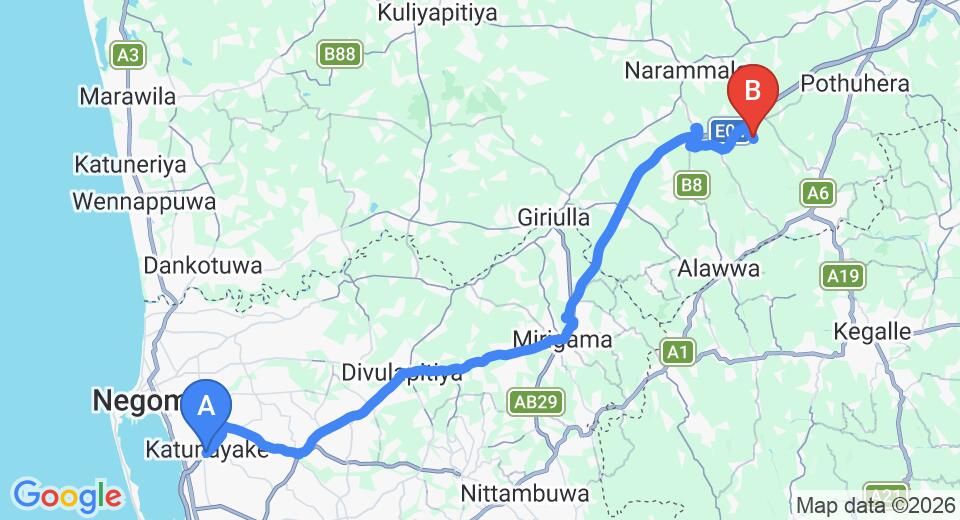
The town lies roughly 80 km north-east of Colombo, about 50 km south-west of Kandy, and around 20 km from the regional capital of Kurunegala. Bandaranaike International Airport is approximately 65 km to the south-west, making Polgahawela accessible without a long transfer. The terrain here is low-country foothills — flatter than the highlands to the east, greener than the coastal plains to the west.
Why is Polgahawela's railway junction so significant?
Sri Lanka Railways treats Polgahawela as one of its most strategically important junctions. The Main Line, which runs from Colombo Fort up through Kandy and on to Badulla in the hill country, intersects here with the Northern Line, which heads north through Anuradhapura toward Vavuniya and eventually Kankesanthurai on the Jaffna Peninsula. Any train journey connecting the south-west of the island with the north passes through this junction, meaning the station sees a steady flow of long-distance services throughout the day. Travellers using the railway to move between the cultural heartland and the ancient cities of the north will typically change or at least pass through here.
What is the landscape and economy around Polgahawela like?
The countryside surrounding the town is predominantly agricultural. Rubber plantations occupy much of the mid-elevation land, while coconut groves stretch toward the coastal lowlands. Smallholder farmers also cultivate spices — including Ceylon black pepper — alongside paddy and fruit crops. The fertile, well-watered soil of the North Western Province suits these crops well, and the local economy has historically depended on them. Light agro-processing activity, including rubber tapping and copra production, gives the town a working, unhurried character that contrasts sharply with the bustle of Colombo or the tourism economy of Kandy.
What cultural and religious sites can you find in Polgahawela?
Buddhist temples are the primary centres of community life in and around Polgahawela. Several viharas in the area date back generations, serving both as places of daily worship and as venues for poya-day observances, Vesak celebrations, and other religious events. The Dhamma school (daham pasala) tradition remains strong here, with children attending religious education on weekends — a living example of how Theravada Buddhism continues to structure rural Sri Lankan society. Visitors with an interest in local heritage will find these temples welcoming, though modest dress and respectful conduct are expected.
Is Polgahawela worth visiting as a destination in itself?
Honest answer: most travellers will experience Polgahawela as a transit point rather than a destination. That said, the Birds Park, Polgahawela gives the town a concrete attraction worth seeking out — a facility housing a varied collection of bird species that appeals to families and casual wildlife enthusiasts alike. Beyond the birds park, the town's appeal lies in its authenticity. Polgahawela's market area, local tea shops, and the rhythm of the railway station offer an unscripted slice of Sri Lankan provincial life that more polished tourist hubs cannot replicate.
How do you get to Polgahawela from Colombo or Kandy?
By train, Polgahawela sits on the Main Line and receives services from both Colombo Fort and Kandy throughout the day; journey times are typically under two hours from Colombo and under an hour from Kandy, depending on the service class. By road, the town is accessible via the A1 highway from Colombo or the A9 and A10 routes from Kurunegala and Kandy respectively. Private transfers from Bandaranaike International Airport are a straightforward option for travellers whose itinerary begins or ends here.
What day trips are possible from Polgahawela?
The town's central location makes it a practical base for a handful of excursions. Kurunegala, the North Western Province's largest city and a seat of medieval Sinhalese royalty, is roughly 20 km away. Wilpattu National Park — Sri Lanka's largest national park and one of the best places on the island to spot leopards — is reachable within about two hours to the north-west. To the east, the ancient city of Polonnaruwa can be visited as a long day trip, and the road to Kandy opens up access to the full range of the hill country's offerings.
- Kurunegala — medieval rock fortress and bustling provincial capital, around 20 km
- Wilpattu National Park — leopard and elephant habitat, roughly 2 hours north-west
- Kandy — cultural capital and Temple of the Tooth, around 50 km south-east
- Polonnaruwa — UNESCO-listed ancient city, accessible via the A11 or A6
- Birds Park, Polgahawela — on the town's own doorstep
When is the best time to visit Polgahawela?
The North Western Province generally experiences its dry season between May and September, when skies are clearer and road travel is more predictable. The inter-monsoonal period from October to January can bring heavy showers, though rain here tends to come in concentrated afternoon bursts rather than all-day downpours. There is no single peak festival season tied specifically to Polgahawela, so the town remains accessible and uncrowded year-round — a practical advantage for travellers building flexible itineraries.