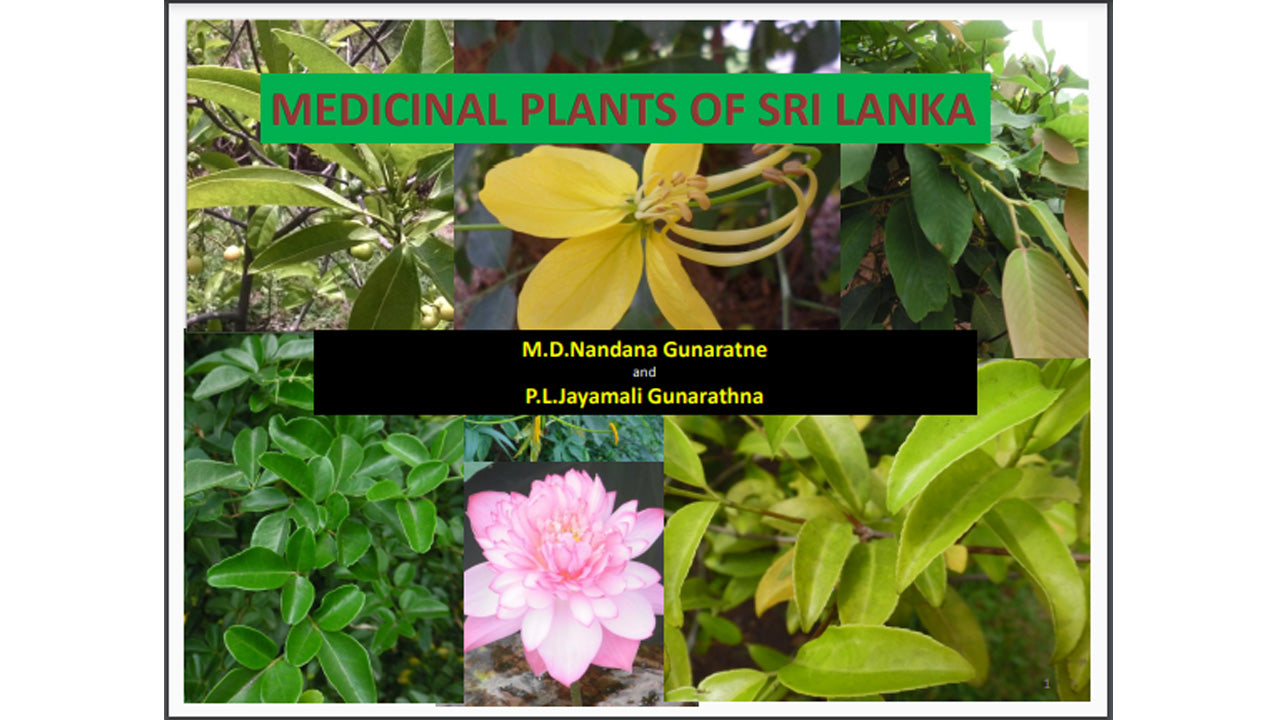
Ocimum basilicum, commonly known as sweet basil, is one of the most widely recognised aromatic herbs in the world and holds a respected place in Sri Lanka's catalogue of Ayurvedic medicinal plants. In the island's traditional healing systems, it is valued not merely as a culinary herb but as a plant with documented therapeutic properties that practitioners have drawn upon for centuries.
What is Ocimum basilicum?
Ocimum basilicum belongs to the family Lamiaceae and is native to tropical regions of central Africa and Southeast Asia, though it has been cultivated across South Asia — including Sri Lanka — for millennia. The plant typically grows as a tender annual herb, reaching around 30–60 cm in height, with bright green ovate leaves and small white or pale purple flowers arranged in slender spikes. Several varieties exist, differing in leaf size, colour, and essential oil composition.
The plant's characteristic fragrance comes from a complex mixture of volatile compounds, with eugenol, linalool, and methyl chavicol among the most prominent depending on the chemotype. This aromatic profile underpins both its culinary appeal and its medicinal reputation.
How is Ocimum basilicum used in Sri Lankan Ayurveda?
Within the Sri Lankan Ayurvedic tradition, Ocimum basilicum is categorised as a plant with heating, digestive, and carminative properties. Practitioners commonly recommend preparations made from its leaves to address digestive complaints, including bloating, indigestion, and mild stomach cramps. The leaves are also used in formulations intended to support respiratory health, particularly for easing coughs and mild congestion.
The plant is sometimes applied topically in poultices or infused oils to soothe minor skin irritations and insect bites. Its antimicrobial and anti-inflammatory properties, which have attracted interest in modern pharmacological research, align with traditional uses that long predate laboratory investigation. Decoctions of the fresh leaves are prepared at home across many parts of Sri Lanka, reflecting how embedded this herb is in everyday wellness practice rather than solely in formal Ayurvedic clinics.
In the broader context of Sri Lanka's rich herbal pharmacopoeia, Ocimum basilicum sits alongside other documented medicinal plants such as Acacia chundra and Pongamia pinnata, each occupying a specific therapeutic niche within classical formulations.
What does Ocimum basilicum look like when growing in Sri Lanka?
In Sri Lanka's warm, humid climate, sweet basil thrives with relatively modest care. The plant is commonly found in home gardens, medicinal herb gardens attached to Ayurvedic hospitals, and smallholder agricultural plots across the low and mid country. It prefers well-drained soil and ample sunlight, conditions that the island's tropical environment readily provides for much of the year.
Growers typically harvest leaves before the plant flowers to maintain the highest concentration of aromatic oils. Once flowering begins, the plant channels energy into seed production and the leaves gradually lose some of their potency. In Sri Lanka's year-round growing season, successive plantings allow a continuous harvest.
What are the key therapeutic properties attributed to this plant?
Traditional Ayurvedic texts and more recent ethnobotanical surveys of Sri Lanka attribute a range of properties to Ocimum basilicum:
- Carminative: Helps to relieve gas and digestive discomfort.
- Antimicrobial: Leaf extracts have demonstrated activity against certain bacterial strains in laboratory settings.
- Anti-inflammatory: Used in traditional practice to reduce mild inflammatory conditions.
- Adaptogenic support: Some Ayurvedic traditions — particularly those that do not distinguish sharply between Ocimum basilicum and the closely related Ocimum tenuiflorum (holy basil or tulsi) — ascribe stress-modulating benefits to basil preparations.
- Expectorant: Leaf decoctions are used to ease mucus clearance in mild respiratory ailments.
It is important to note that while these traditional uses are well-documented, individuals seeking treatment for specific health conditions should consult a qualified Ayurvedic physician or medical professional rather than self-prescribing herbal preparations.
How does Ocimum basilicum relate to Sri Lanka's wider Ayurvedic tradition?
Sri Lanka maintains one of the world's most intact living traditions of Ayurvedic medicine, supported by government-recognised institutions, licensed practitioners, and a long history of indigenous medical knowledge often referred to as Deshiya Chikitsa. Medicinal plants form the foundation of this system, and Ocimum basilicum is among the hundreds of species catalogued and used within it.
The island's biodiversity — encompassing rainforests, dry-zone scrublands, and montane ecosystems — supports an exceptional range of medicinal flora. The Sinharaja Forest Reserve, a UNESCO World Heritage Site, is one of several ecosystems where botanists continue to document plant species with traditional medicinal applications, underscoring the ongoing relevance of Sri Lanka's herbal heritage.
Ayurvedic compound formulations, known as churnas, gutis, and lehyams, frequently combine Ocimum basilicum with other plant ingredients to achieve synergistic effects. This integrative approach — layering herbs with complementary properties — is a defining characteristic of classical Ayurvedic pharmacy and distinguishes it from single-herb supplementation.
Can visitors encounter Ayurvedic herb gardens during a Sri Lanka trip?
Several Ayurvedic centres, botanical gardens, and rural tourism experiences across Sri Lanka offer guided introductions to medicinal plants, including Ocimum basilicum. These visits provide context for how traditional medicine is practised today, from the preparation of raw plant material through to finished formulations dispensed in clinical settings.
Visitors with an interest in herbal medicine and wellness tourism often find that these experiences complement broader itineraries exploring Sri Lanka's cultural and natural heritage. Lakpura can incorporate Ayurvedic herb garden visits into customised travel programmes on request.
Other species in this genus
3 more, sharing the same genus.