

Nuwara Eliya occupies a singular place in Sri Lanka's hill country — a town shaped by British colonial ambition, cooled by mountain air, and still wearing much of its Victorian character. Among the colonial-era buildings that survive here, the Nuwara Eliya Post Office stands out for both its architectural drama and its continued, daily usefulness. It is not a ruin or a museum piece; it is a working post office that doubles as one of the most photographed facades in the Central Highlands.
What makes the Nuwara Eliya Post Office historically significant?
The building was constructed in 1894, commissioned specifically to handle the correspondence of British colonials who had made Nuwara Eliya their preferred highland retreat. That purpose-built origin gives it a clarity of character that later adaptations rarely achieve. More than a century on, it remains one of the oldest functioning post offices in Sri Lanka and one of the oldest surviving structures in the town itself.
Its place in philatelic history was confirmed on 26 December 1990, when the Sri Lanka Postal Department issued a Rs. 10 commemorative stamp featuring the building as its central image, marking World Postal Day. The stamp brought the post office to the attention of collectors and travellers who might otherwise have walked past, and it has been considered a visitor attraction in its own right ever since.
What does the building look like?
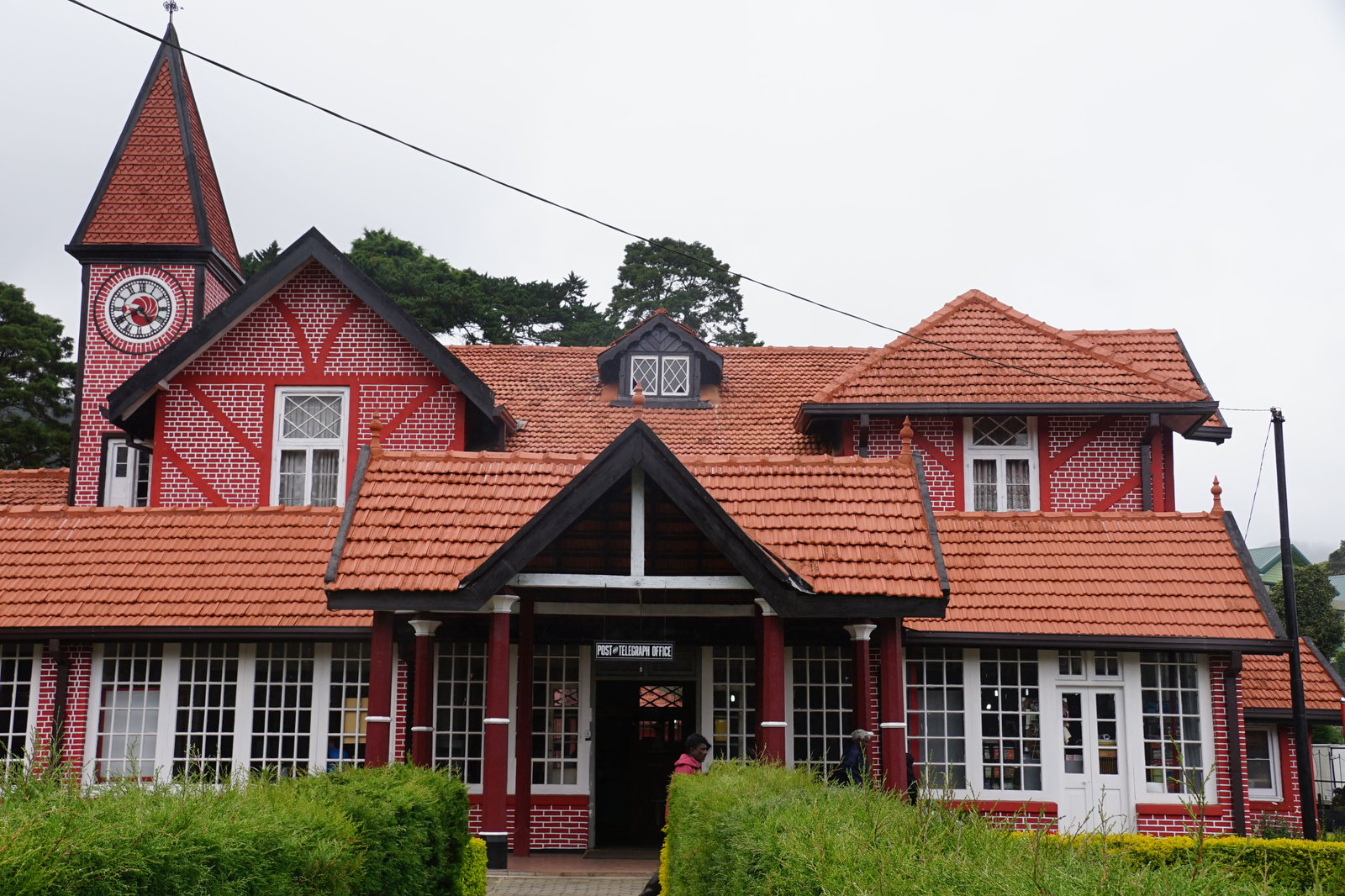
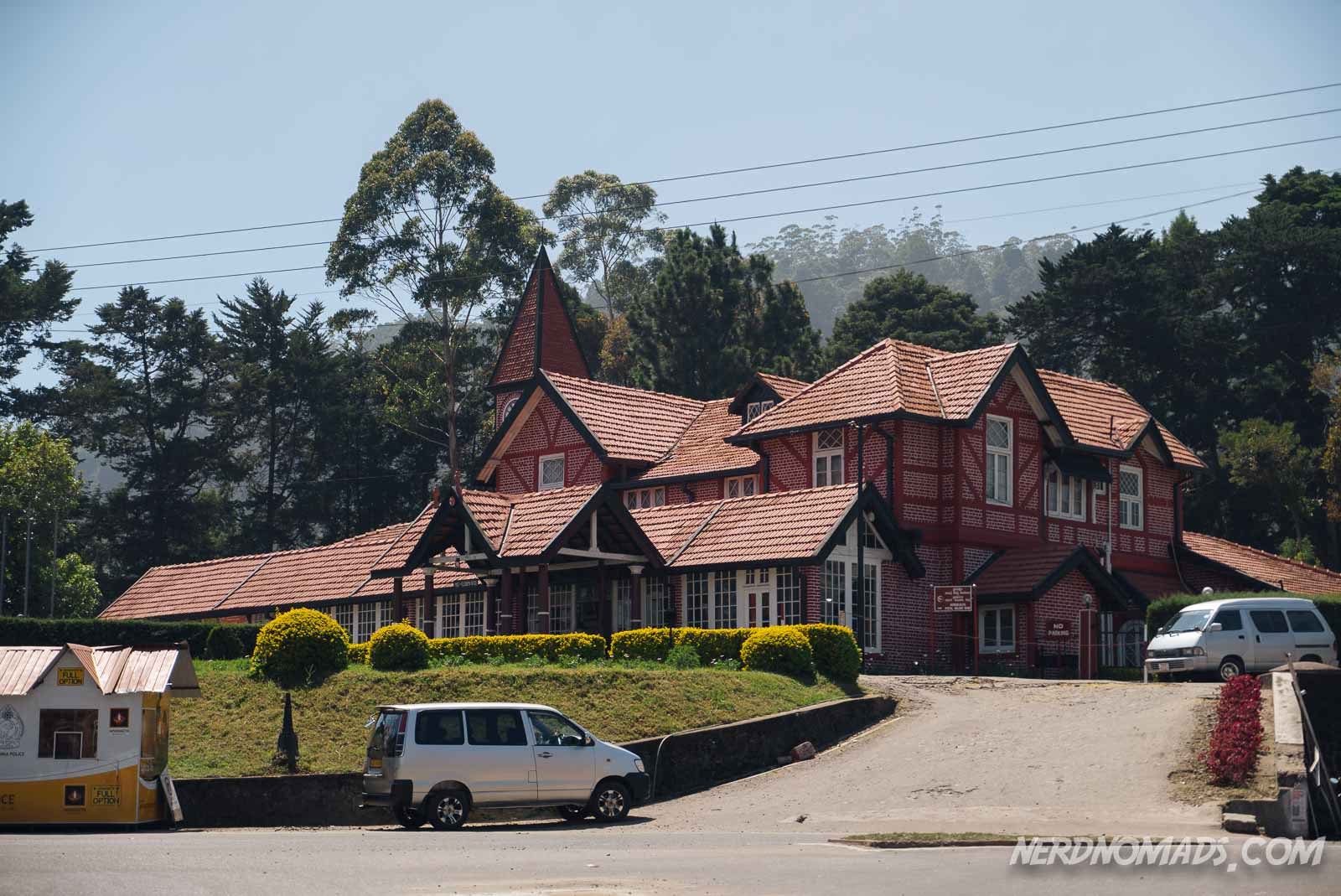
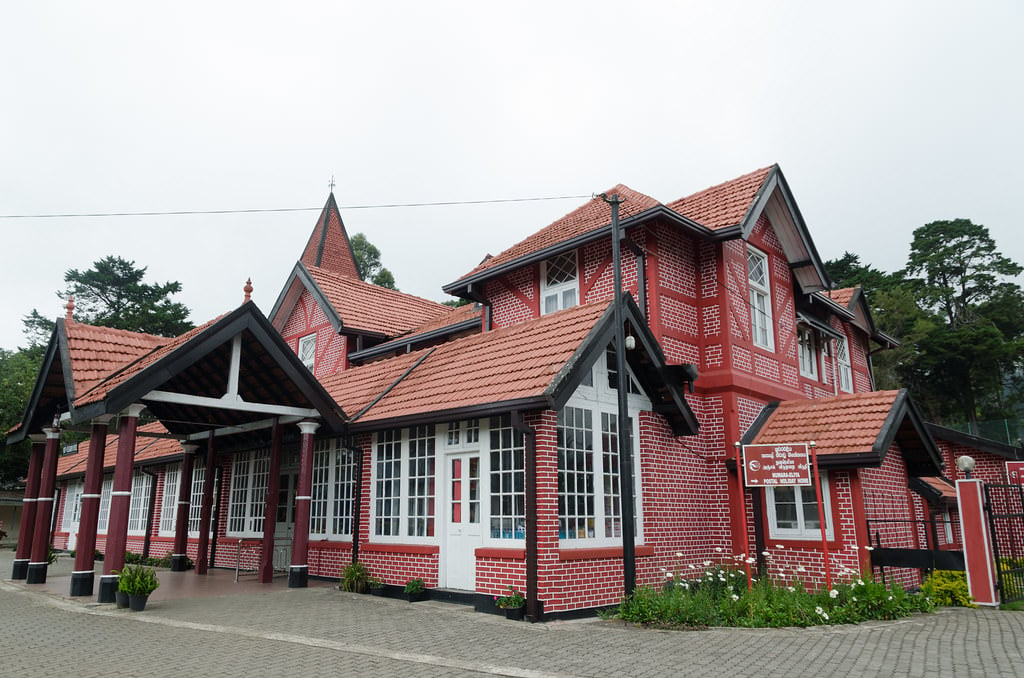
The post office is built in a Tudor Revival style — an architectural choice that was common among British colonial administrators who wanted familiar visual references thousands of miles from home. The structure features pointed spires, a small clock tower, and walls of deep red brick. The roofline is tiled in bright orange, creating a warm contrast against the cool grey skies that often hang over Nuwara Eliya. Manicured lawns and neatly trimmed hedges border the building, giving the compound the appearance of a well-kept English country house transplanted into a Sri Lankan hillside.
The overall effect is one of unhurried solidity. The building does not try to impress through scale — it impresses through detail and the evident care taken in its upkeep over more than a century.
Can visitors stay inside the Nuwara Eliya Post Office?
Since 2012, the upper floor of the post office — formerly the living quarters of the postmaster — has been converted into tourist accommodation. Guests can book a room and experience the building from the inside, sleeping in a space that once served the administrative heart of colonial hill-country life. The rooms retain period character while offering the basic comforts expected by modern travellers.
For those who do not secure accommodation, the ground floor remains accessible during normal postal hours. The post office sells decorative postcards that make for an unusually authentic souvenir — one that you can actually post from the very building depicted on the card.
How does the post office fit into a Nuwara Eliya itinerary?
The post office sits near the centre of Nuwara Eliya town, making it easy to combine with other landmarks on foot. The surrounding area includes the racecourse, Victoria Park, and several other colonial-era buildings that together form an informal architectural trail through the town's British past. Most visitors spend around twenty to thirty minutes at the post office itself — long enough to photograph the exterior from multiple angles, browse the postcards inside, and get a sense of the building's proportions.
Nuwara Eliya is also a natural base for day trips into the surrounding hill country. Horton Plains National Park, with its plateau grasslands and World's End escarpment, lies within roughly an hour's drive and is a common addition to any post office visit. Bluefield Tea Gardens offer a closer look at the tea culture that defined the region's economy for well over a century.
When is the best time to visit Nuwara Eliya?
The town sits at around 1,868 metres above sea level, so temperatures are cool year-round by Sri Lankan standards — typically between 9°C and 20°C. The driest and most reliably pleasant period runs from January through April, when the skies clear and the surrounding landscape is at its most vivid green. The Sinhalese and Tamil New Year in April brings a festive atmosphere to the town. The southwest monsoon, which arrives between May and August, brings heavier rainfall and mist, which can give the colonial buildings an atmospheric quality of their own — though outdoor sightseeing becomes less comfortable.
How do I get to the Nuwara Eliya Post Office from Colombo?
Nuwara Eliya is approximately 180 kilometres from Colombo by road, typically three and a half to five hours depending on traffic and the route taken. The most scenic approach is via Kandy and then up through the tea-country roads — a route that passes through some of the island's most recognisable highland scenery. The hill-country train from Colombo Fort to Nanu Oya (the nearest station to Nuwara Eliya, around eight kilometres away) is one of Sri Lanka's most celebrated rail journeys and a worthwhile experience in itself. From Nanu Oya, taxis and three-wheelers connect to the town centre, where the post office is easily walkable from most guesthouses.
What else should I know before visiting?
The post office is a working government facility, so visitors are expected to behave considerately toward staff and customers. Photography of the exterior is freely done by almost everyone who passes, and staff are generally accustomed to it. The interior is functional and modest — this is not a heritage museum with interpretive panels, but an active post office that happens to occupy a remarkable building. That combination is precisely what makes it worth a visit: the ordinary and the extraordinary occupying the same Tudor walls.
If you are looking for somewhere to stay in Nuwara Eliya that matches the town's colonial character, The Grand Hotel is the most prominent historic property in town and sits within easy walking distance of the post office.