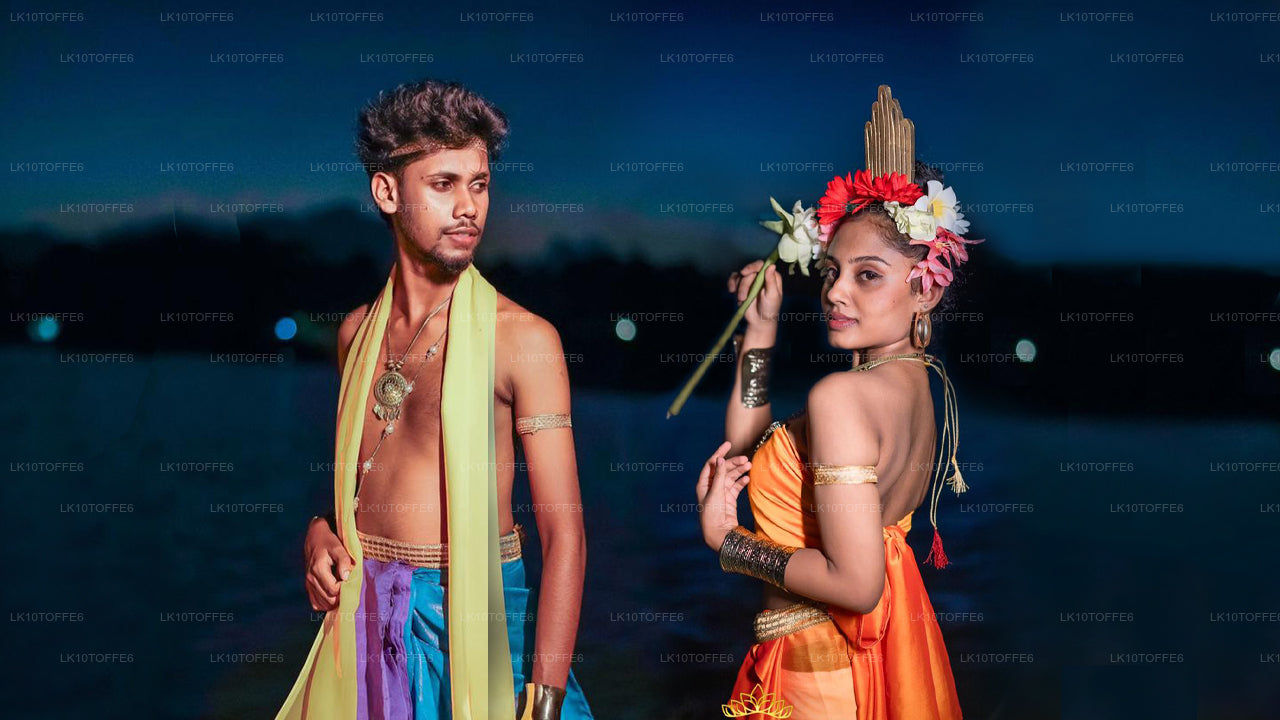
Clothing in Sri Lanka carries meaning well beyond fabric and thread. The island's traditional dress has evolved across centuries of royal courts, Buddhist monasteries, colonial encounters, and living village customs, yet it retains a coherent aesthetic: modest, graceful, and attuned to a tropical climate. Understanding what people wear — and why — offers a useful window into Sri Lankan culture for any visitor.
What is the national dress of Sri Lanka for men?
The standard male national dress combines a sarong with a national shirt (also called a national dress shirt). The sarong — a single length of woven fabric wrapped and knotted at the waist — has been worn on the island for well over a thousand years. Its practicality in Sri Lanka's warm, humid conditions is obvious: it allows airflow, dries quickly, and requires no tailoring. Plain cotton sarongs in cream, white, or muted checks are everyday wear; finer weaves with subtle patterns appear at ceremonies and formal events.
The national shirt that pairs with the sarong is characteristically collarless, usually made from cotton or linen, and worn with long sleeves even in warm weather — a mark of formality. In more elevated contexts, such as Buddhist temple observances or official state occasions, men may add a banian jacket (a structured, mandarin-collar overcoat) or drape a shawl across one shoulder. Civil servants, academics, and politicians regularly appear in this ensemble as a deliberate signal of cultural pride alongside professional standing.
What is the traditional dress of Sri Lankan women?
The sari is the most widely recognised form of female national dress in Sri Lanka. A single length of fabric — typically five to six yards — is draped around the body over a fitted blouse and an underskirt called a petticoat. The precise technique of draping varies subtly between Sinhalese, Tamil, and Moor traditions, though the overall silhouette remains similar across communities.
Sri Lankan saris are distinguished by their use of colour and hand-crafted detail. Silk saris with gold-thread borders (zari work) are favoured for weddings and formal ceremonies. Cotton saris in lighter weaves serve everyday and professional settings. In government offices, banks, and school staff rooms across the country, the sari remains the dominant professional uniform for women — a practicality that has quietly reinforced its cultural longevity.
An older and increasingly rare garment is the osariya, sometimes called the Kandyan sari. Rather than the Indian-influenced drape most commonly seen today, the osariya is wrapped in a style believed to have been the pre-colonial norm among Sinhalese women. It is still worn by bridesmaids, classical dancers, and schoolgirls during national celebrations such as Independence Day.
How does religion shape what Sri Lankans wear?
Buddhism, Hinduism, Islam, and Christianity all leave visible marks on dress choices. When visiting a Buddhist temple, both men and women are expected to cover their shoulders and knees; white or very light-coloured clothing is preferred as a sign of purity and humility. This is especially true on poya days (full-moon days) when lay Buddhists observe sil — a form of devotional retreat — and dress entirely in white.
Hindu kovil ceremonies in the north and east similarly call for modest, often freshly washed clothing. Muslim women in Sri Lanka frequently wear the abaya or a long-sleeved, full-length ensemble, while the men's dress at Friday prayers often includes a sarong and kufi cap. These distinctions mean that what counts as respectful attire shifts depending on the community and occasion — something worth keeping in mind when planning temple or mosque visits.
When is traditional dress worn in Sri Lanka today?
Modern urban Sri Lankans blend international fashion with traditional dress in pragmatic ways. Western-style clothing dominates daily office and street wear in Colombo and other cities, yet traditional garments reliably appear at a defined set of occasions:
- National Day (4 February): schoolchildren across the country participate in ceremonies wearing national dress, and television presenters often appear in osariya or national shirts.
- Sinhala and Tamil New Year (April): new clothing — often traditional — is purchased and worn as part of the new-year rituals associated with Sinhala Avurudu.
- Weddings: Kandyan wedding ceremonies in particular follow a strict traditional dress code, with the groom in full Kandyan costume (nilame attire) and the bride in an elaborate osariya.
- The Esala Perahera: participants in the Esala Perahera Festival in Kandy dress in traditional Kandyan regalia that has changed little in several centuries.
- School and religious functions: white uniform shirts and sarongs or saris are standard for formal school events and religious observances.
What is Kandyan traditional attire?
The Kandyan kingdom (roughly 1469–1815) developed a highly distinctive court dress that survives today mainly in ceremonial contexts. Male Kandyan attire consists of an elaborately folded cloth (komba) pleated at the front and secured with a waistband, paired with a fitted jacket, chest ornaments, and a cloth headdress. This is the costume worn by dancers in Kandyan classical dance, by participants in perahera processions, and — in a simplified version — sometimes offered to tourists visiting cultural villages near Kandy.
The full regalia of a Kandyan chief (nilame) is one of the most elaborate traditional costumes in South Asia, with layers of silver and gold ornaments, intricate embroidery, and structured headwear. Seeing it in person during a perahera or a ceremonial occasion remains one of the more striking cultural experiences Sri Lanka offers.
Can visitors try on traditional Sri Lankan dress?
Yes — and many travellers find it a memorable way to engage with local culture rather than simply observe it. Cultural villages near Sigiriya, Kandy, and Galle regularly offer opportunities to dress in traditional clothing for photography. The Sigiriya Traditional Dress Up and Cultural Photography Tour is a structured experience organised by Lakpura that places visitors in authentic Kandyan or village attire at one of Sri Lanka's most photographed landscapes.
When participating in such experiences, a few practical notes apply: the fabric can be heavy and warm, especially the more formal layered versions; respectful handling of the garments and the guidance of local dressers who know the proper folding techniques makes the experience both accurate and comfortable.
What fabrics are used in Sri Lankan traditional dress?
Cotton dominates everyday traditional clothing, suited to the climate and widely available. Silk — much of it imported historically from India and China — features in ceremony and celebration wear. Hand-loomed fabrics from areas such as Dumbara (near Kandy) carry geometric patterns that are considered distinctively Sri Lankan and are sometimes woven into saris or shawls. Batik, though influenced by Indonesian technique through Dutch colonial contact, has been thoroughly absorbed into Sri Lankan craft and is used for sarongs, shirts, and decorative garments sold across tourist markets and boutique textile shops alike.
How has modern fashion influenced Sri Lankan dress?
Globalisation has shifted everyday dress in Sri Lanka considerably since the 1980s. Jeans, T-shirts, and Western business wear are the norm in most urban and suburban workplaces. Yet the pressure to modernise has, paradoxically, reinforced a certain cultural attachment to traditional forms. Government campaigns, school curricula, and cultural organisations actively promote national dress as an expression of identity. Fashion designers in Colombo increasingly work with traditional weaves and silhouettes, creating contemporary pieces that reference the sarong's drape or the osariya's fold without being purely ceremonial.
The result is a textile culture in transition but not in decline — one where a civil servant in a national shirt and a young professional in a linen suit can share the same office without either appearing out of place.
Related reading
5 pages on closely related subjects.