


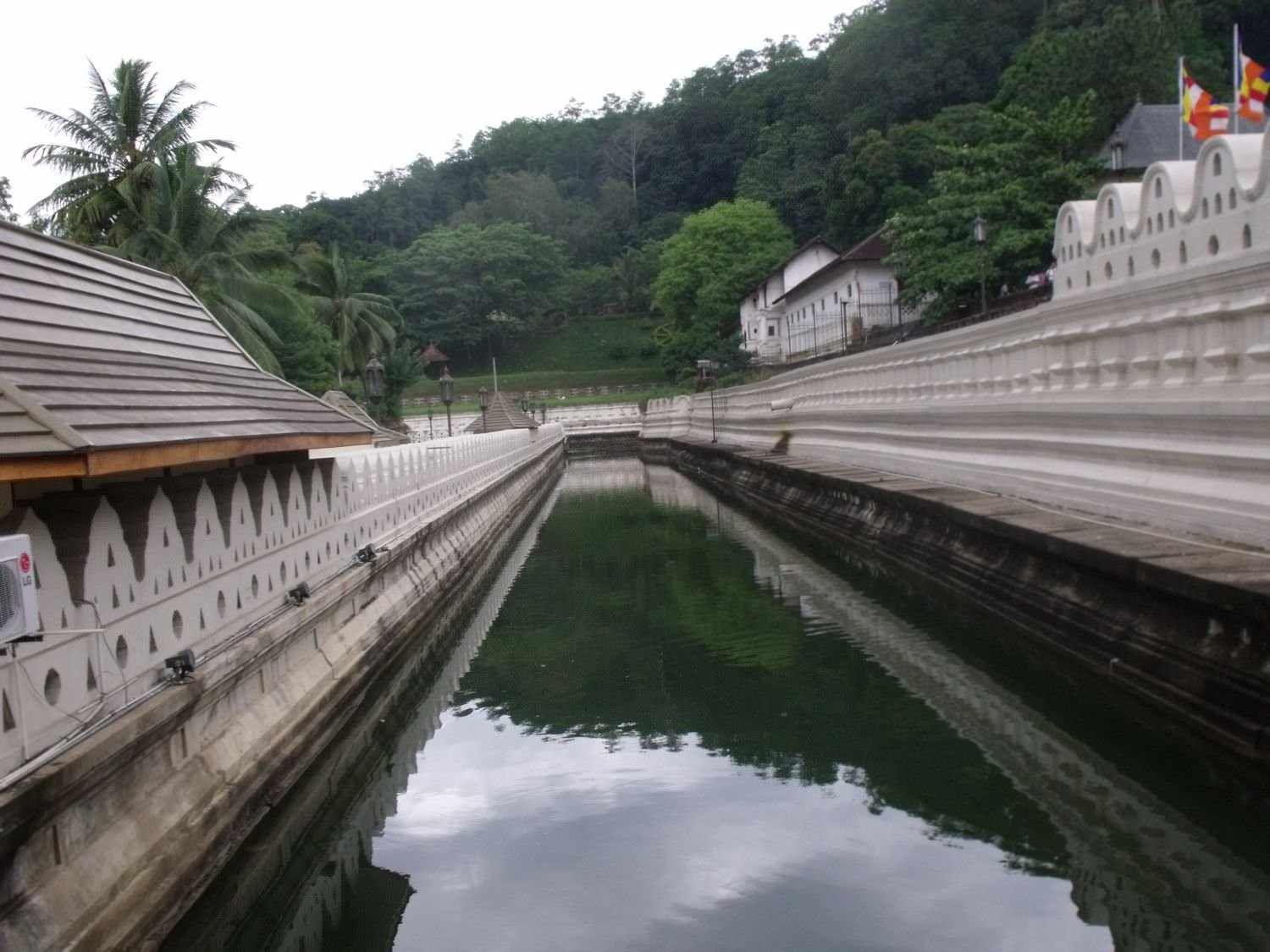
A moat is more than a trench filled with water. In Sri Lanka's ancient cities, moats were feats of hydraulic engineering, symbols of royal authority, and living ecosystems that sustained palace complexes for centuries. From the rock fortress of Sigiriya to the medieval capital of Polonnaruwa, the island's moats tell a layered story of military strategy, aesthetic refinement, and environmental ingenuity.
What is the history of moats in Sri Lanka?
Sri Lanka's moat-building tradition stretches back more than two thousand years, rooted in the hydraulic civilisation of the dry zone. Ancient Sinhalese kings recognised that controlled water — whether for irrigation, palace defence, or ceremonial landscaping — was an expression of sovereign power. Moats were therefore designed with multiple purposes in mind: they slowed advancing armies, sustained aquatic ecosystems, fed surrounding gardens, and created dramatic visual approaches to palace gates.
The most celebrated example is the water moat at Sigiriya: The Ancient Rock Fortress, constructed in the fifth century CE during the reign of King Kashyapa. This broad channel, still partially intact today, was part of an elaborate water-garden system that drew on natural springs and seasonal rainfall to maintain a constant supply. Engineers of the era used underground conduits, sluice gates, and gravity-fed channels with a precision that continues to impress hydrologists.
At Polonnaruwa, the medieval capital, moats formed an integral part of the city's defensive perimeter. The outer moat surrounded the entire royal citadel, functioning as both a physical barrier and a psychological statement of royal inviolability. Fragments of this moat remain visible today within the archaeological park.
How were ancient Sri Lankan moats engineered?
The engineering behind these water features was remarkably sophisticated for their era. Builders relied on careful site surveys to exploit natural gradients, ensuring that water could be directed into the moat from nearby tanks or rivers without mechanical pumps. Stone-lined channels and clay-packed embankments minimised seepage, while stepped sluices allowed engineers to regulate water depth across seasons.
At Sigiriya, the moat system was integrated with a series of fountain gardens — shallow limestone basins fed by underground pressure pipes — that activated naturally when the water table rose during the rains. This dual function, combining defensive utility with ornamental waterscapes, placed Sri Lanka's ancient hydraulic engineers among the most inventive of the ancient world.
Moats were also designed with ecological awareness. The permanent water bodies attracted birds, fish, and aquatic plants, creating natural buffer zones that enhanced the fortification while providing a food resource for palace inhabitants.
What can visitors see at Sri Lanka's ancient moat sites today?
The best-preserved moat system accessible to visitors is at Sigiriya, where the western water gardens and their flanking moat channels have been partially restored and are included within the UNESCO World Heritage Site. Walking the outer perimeter of the rock fortress, visitors pass the main moat — still holding water for much of the year — before entering the inner gardens.
Polonnaruwa's archaeological park also rewards careful exploration. The royal palace compound is ringed by traces of its original defensive moat, and the broader network of ancient tanks that supplied the city offers context for understanding how water management shaped urban planning at this scale. The Kiri Vehera Stupa and surrounding monuments sit within this water-engineered landscape.
For visitors interested in living hydraulic traditions, the Dambulu Oya River in the Cultural Triangle region demonstrates how ancient water channels continue to feed modern agriculture, including the paddy fields that define the Sri Lankan rural landscape.
What is the significance of moats in Sri Lankan culture?
Beyond their military function, moats carried deep symbolic weight. In Buddhist cosmology, the ocean surrounds Mount Meru at the centre of the universe, and the layout of royal cities — with water encircling a central palace — consciously echoed this cosmological model. The king, positioned at the centre, was thereby aligned with divine order.
This cosmological symbolism shaped the planning of Anuradhapura, Polonnaruwa, and Sigiriya alike. Even the placement of sacred stupas within moated precincts reinforced the idea that the most important spaces were separated from the ordinary world by water, physically and spiritually.
The aesthetic dimension should not be overlooked. Royal pleasure gardens in Sri Lanka routinely incorporated reflecting pools, lotus ponds, and ornamental channels that blurred the boundary between defensive infrastructure and landscape art. The result was an architecture of water that has no precise parallel elsewhere in South Asia.
When is the best time to visit moat sites in Sri Lanka?
The dry season, broadly from January to April in the Cultural Triangle region, offers the most comfortable conditions for exploring open archaeological sites. However, the moats themselves are most visually striking shortly after the north-east monsoon (typically November to January), when they hold their maximum water levels and surrounding vegetation is lush.
Visiting in the early morning, particularly at Sigiriya, allows travellers to see the moat and water gardens in low-angle light before the heat of the day builds. Midday visits to open sites like Polonnaruwa can be taxing, so carrying water and sun protection is essential year-round.
How do I get to the main moat sites from Colombo?
Sigiriya lies roughly 170 kilometres north of Colombo, typically reached in around four hours by road. Polonnaruwa is a further 60 kilometres east of Sigiriya and can be combined into a two- or three-day itinerary covering the Cultural Triangle. Both sites are served by good roads and are accessible via private vehicle — a comfortable option for travellers who want flexibility in timing their arrival.
Inter-city trains run between Colombo and the nearby towns of Habarana and Polonnaruwa; from there, tuk-tuks and taxis reach the archaeological parks. A Tuk-Tuk Safari is a popular way to cover multiple monuments within Polonnaruwa's archaeological park itself, as the ruins are spread across several square kilometres.
Are there conservation efforts to protect Sri Lanka's ancient moats?
The Central Cultural Fund of Sri Lanka, operating under the Ministry of Culture, oversees the restoration and maintenance of ancient hydraulic infrastructure at UNESCO-listed sites. Ongoing work at Sigiriya has focused on stabilising moat embankments, clearing invasive vegetation, and carefully restoring sections of the fountain garden channel system to working order.
International partnerships, including collaboration with UNESCO, have contributed funding and technical expertise to this work. Visitors paying the heritage site entrance fee contribute directly to these conservation programmes, making tourism an active participant in preservation rather than merely a beneficiary of it.
Nearby places
14 places within about 25 km, nearest first.
- Athreya Ayurvedic Spa, Sigiriyaunder 1 km
- Athreya Ayurvedic Spa, Sigiriyaunder 1 km
- Gold Routeunder 1 km
- Naipena Caveunder 1 km
- Sigiriya Villageunder 1 km
- Deraniyagala Caveunder 1 km
- Sigiriya Cityunder 1 km
- Sigiriya Rock Fortressunder 1 km
- Sigiriya Sanctuaryunder 1 km
- Sigiriya Villageunder 1 km
- Ancient Architectureunder 1 km
- Aligala (Elephant Rock)under 1 km
- Heritage1 km
- Heritage Tours1 km
