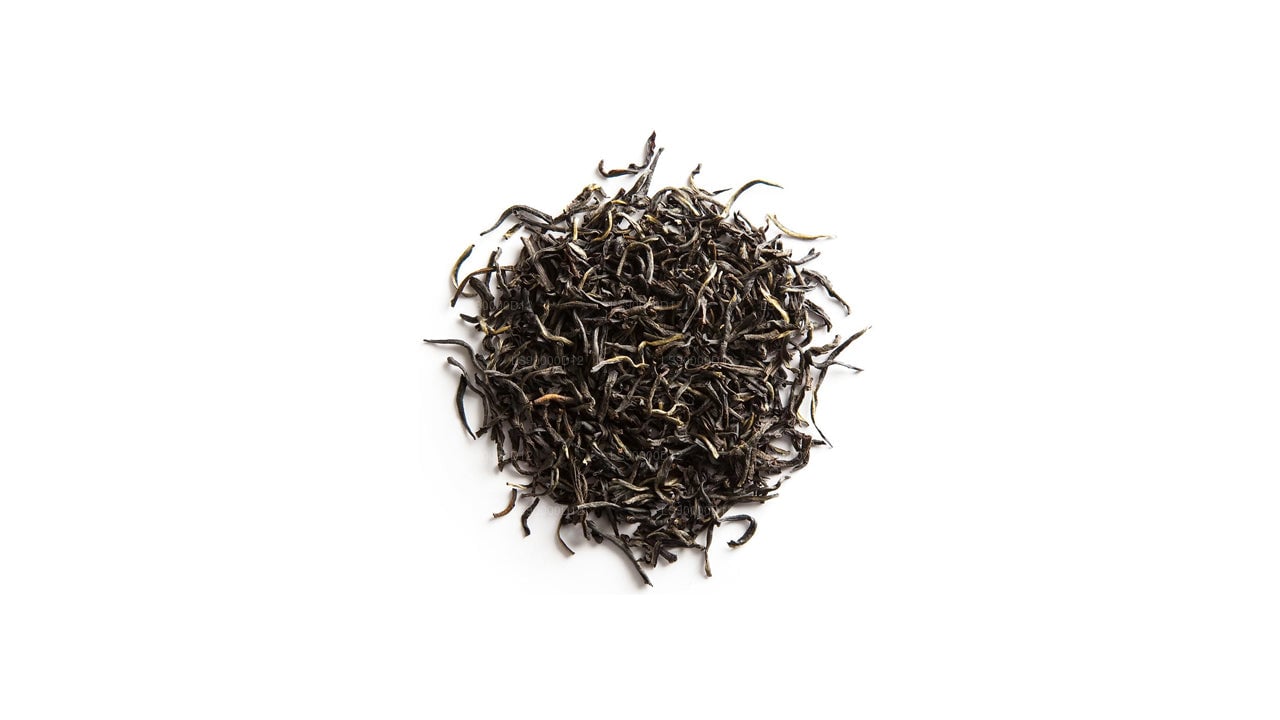
Tucked into the hills of Dangalla in the Alapaladeniya area of Sri Lanka's Southern Province, Liyonta Tea Estate is one of the country's lesser-known but quietly accomplished single-origin producers. For nearly two decades the factory has been processing leaf from its surrounding gardens into premium Ceylon tea that reaches both local households and international buyers. What distinguishes Liyonta is its breadth of output and its consistent emphasis on traceability — every batch can be traced back to a defined growing area, which matters increasingly to buyers who want to know exactly where their cup comes from.
Where is Liyonta Tea Estate located?
The estate sits in Dangalla, a rural locality within Alapaladeniya, in the Southern Province of Sri Lanka. This part of the country is not traditionally associated with the high-grown teas of Nuwara Eliya or Uva, but the mid-elevation terrain and the humid, equatorial climate produce a distinct leaf character — typically fuller-bodied and with a brisk, malty quality that suits both standalone brewing and blending.
The nearest major town is Galle, making Liyonta reasonably accessible for travellers moving along the southern coastal corridor. If you are visiting the Sinharaja Forest Reserve, the estate falls within the same broad region and can be incorporated into a wider itinerary covering Sri Lanka's south.
What teas does Liyonta produce?
Liyonta operates a diversified production line with more than 60 individual products across several processing styles. The two principal categories are:
- Orthodox leaf teas — including Orange Pekoe A (OPA) and standard Pekoe grades, which retain a long, wiry leaf and suit slow, careful brewing.
- Crush, Tear, Curl (CTC) teas — a machine-processed style that produces small, granular pellets. CTC infuses quickly and strongly, making it the format of choice for milk tea and traditional Sri Lankan morning brews.
Beyond these two broad styles, the estate produces specialty blends and flavoured variants aimed at export markets in Europe, the Middle East, and East Asia. The range reflects a deliberate strategy: rather than competing purely on volume, Liyonta positions itself around variety and the assurance of single-estate provenance.
How long has Liyonta Tea Estate been operating?
The factory was established around 2005, giving it roughly 19 years of continuous production at the time of writing. That is a relatively short run in an industry where estates like Dimbula's historic gardens have been producing for well over a century, but it also means Liyonta has grown up in the modern era of Ceylon tea — with contemporary quality-control standards, traceability expectations, and export compliance built into its DNA from the start rather than retrofitted later.
What sustainable practices does Liyonta follow?
The estate has articulated a commitment to ethical cultivation and processing, which in practical terms covers responsible use of agricultural inputs, fair treatment of estate workers, and minimising waste in the manufacturing process. Single-estate production itself is a form of traceability that benefits consumers: when a tea carries a named-estate designation, the grower is accountable for exactly how that leaf was grown and handled, with no opportunity to mask quality issues through blending from multiple anonymous sources.
For travellers interested in the broader economics of Sri Lanka's tea sector, a visit to a working factory like Liyonta offers a grounded counterpoint to the polished plantation hotels of the Hill Country — you see the mechanics of production, not just the romance.
How does Liyonta tea compare with other Ceylon single-estate teas?
Ceylon tea quality is conventionally sorted by altitude: high-grown estates (above roughly 1,200 m) in Nuwara Eliya and Uva produce the most delicate, aromatic teas; mid-grown estates (600–1,200 m) deliver balance and body; low-grown estates (below 600 m) tend to give the strongest, darkest cups. Dangalla sits in the low-to-mid range, so Liyonta teas lean toward bold, full-bodied infusions rather than the floral subtlety you would find in a high-grown leaf.
| Grade | Leaf style | Typical brew character |
|---|---|---|
| OPA (Orange Pekoe A) | Long, open orthodox leaf | Bright, medium-bodied, clean finish |
| Pekoe | Shorter orthodox leaf | Fuller, slightly more tannic |
| CTC | Granular pellets | Very strong, ideal with milk and sugar |
Can visitors tour the Liyonta Tea Factory?
Like many working factories in Sri Lanka, Liyonta's primary function is production rather than tourism, but small-group and trade visits can typically be arranged with advance notice. A factory tour usually covers the withering troughs where freshly plucked leaf loses moisture, the rolling or CTC machines that break down the leaf cells, the oxidation room where the characteristic colour and flavour develop, and the drying chamber that arrests oxidation and locks in the final character. If you are planning a visit, coordinating through a local ground operator is the most reliable way to ensure the factory floor is accessible on your chosen day.
For a broader tea-country experience, the estate pairs well with a visit to Bluefield Tea Gardens, which is set up specifically for visitor tours and tastings.
How can I buy Liyonta tea?
Liyonta distributes through its own channels as well as through licensed retailers and online platforms. Lakpura stocks the estate's Pekoe grade Ceylon black tea in 100 g packs, allowing you to source it with confidence and have it shipped internationally. Single-estate teas make for one of the most practical and culturally grounded souvenirs from Sri Lanka — lightweight, non-perishable, and with a story behind the cup.
If you want to compare the Liyonta character with other regional styles, exploring the wider world of Ceylon green tea and other processing categories gives useful context for how much terroir and technique can shift the final result.
What else is worth visiting near Liyonta Tea Estate?
The estate's location in the Southern Province places it within reach of several compelling attractions. The Udawalawe National Park is one of Sri Lanka's premier wildlife destinations, known for large resident elephant herds and excellent year-round game viewing. The Madu River Safari through the Madu Ganga wetlands offers a quieter, waterborne perspective on the south's ecology. And for those drawn to colonial heritage and fort architecture, a Galle City Tour is an easy half-day extension from the Alapaladeniya area.
Nearby places
8 places within about 25 km, nearest first.
- Devitura Estate1 km
- Bimbaramaya - Eluketiya3 km
- Thawalama Ambalama10 km
- Gin Ganga11 km
- Mabotuwana Tempita viharaya11 km
- Homadola Estate12 km
- Henakanda Estate12 km
- Kanneliya Rain Forest13 km
Related reading
5 pages on closely related subjects.