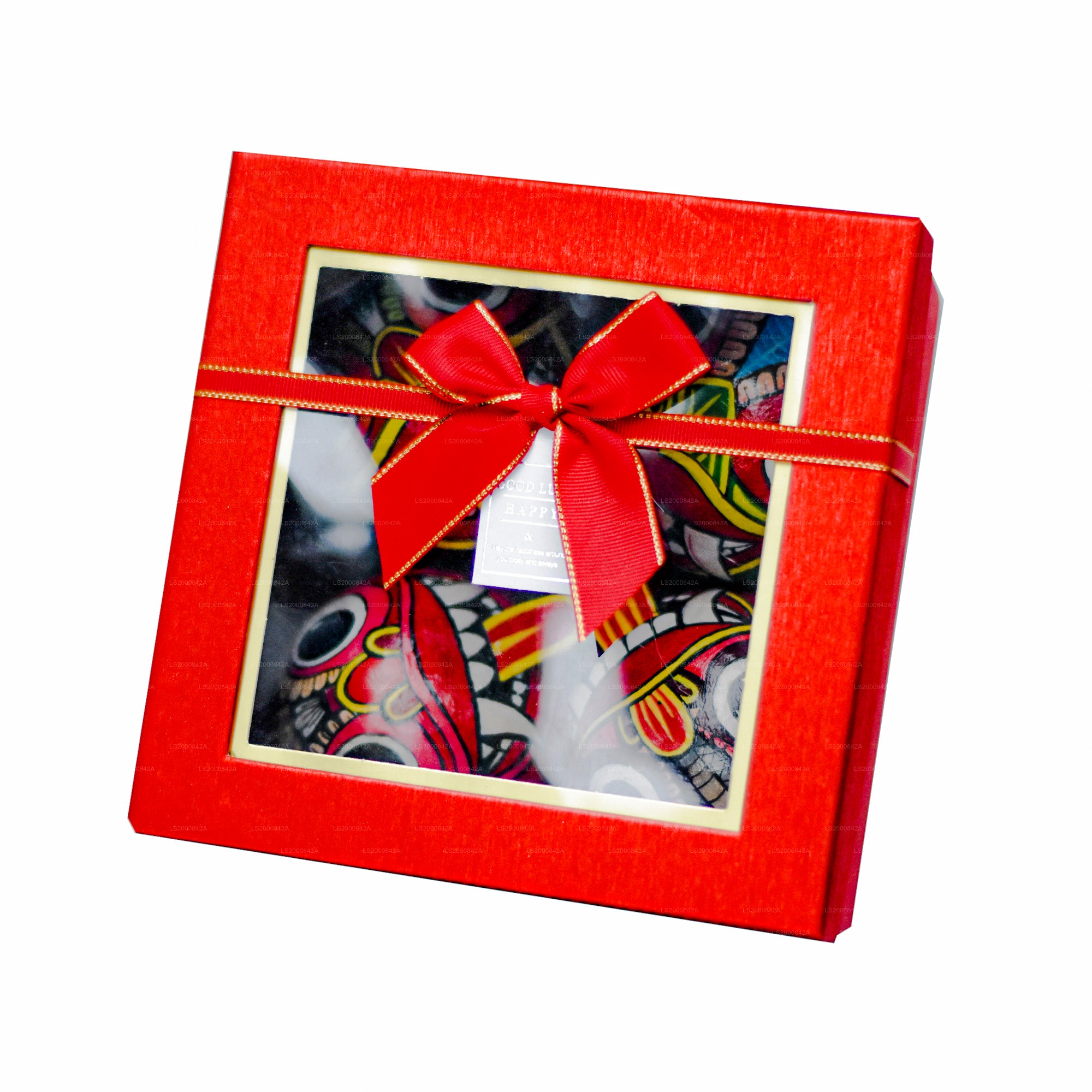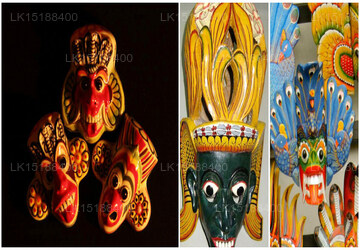
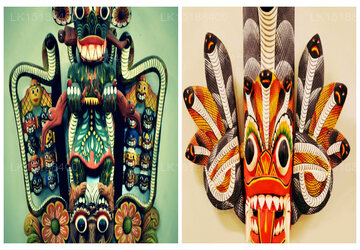


Ambalangoda, a coastal town on Sri Lanka's southwestern shore, has been the country's foremost centre of traditional mask carving for generations. The craft is not purely decorative — it is rooted in ancient healing rituals, folk theatre, and a living cultural tradition passed down through families in this region. Lanka Masks is one of the most established workshops and showrooms in the area, offering visitors a rare opportunity to see master craftsmen at work and to understand the stories behind each carved form.
What is the history of mask carving in Ambalangoda?
Mask carving in Ambalangoda grew out of two distinct performance traditions: Shanthikarma (ritual healing ceremonies) and Kolam theatre, a form of masked drama that dramatises stories from Sri Lankan folklore and royal courts. In Shanthikarma, priests used specific demon masks to appease malevolent spirits believed to cause illness. Over time, the craftsmanship refined and diversified, and by the colonial era Ambalangoda had become synonymous with the art across the island.
Today, while some masks are still commissioned for ritual and theatrical use, the majority are purchased as collector's pieces and interior décor — found in hotels, offices, and private homes across Sri Lanka and abroad. The tradition remains alive and commercially viable, which is one reason the craft has survived where many other regional art forms have faded.
What types of masks are made at Lanka Masks?
Masks produced in Ambalangoda fall into several broad categories, each with distinct iconographic conventions:
- Raksha masks — the most recognisable type, depicting fearsome demon figures with bulging eyes, protruding fangs, and elaborate cobra hoods. Common Raksha forms include the Naga (cobra), Maru (death), Agni (fire), and Mayura (peacock) demons.
- Kolam masks — used in Kolam theatrical performances, representing a wide cast of characters including royalty, deities, village figures, and animals such as peacocks and bears.
- Sanni masks — a set of eighteen demon masks associated with specific diseases or afflictions in the Sanni Yakuma healing ritual. Each mask corresponds to a named demon thought to cause a particular ailment.
- Decorative and miniature masks — smaller pieces designed primarily for wall display, available in a wide range of sizes and finish styles.
Carved forms include human faces, animal heads, mythical creatures, and hybrid demon characters. The Raksha category in particular has become the most widely exported Sri Lankan handicraft worldwide.
What wood is used to carve Ambalangoda masks?
The wood of choice is kaduru (Strychnos nux-vomica), valued for being lightweight, relatively soft, and easy to carve into fine detail without splitting. Kaduru trees grow widely in lowland Sri Lanka and were historically abundant near Ambalangoda. For certain larger or more structural pieces, harder local timbers are occasionally used. Once carved, masks are finished with natural and synthetic pigments — traditionally using mineral-based paints, though modern workshops often blend both for durability and colour vibrancy.
The carving process begins with a rough block shaped by adze and chisel, then progressively refined with smaller gouges. Experienced carvers can complete a detailed Raksha mask in a matter of hours; elaborate Kolam pieces with moving parts may take considerably longer.
What can visitors do at Lanka Masks, Ambalangoda?
Lanka Masks operates both as a working studio and a retail gallery. Visitors can typically:
- Watch craftsmen carve and paint masks at various stages of completion.
- Browse a curated display of finished masks — from palm-sized souvenirs to large statement pieces — across all major categories.
- Purchase directly from the workshop, which ensures authenticity and supports the artisan families behind the work.
- Learn the iconographic meaning of individual mask types from knowledgeable staff, giving context that transforms a purchase into a meaningful keepsake.
The facility is compact but well organised. Allow roughly 45 minutes to an hour to explore the workshop and gallery properly. Photography of the carving process is generally welcome.
Where is Lanka Masks and how do I get there from Colombo?
Lanka Masks is located in Ambalangoda, on the Southern Expressway corridor roughly 90 kilometres south of Colombo. By road via the Southern Expressway, the journey typically takes around 75 to 90 minutes depending on traffic. The slower coastal A2 highway is a scenic alternative, passing through Kalutara, Beruwala, and Aluthgama before reaching Ambalangoda — allow around two to two-and-a-half hours on that route.
Ambalangoda is also served by the coastal railway line; trains from Colombo Fort to Ambalangoda run regularly and the station is within easy reach of the town centre. For visitors travelling with Lakpura, private transfers from Colombo Airport directly to Ambalangoda can be arranged door to door.
The town sits conveniently between Hikkaduwa and Galle, making it a natural addition to a southern coastal itinerary. Visitors combining the mask workshop with the nearby Madu River Safari on the Madu Ganga estuary will find both experiences fit comfortably into a single day from a Galle or Hikkaduwa base.
What else is worth seeing near Ambalangoda?
The town and its surroundings offer several points of interest beyond the mask workshops:
- Ambalangoda Museum of Masks and Puppets — a small dedicated museum displaying antique masks and documenting the history of Kolam and Sanni theatre traditions. An essential complement to any workshop visit.
- Madu Ganga — a UNESCO-listed mangrove waterway a short drive north, navigable by boat and home to a remarkable biodiversity of birds, monitor lizards, and fish.
- Kosgoda Sea Turtle Conservation Project — a working turtle hatchery located between Ambalangoda and Hikkaduwa, where visitors can observe nest protection programmes and, at the right season, witness hatchling releases. Details are available on the Kosgoda Sea Turtle Conservation Project page.
- Hikkaduwa — Sri Lanka's most established reef-snorkelling destination, roughly 15 kilometres south.
- Galle — the colonial Dutch fort city, a UNESCO World Heritage Site, approximately 35 kilometres south.
Are masks from Ambalangoda authentic handicrafts or mass-produced imports?
This is a legitimate concern at markets throughout Sri Lanka. Ambalangoda workshops, including Lanka Masks, produce pieces carved and painted by local artisans on-site, not mass-manufactured imports. The easiest way to verify authenticity is to visit a workshop directly and observe the production process. Pieces purchased at the source will show the slight asymmetries and tool marks characteristic of hand carving — qualities that distinguish them from moulded resin copies sold at tourist markets elsewhere on the island. When buying from reputable workshops, staff can typically explain the specific demon or character depicted and the ritual tradition it belongs to, which is itself a mark of genuine provenance.
Nearby places
9 places within about 25 km, nearest first.
- Ambalangoda Mask Factory and Museumunder 1 km
- Ambalangoda Cityunder 1 km
- Ambalangoda Railway Stationunder 1 km
- Dutch Stables Ambalangodaunder 1 km
- Kandegoda Railway Stationunder 1 km
- Ambalangoda Beachunder 1 km
- Telwatte Railway Station1 km
- Dodanduwa2 km
- Lagoon Safari7 km
Related reading
6 pages on closely related subjects.