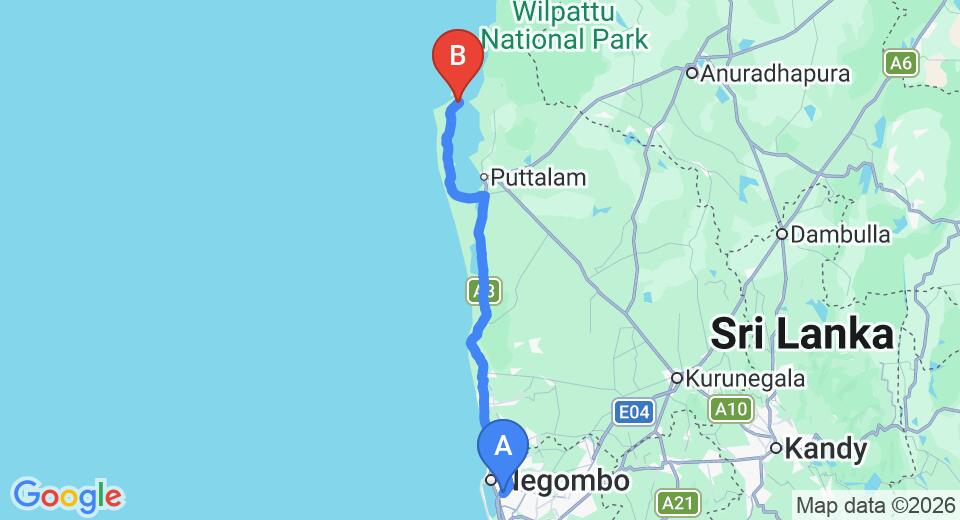
Kovilan Point Lighthouse stands at the northernmost reaches of Sri Lanka's Jaffna Peninsula, marking a stretch of coastline where the Gulf of Mannar and the Palk Strait converge. It is one of the lesser-visited navigational landmarks on the island, but for travellers making the journey into the Northern Province, it offers a genuine sense of remoteness and an insight into Sri Lanka's maritime history that few other sites can match.
What is the history of Kovilan Point Lighthouse?
Lighthouses along Sri Lanka's northern coast were established primarily during the British colonial period to guide vessels navigating the shallow, reef-studded waters around the Jaffna Peninsula. Kovilan Point, positioned at the peninsula's northern extremity, served as a critical marker for ships approaching from the Indian subcontinent across the Palk Strait. The structure reflects the utilitarian design typical of colonial-era navigational aids — a slender masonry tower built to be seen clearly from the sea rather than to impress from the land.
The region around Kovilan Point was affected by the decades-long civil conflict that kept much of the north largely inaccessible to visitors until the early 2010s. Since then, infrastructure has improved steadily and the lighthouse has become a point of quiet curiosity for travellers exploring the far north of the island.
What can visitors see and do at Kovilan Point?
The appeal of Kovilan Point is as much about the journey and the landscape as it is about the lighthouse itself. The surrounding coastline is flat and windswept, with stretches of pale sand, shallow lagoons, and scattered palmyra palms that are characteristic of the Jaffna Peninsula's terrain. The views across the water toward India on a clear day are striking in their own understated way.
Birdwatching is worthwhile in this area, particularly during the northeast monsoon season when migratory species move along the coast. The quiet roads leading to the point also pass through small fishing communities where traditional outrigger boats are hauled up on the shore — a scene largely unchanged for generations.
- Observe the lighthouse structure and its seaward setting
- Walk sections of the undeveloped shoreline
- Watch local fishing activity along the coast
- Photograph the open seascape toward the Palk Strait
- Combine the visit with exploration of other northern coastal sites
How do I get to Kovilan Point Lighthouse from Jaffna?
Jaffna city is the practical base for visiting Kovilan Point. The drive from Jaffna town to the northern tip of the peninsula takes roughly 30 to 45 minutes depending on the exact route and road conditions. A private vehicle or a hired three-wheeler is the most reliable way to reach the area, as public transport services to the far northern tip are limited and infrequent.
Roads in the peninsula are generally passable year-round, though some minor tracks closer to the coast can become difficult after heavy rain during the northeast monsoon (typically October to January). It is advisable to confirm local road conditions before setting out, particularly if visiting after a period of rain.
When is the best time to visit Kovilan Point?
The Jaffna Peninsula experiences a different seasonal pattern from the rest of Sri Lanka. The driest and most comfortable period for visiting falls between February and September, when the northeast monsoon has passed and the weather is warm and largely settled. This window offers the clearest skies for coastal views and the easiest road access to outlying points like Kovilan.
The northeast monsoon, which affects the north from around October to January, can bring strong winds and choppy seas that make the exposed coastline feel raw. That said, visiting in this shoulder period has its own character — the light is dramatic and the area is even quieter than usual.
What else is worth seeing near Kovilan Point?
A visit to Kovilan Point fits naturally into a broader exploration of the Jaffna Peninsula and the Northern Province. The peninsula is dotted with Hindu temples, colonial-era forts, and causeways linking the mainland to a series of small islands. Jaffna city itself has a compact but rewarding collection of historical and cultural sites, including the old Dutch fort and the distinctive Nallur Kandaswamy Temple.
For travellers continuing south from the north, the road through the Vanni passes Wilpattu National Park, Sri Lanka's largest national park and one of the best places on the island to spot leopards and sloth bears in a dry-zone forest setting. Combining a northern itinerary with a Wilpattu safari makes for a richly varied journey through a part of Sri Lanka that remains largely off the main tourist circuit.
What should visitors know before going?
The area around the northern tip of the Jaffna Peninsula is remote, and facilities are minimal. There are no formal visitor facilities, cafes, or fuel stations at Kovilan Point itself, so it is practical to carry water, snacks, and a fully charged phone before leaving Jaffna. A local guide or a driver familiar with the peninsula's back roads will make navigation considerably easier.
As with anywhere in the far north of Sri Lanka, travellers should be respectful when passing through fishing villages and other local communities. Photography near sensitive infrastructure — including the lighthouse itself if it remains in active operation — should be approached with care and any posted restrictions observed.
| Detail | Information |
|---|---|
| Location | Northern tip of the Jaffna Peninsula, Northern Province |
| Nearest city | Jaffna (approximately 30–45 min by road) |
| Best season to visit | February to September |
| Recommended transport | Private vehicle or hired three-wheeler |
| Facilities on site | None — carry supplies from Jaffna |
Nearby places
9 places within about 25 km, nearest first.