Hoya pauciflora is a climbing and twining plant native to Sri Lanka, belonging to the family Asclepiadaceae. It is listed as Endangered on the National Conservation Status list of Sri Lanka (2012), making it one of the island's threatened flora species documented in Lakpura's indigenous plants register.
What does Hoya pauciflora look like?
This species is a climbing and twining plant, a growth habit typical of many Hoya species, which often use other vegetation for support as they spread. Its leaf blades are small, measuring 2 to 2.5 cm long and 0.5 to 1 cm wide, with a lanceolate to narrowly ovate-lanceolate shape. The leaf base is obtuse or rounded, tapering to a rounded apex, and the underside is frequently dotted with red.
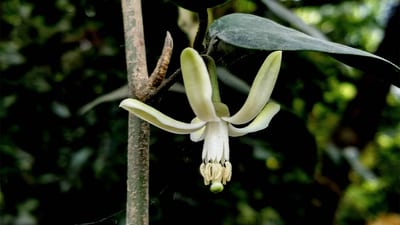
Flowers appear in clusters of 2 to 12, arranged in sessile or almost sessile, umbel-like cymes that sit shorter than the surrounding leaves. The fruit, known botanically as a merocarp, has not been observed for this species, though it is described as very slender where recorded.
Where does Hoya pauciflora grow?
Hoya pauciflora is native to Sri Lanka. As with other members of the Asclepiadaceae family found on the island, it grows as part of the island's native climbing flora.
What is its conservation status?
Hoya pauciflora is classified as Endangered according to the National Conservation Status list of Sri Lanka published in 2012. This designation reflects pressure on the species within its native range and underscores the broader importance of documenting and protecting Sri Lanka's native plant diversity.
What is it called in Sinhala?
In Sinhala, Hoya pauciflora is known as Heen aramessa (හීන්-අරමස්ස). No edible parts are recorded for this species, and it is not known as a food plant.
| Attribute | Recorded detail |
|---|---|
| Scientific name | Hoya pauciflora |
| Family | Asclepiadaceae |
| Sinhala name | Heen aramessa (හීන්-අරමස්ස) |
| Status in Sri Lanka | Native |
| Conservation status | Endangered (NCS, 2012) |
| Edible parts | None |
| Growth habit | Climbing and twining |
| Leaf size | 2 – 2.5 cm long, 0.5 – 1 cm wide |
| Leaf shape | Lanceolate, narrowly ovate-lanceolate |
| Flowers | 2 – 12, sessile or almost sessile, umbel-like cymes |
| Merocarps | Not seen; described as very slender |
Other species in this genus
1 more, sharing the same genus.