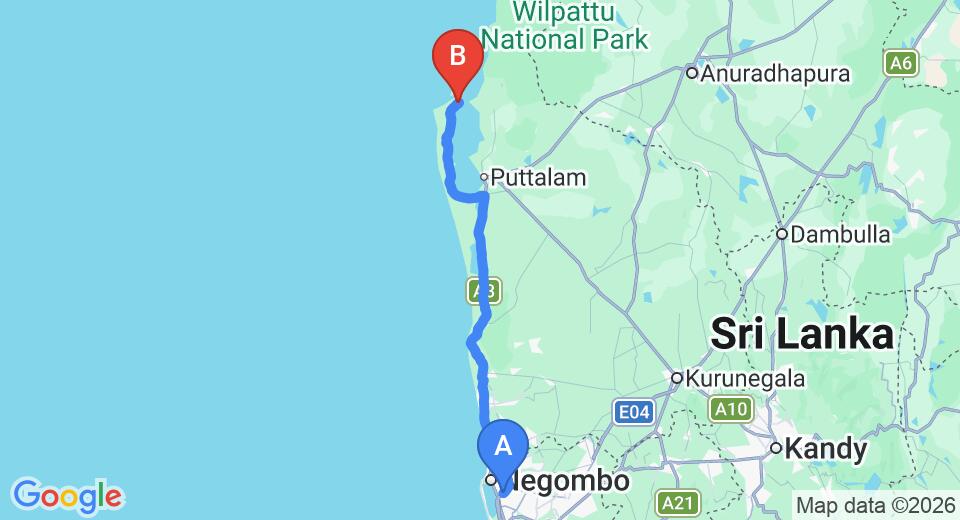
Gange Wadiya is a quiet, off-the-beaten-track settlement in the Puttalam District, tucked along the Mannar road near Eluwankulama and skirting the northern border of Wilpattu National Park. It sits beside the Kala Oya — one of Sri Lanka's major rivers draining the North Western plains — and remains largely unknown to mainstream tourism. That obscurity is precisely its appeal: visitors who find their way here encounter a landscape of ancient kumbuk trees, tidal forest edges, and a genuinely working fishing community rather than a curated attraction.
The village is home to a significant Muslim fishing community whose daily life centres on the lagoon and river system. Public transport does not reach Gange Wadiya; three-wheelers, motorcycles, and bicycles are the practical means of getting around once you are in the area. That limited access keeps visitor numbers low and the environment largely intact.
What makes Gange Wadiya worth visiting?
The draw here is ecological rather than historical. The banks of the Kala Oya are lined with ancient kumbuk trees (Terminalia arjuna), their broad canopies arching over the water and providing habitat for a dense community of birds and riverine wildlife. Because the site borders Wilpattu — Sri Lanka's largest national park by area — the surrounding scrub jungle functions as an informal wildlife corridor. Wild elephants are regularly spotted moving along the river edge after dark, and the daytime riverbanks reward patient observers with kingfishers, sea eagles, and peacocks.
The combination of a slow-moving river, undisturbed forest fringe, and proximity to a national park boundary gives Gange Wadiya a character that few accessible spots on the island can match.
What can I do at Gange Wadiya?
Kayaking on the Kala Oya
The Kala Oya offers a calm, sheltered waterway well suited to kayaking. Paddling here means moving through a living corridor between the Wilpattu forest and the river's mangrove margins — a route that regularly reveals kingfishers perched at the waterline, brahminy kites circling overhead, and, if the timing is right, elephants descending to drink in the early morning or at dusk. The river is wide enough to feel open yet intimate enough that wildlife along the banks remains close. No white-water experience is required; the current is gentle and conditions are generally manageable year-round outside the heaviest monsoon rains.
Lagoon and river fishing
Fishing is the economic backbone of Gange Wadiya, and the surrounding waters are productive. The lagoon and lower Kala Oya support a range of fish species valued in local markets. Visitors with an interest in traditional fishing methods can observe — or participate in — techniques used by resident families, offering an authentic window into coastal North Western Province livelihoods. For those interested in a more active angling experience, the deeper stretches of the Kala Oya hold catfish, mullet, and other riverine species. The deep sea fishing opportunities accessible from the broader Puttalam coastline add another dimension for serious anglers.
Overnight camping
Camping at Gange Wadiya is the most immersive way to experience the site. After dark, the soundscape shifts entirely: the calls of nocturnal birds, the distant movement of elephants through the forest edge, and the near-silence of a community without heavy road traffic make for a genuinely wild overnight. Sleeping under the kumbuk canopy beside the river — whether in a tent or a basic shelter — connects visitors to the rhythm of the place in a way that a day trip cannot replicate. Arrangements are typically made through local contacts or specialist operators; facilities are minimal and visitors should come self-sufficient.
Wildlife and birdwatching
The position of Gange Wadiya at the Wilpattu boundary makes casual wildlife sightings a realistic expectation rather than a lucky bonus. Resident bird species include the common kingfisher, white-bellied sea eagle, Indian peafowl, and various waders along the river margin. Crocodiles are present in the Kala Oya system — a fact to be aware of and respected. The nocturnal elephant movements described by local residents are most reliably observed from the road approaching the village rather than from within the settlement itself.
When is the best time to visit Gange Wadiya?
The North Western Province receives its main rainfall from the south-west monsoon between May and September, with the heaviest downpours typically in June and July. The Kala Oya can rise significantly during this period, which may limit kayaking. The driest and most comfortable window for visiting runs from roughly November through to early April, when temperatures are warm but manageable and river levels are stable. Wildlife activity along the river tends to be highest in the dry season when animals concentrate near permanent water sources.
How do I get to Gange Wadiya from Colombo?
Gange Wadiya lies along the Puttalam–Mannar road, within the Puttalam District. From Colombo, the most practical route is to drive north on the A3 through Negombo and Chilaw to Puttalam, then continue north-east toward Mannar; Eluwankulama and Gange Wadiya are accessible from this corridor. Journey time from Colombo is typically in the range of three to four hours depending on traffic and road conditions. Because public transport does not serve the village, hiring a private vehicle or arranging transport through a specialist operator is the only realistic option for most visitors.
What should visitors know before going to Gange Wadiya?
- No public transport: the village is only reachable by private vehicle, three-wheeler, or motorcycle.
- Basic infrastructure: facilities are limited; carry water, food, and any camping supplies you need.
- Wildlife awareness: elephants move through the area at night — stay alert on the approach road after dark and do not approach wildlife on foot.
- Crocodiles are present in the Kala Oya; swimming in the river is not recommended.
- Respect the community: Gange Wadiya is home to Muslim fishing families; dress modestly and ask permission before photographing people or their homes.
- Environmental care: the ancient kumbuk trees and riverine vegetation are under pressure. Carry out all waste and avoid disturbing the bank vegetation.
What wildlife can I expect to see near Wilpattu's border?
Wilpattu National Park is known for leopards, sloth bears, and a wide range of deer species, but most of that wildlife remains within the park boundary and is not reliably visible from Gange Wadiya itself. What visitors consistently report at the village level are elephant sightings on the approach road at night, large waterbirds along the river, and crocodiles in calmer stretches of the Kala Oya. The overall experience is one of peripheral wilderness rather than a formal safari — which makes it rewarding for travellers who prefer unmediated, unscripted encounters with nature.
Is Gange Wadiya suitable for families or first-time visitors to Sri Lanka?
Gange Wadiya suits travellers who are comfortable with basic conditions, limited facilities, and some degree of self-sufficiency. It is not an entry-level destination: the lack of public transport, absence of tourist infrastructure, and proximity to a wildlife corridor mean visitors need to plan carefully. For those who have already experienced Sri Lanka's more developed attractions and are looking for something quieter and less curated, it offers a genuinely distinctive perspective on the country's North Western coastal interior.
Nearby places
8 places within about 25 km, nearest first.
- Malwatu Oyaunder 1 km
- Eluwankulama Entrance4 km
- Thekkama Anicut16 km
- Mahawilachchiya City17 km
- Wilpattu20 km
- Wilpattu City20 km
- Wilpattu National Park20 km
- Hunuvilagama Entrance24 km