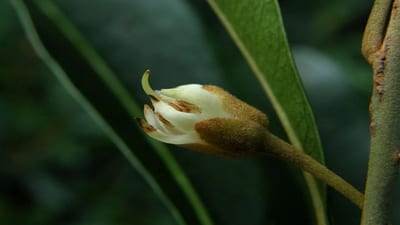
Ficus virens var. sublanceolata is a fig tree variety catalogued among Sri Lanka's ayurvedic medicinal plants. Belonging to the family Moraceae, the genus Ficus is one of the most ecologically and therapeutically significant plant groups in South and Southeast Asia, and this variety holds a recognised place within the island's traditional healing traditions.
What is Ficus virens var. sublanceolata?
Ficus virens, commonly known as the white fig or pilkhan, is a large deciduous to semi-deciduous tree native to a broad range spanning South Asia through to Australia. The variety sublanceolata is distinguished primarily by the shape of its leaves, which are notably narrower and more lance-like than the typical form of the species. In Sri Lanka, trees of this variety are found in lowland and mid-elevation zones, often growing near water sources or in secondary forest.
The tree can reach considerable height and spread, making it ecologically valuable as a canopy species. Its figs provide food for a wide range of birds and fruit bats, contributing to forest regeneration through seed dispersal.
What is the role of this plant in Ayurveda?
Sri Lanka has a long and well-documented tradition of Ayurvedic medicine, and the Ficus genus features across multiple classical texts and local formularies. Ficus virens in its various forms is associated in traditional practice with several therapeutic applications. The bark, latex, and leaves of fig species within this group have been used in preparations addressing inflammatory conditions, skin disorders, and digestive complaints, though specific preparations vary by practitioner and regional tradition.
Within Sri Lanka's official ayurvedic plant catalogue — maintained as part of the country's efforts to document and protect its ethnobotanical heritage — Ficus virens var. sublanceolata is recorded under the reference LK94006137. This cataloguing forms part of a broader national project to validate and preserve indigenous medicinal knowledge.
It is important to note that traditional usage does not substitute for clinical evaluation. Anyone seeking ayurvedic treatment should consult a qualified practitioner registered with Sri Lanka's Department of Ayurveda.
How does Ficus virens var. sublanceolata fit into Sri Lanka's wider botanical heritage?
Sri Lanka's extraordinarily high level of plant biodiversity — the island is recognised as a global biodiversity hotspot — means that its medicinal flora is both rich and, in many cases, still being fully documented. The Ficus genus alone includes dozens of species on the island, ranging from the sacred Ficus religiosa (Bo tree) to lesser-known varieties like sublanceolata.
Traditional knowledge about plants such as this one is typically held by generations of Ayurvedic physicians, known locally as veda mahatmayas, whose knowledge is passed through apprenticeship and family lineage as much as through formal training. Efforts by universities, the Department of Ayurveda, and organisations such as the Institute of Indigenous Medicine work to cross-reference this inherited knowledge with modern botanical and pharmacological research.
What are the botanical characteristics of this variety?
- Family: Moraceae
- Genus: Ficus
- Species: Ficus virens
- Variety: sublanceolata
- Distinguishing feature: Narrower, lance-shaped leaves compared to the typical species form
- Growth habit: Large tree, semi-deciduous to evergreen depending on conditions
- Distribution in Sri Lanka: Lowland and mid-elevation zones, typically in moist or riverine environments
- Catalogue reference: LK94006137
What is the broader significance of Sri Lanka's ayurvedic plant catalogue?
Sri Lanka's ayurvedic plant cataloguing initiative documents indigenous medicinal plants with standardised reference numbers, botanical descriptions, and associated traditional uses. This serves several purposes: it protects local knowledge from exploitation, supports quality control in the manufacture of ayurvedic products, and provides a foundation for pharmacological research.
Plants listed in the catalogue, including Ficus virens var. sublanceolata, are not simply historical curiosities. They remain in active use within Sri Lanka's formal and informal healthcare systems, and demand for authenticated medicinal plant material is part of a growing domestic and export market for Sri Lankan herbal products.
Where can I learn more about Sri Lankan Ayurveda?
Sri Lanka's approach to traditional medicine is formalised through the Ministry of Health's Department of Ayurveda, which oversees practitioner registration, hospital networks, and quality standards for herbal preparations. For travellers interested in experiencing authentic Ayurvedic treatments, the island has a wide range of recognised wellness centres and Ayurvedic hospitals, particularly in areas such as the Southern Province and the Hill Country. These offer programmes ranging from brief consultations to longer residential treatments under qualified physicians.
Other species in this genus
16 more, sharing the same genus.
- Ficus amplissima
- Ficus arnottiana
- Ficus benghalensis var. benghalensis
- Ficus benghalensis var. krishnae
- Ficus benjamina var.benjamina
- Ficus callosa %
- Ficus deltoidea var. lutescens %
- Ficus drupacea var. pubescens
- Ficus exasperata
- Ficus fergusoni
- Ficus heterophylla
- Ficus hispida
- Ficus microcarpa
- Ficus mollis
- Ficus nervosa var. nervosa
- Ficus religiosa