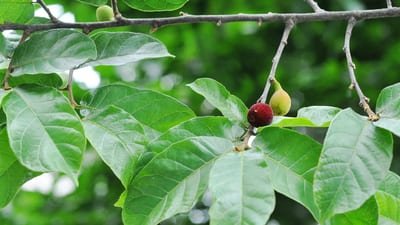
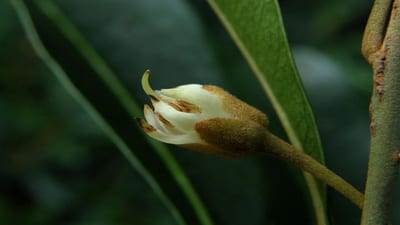
Ficus tsjahela is a tree species in the fig family, Moraceae, native to Sri Lanka. It is known locally as Pulila (පුළිල) or Kiri pella (කිරි පෙල්ල), and belongs to a genus recognised worldwide for its milky latex and distinctive fruit structure.
What does Ficus tsjahela look like?
As a member of the genus Ficus, this species shares the family's typical traits: broad leaves, a milky white latex in its stems and leaves, and the characteristic fig fruit, a fleshy, hollow receptacle enclosing tiny internal flowers rather than an external bloom. Figs in this family are typically woody, ranging from shrubs to large trees.
Where does Ficus tsjahela grow?
The species is native to Sri Lanka. Members of the Ficus genus are found broadly across the tropics and subtropics of Asia, Africa, and the Americas, with many species, including several in Sri Lanka, confined to South and Southeast Asia.
What is its conservation status?
Under the National Conservation Status list of Sri Lanka (2012), Ficus tsjahela is classified as Least Concerned. This designation indicates the species is not currently considered at risk of extinction within the country.
What is it called in Sinhala?
In Sinhala, the species is known by two local names: Pulila (පුළිල) and Kiri pella (කිරි පෙල්ල). These names are used in Sri Lanka's botanical and indigenous plant records alongside the scientific name.
Are any parts of Ficus tsjahela edible?
No edible parts are recorded for this species.
| Attribute | Detail |
|---|---|
| Scientific name | Ficus tsjahela |
| Family | Moraceae |
| Sinhala / local name | Pulila (පුළිල) / Kiri pella (කිරි පෙල්ල) |
| Status in Sri Lanka | Native |
| Conservation status (NCS 2012) | Least Concerned |
| Edible parts | None |
Other species in this genus
16 more, sharing the same genus.
- Ficus amplissima
- Ficus arnottiana
- Ficus benghalensis var. benghalensis
- Ficus benghalensis var. krishnae
- Ficus benjamina var.benjamina
- Ficus callosa %
- Ficus deltoidea var. lutescens %
- Ficus drupacea var. pubescens
- Ficus exasperata
- Ficus fergusoni
- Ficus heterophylla
- Ficus hispida
- Ficus microcarpa
- Ficus mollis
- Ficus nervosa var. nervosa
- Ficus religiosa