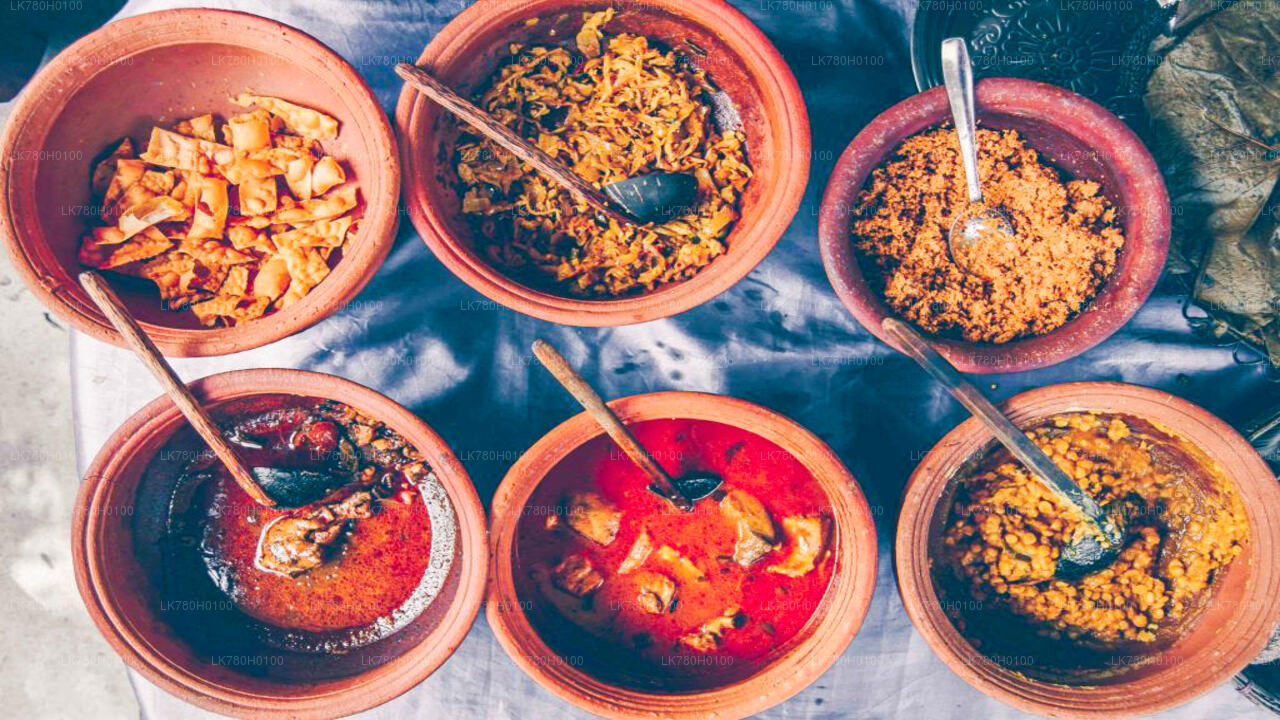
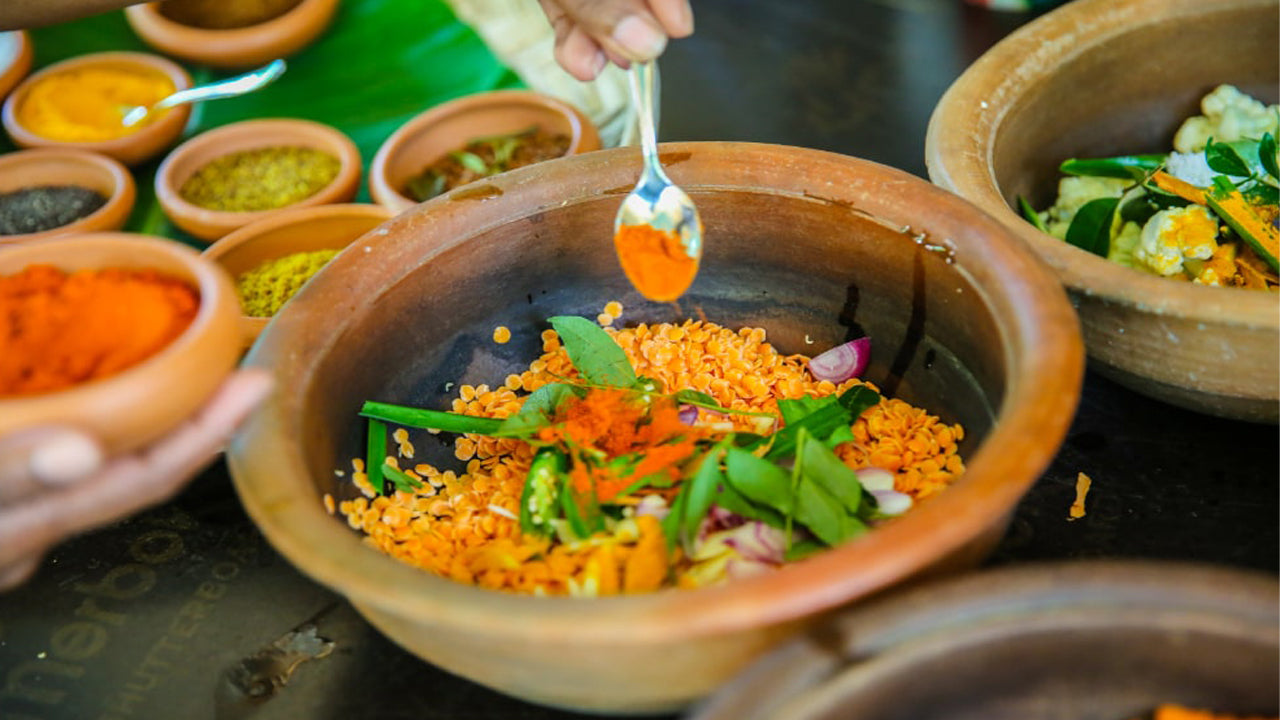
Sri Lanka's food culture is one of the island's least-told stories. Behind the beaches and ancient ruins lies a cuisine shaped by centuries of trade, migration, and a landscape that produces some of the world's most prized spices, teas, and tropical fruits. A culinary experience here is rarely just a cooking class — it is a conversation with history, ecology, and the daily rhythms of village life.
What makes Sri Lankan cuisine distinctive?
Sri Lankan cooking shares a family resemblance with South Indian food but has developed its own identity over two millennia. Rice is the foundation of almost every meal, served with an array of curries that balance heat, acidity, and coconut creaminess in ways that differ noticeably from region to region. The coastal south relies heavily on seafood and fresh coconut, while the highland interior favours slow-cooked lentils and root vegetables tempered with aromatic spices.
Two ingredients define the heat spectrum of local cooking. Ceylon black pepper — once called "black gold" by Arab traders — is still grown across the wet zone and carries a clean, lingering heat. Alongside it, the island's bird's-eye chillies (known as Nai Miris and Kochchi) add a sharper, more volatile fire that locals deploy with precision.
Which spices and ingredients are central to Sri Lankan cooking?
Sri Lanka's spice heritage runs deep. Cloves, native to the Maluku Islands but cultivated here for centuries, appear in rice dishes, sweet preparations, and medicinal remedies. True cinnamon — Cinnamomum verum — is native to Sri Lanka and carries a subtler, sweeter profile than the cassia sold elsewhere in the world. Cardamom, turmeric, and pandanus leaf round out the spice pantry that any home cook or professional chef draws from daily.
On the sweeter side, kitul — the sap of the fishtail palm — is tapped from trees in the wet-zone lowlands and reduced into a dark, complex treacle that flavours desserts, porridges, and arrack. It is one of those ingredients that surprises visitors who expect sweetness to taste uniform.
- Cinnamon — Ceylon cinnamon is lighter and more aromatic than cassia; look for it at spice gardens around Matale and Kandy.
- Cloves — used whole in rice dishes and ground into spice blends.
- Kitul treacle — a forest-sourced sweetener paired with buffalo curd as a classic Sri Lankan dessert.
- Goraka — a dried fruit rind used to acidify and preserve fish curries; unique to Sri Lankan and Malabar cooking.
- Pandanus (rampe) — fresh leaves added to coconut milk rice for a faintly floral, grassy aroma.
What culinary experiences can visitors join in Sri Lanka?
Hands-on cooking classes are available across the island, ranging from informal home-cook sessions in village houses to more structured half-day programmes in purpose-built demonstration kitchens. The most rewarding formats begin with a market visit — learning to identify goraka from gamboge, or fresh turmeric from ginger — before moving into preparation and cooking.
In Negombo, the fish-market atmosphere provides an ideal backdrop for seafood-focused sessions. Visitors can watch the early-morning catch arrive at the lagoon landing sites and then cook the same fish an hour later. Colombo-based experiences tend to focus on the city's multicultural food scene, blending Sinhalese, Tamil, Malay, and Dutch Burgher influences that have layered into the capital's restaurant culture over generations.
Inland, tea country around Ella and the hill stations offers a different register: simple, hearty mountain cooking built around vegetables grown in kitchen gardens, with Ceylon tea as an ever-present companion. A visit to Bluefield Tea Gardens can be combined with a tea-tasting session that explains the difference between broken orange pekoe grades and the delicate single-estate profiles exported under the Ceylon Tea label.
What traditional Sri Lankan dishes should travellers try?
No culinary journey through Sri Lanka is complete without sitting down to a rice-and-curry meal served on a banana leaf — the presentation style still common at village restaurants and roadside boutique hotels. The dish is not one curry but many: a central mound of steamed red or white rice surrounded by four to eight small preparations that might include dhal, a green-leaf mallum, a pumpkin curry cooked with coconut milk, and a meat or fish preparation.
- Hoppers (appa) — bowl-shaped fermented rice-flour pancakes, eaten at breakfast or dinner, often with a runny egg set in the centre.
- String hoppers (indi appa) — steamed rice-noodle nests, typically served with coconut sambol and lentil curry for breakfast.
- Kottu roti — shredded flatbread stir-fried with vegetables, egg, and often meat on a hot griddle; the rhythmic clanging of the cutter blades is a street-food soundtrack across the island.
- Kokis — a crisp, deep-fried snack of Dutch Burgher origin, still made in large batches for Sinhala New Year festivities.
- Pani Kadju — cashews cooked in palm treacle, a widely available sweet snack native to the south and wet zone.
- Lunu dehi — a sharp lime pickle fermented with salt and chilli; a small spoonful transforms a plate of rice entirely.
How does Sri Lanka's geography shape regional food differences?
The island divides naturally into a dry zone north and east, a wet zone south and west, and a cool highland interior — and the food follows those ecological lines closely. Coastal communities from Negombo down to Galle and around to Trincomalee rely on daily fish catches, cooking with coconut-based broths and fresh lime. The dry-zone north favours palmyra-based preparations and is home to some of the spiciest cooking on the island, a feature of Tamil cuisine that uses mustard seed and curry leaf more assertively than the Sinhalese south.
The paddy-farming villages of the wet-zone lowlands still cook in clay pots over wood fires for everyday meals — a method that imparts a faint earthiness to slow-cooked dishes that gas flames cannot replicate. Visiting a working farm and sharing a meal prepared this way is one of the more genuine culinary experiences available to travellers willing to move beyond the hotel dining room.
Where can travellers find authentic culinary experiences beyond restaurants?
Village home-stay cooking sessions and spice-garden tours are the two most accessible entry points for visitors who want depth rather than novelty. The spice-garden circuit around Matale, north of Kandy, allows visitors to smell and taste raw ingredients at source — a cinnamon quill peeled from the bark of a living tree, a cardamom pod cracked open moments after being picked. These gardens also often carry medicinal plants used in Ayurvedic preparations, adding a second interpretive layer to the visit.
Market tours in Colombo's Pettah district or Nuwara Eliya's central market introduce the full range of local produce: bitter gourd, drumstick pods, green jackfruit, and dozens of varieties of dried Maldive fish that form the backbone of coconut sambol recipes. Guides who can name each ingredient and explain its culinary role are worth seeking out; the visual tour alone misses the point.
For a more structured excursion from Colombo, the Midigama Fruit Farm in the Southern Province offers a chance to taste tropical fruits in season — varieties of mango, woodapple, mangosteen, and rambutan that rarely make it to supermarket shelves in their ripest, most flavourful form.
Is Sri Lankan food suitable for vegetarians and vegans?
Sri Lanka is one of the more accommodating destinations in Asia for plant-based diets. The Buddhist tradition that pervades Sinhalese culture means that vegetable curries, lentil preparations, and coconut-milk-based dishes have always been central rather than supplementary. Many temple towns and pilgrimage sites maintain entirely vegetarian kitchens. The main point of vigilance is Maldive fish — dried tuna flakes used to season dishes that appear vegetarian — so it is worth specifying the requirement clearly when ordering. Vegans should also note that ghee (clarified butter) occasionally appears in sweets and festival foods.
Related reading
2 pages on closely related subjects.