
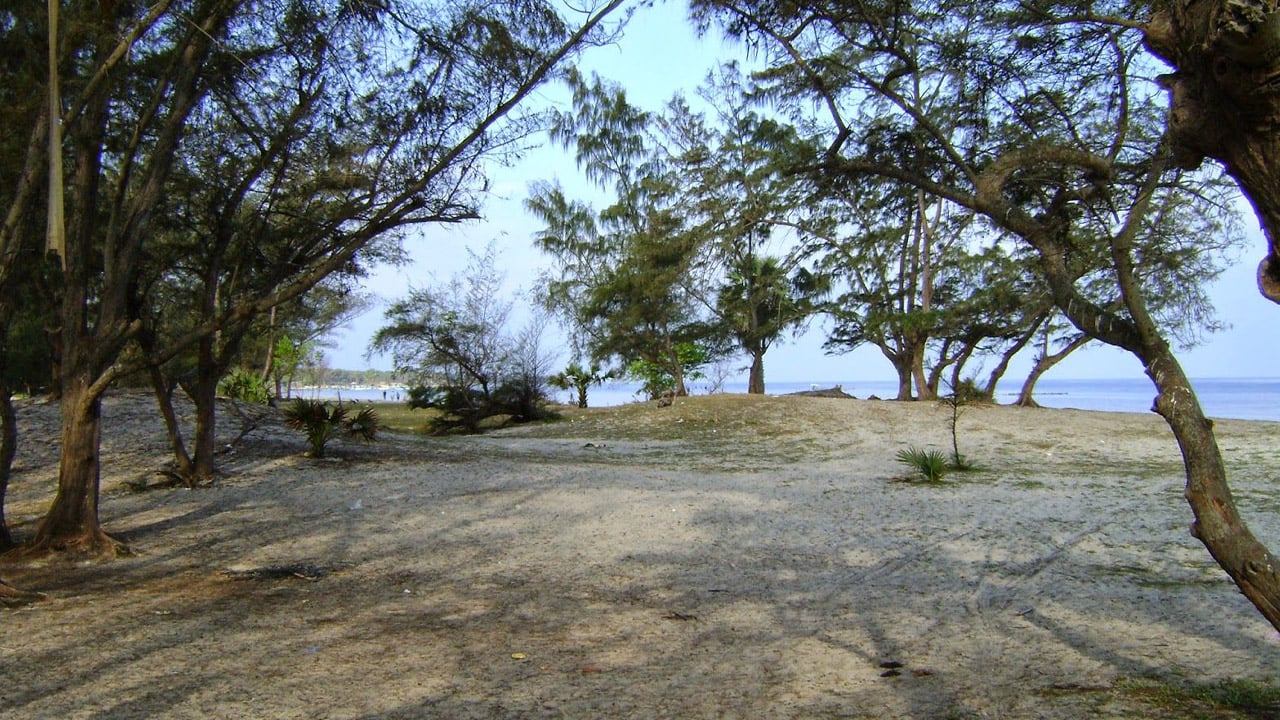
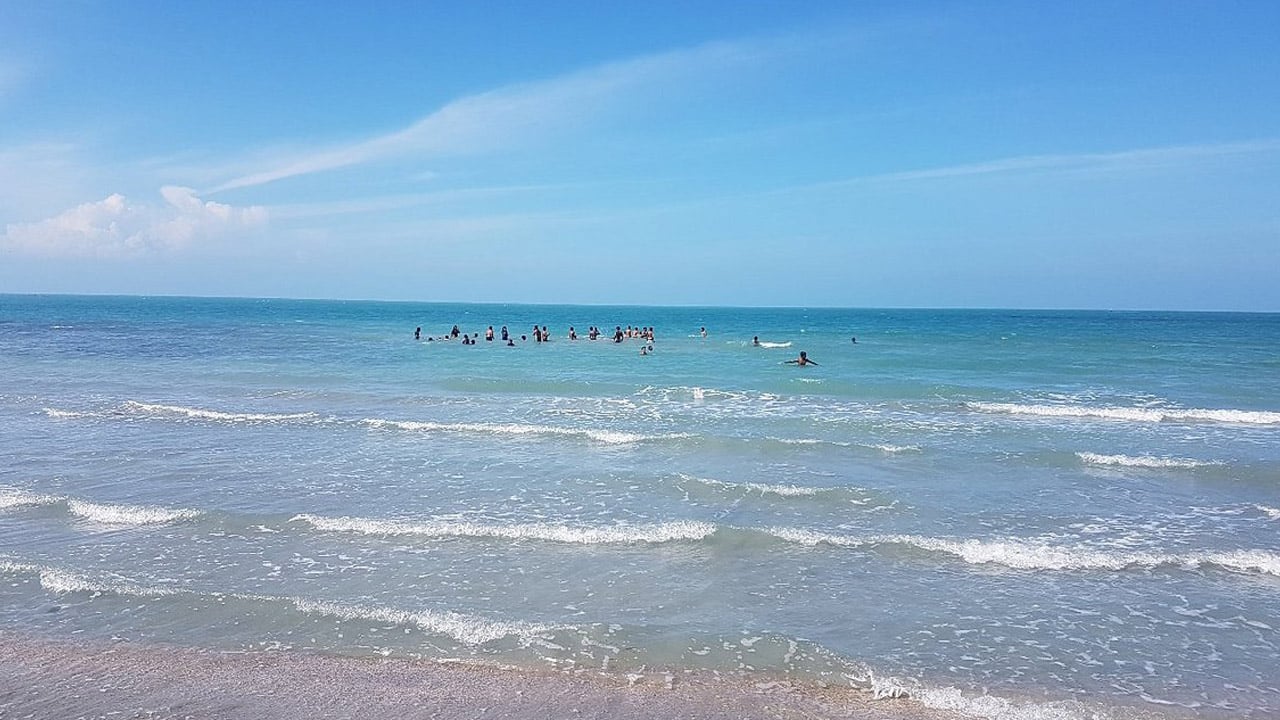
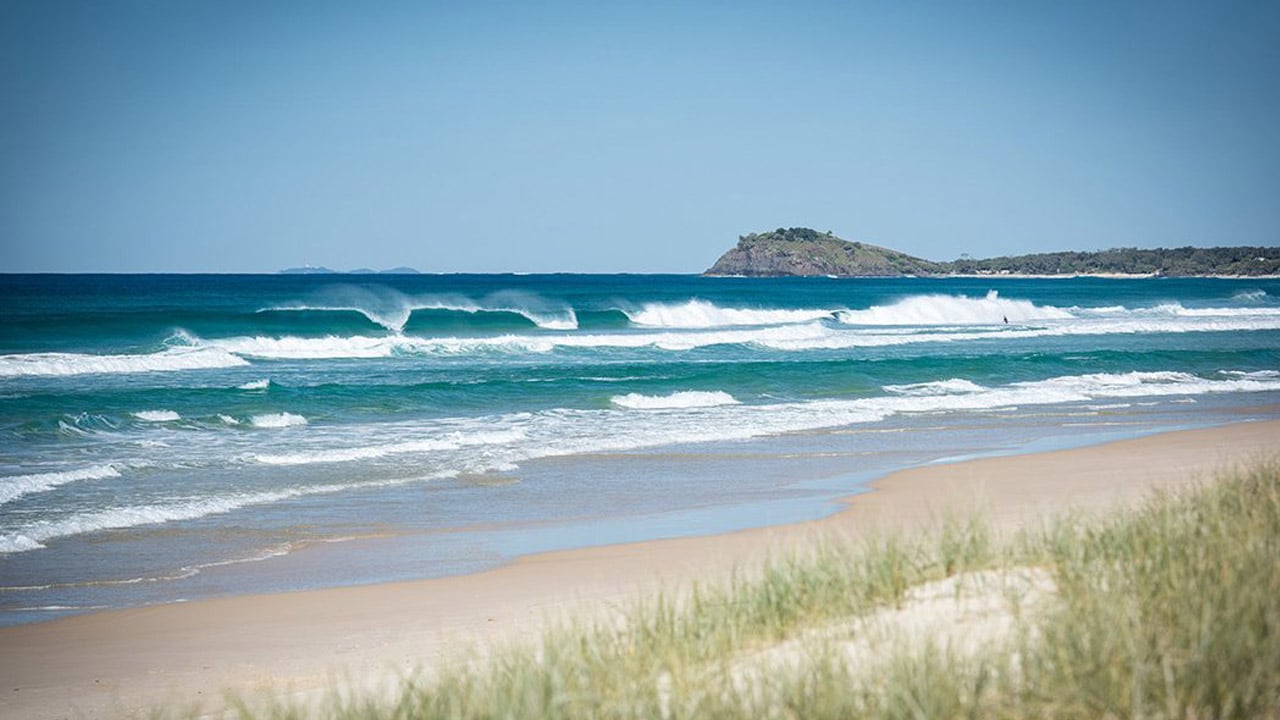
Casuarina Beach sits on the island of Karainagar, roughly 20 kilometres from Jaffna city, connected to the mainland by a short causeway. It is widely regarded as the finest beach on the Jaffna Peninsula — a long, gently curving stretch of pale sand shaded by the casuarina trees that give the beach its name. The setting is quieter and less developed than the beach resorts of the south and west coasts, which makes it especially appealing to travellers who want space to think, read, or simply watch the tide.
What makes Casuarina Beach different from other Sri Lankan beaches?
Most visitors to Sri Lanka head directly for the southern or western coasts. Casuarina Beach rewards those who take the road less travelled. The shoreline faces northwest across the Palk Strait, so the light at dusk is exceptional — the sun drops cleanly toward the sea rather than behind hills or headlands. The sand is fine and white, the water is generally calm between roughly May and September (during the southwest monsoon, which affects the south more severely), and the groves of casuarina, also known as Filicium or ironwood pine, create natural shade that most open beaches lack.
The beach is also culturally distinct. Karainagar is a predominantly Tamil community, and spending time here offers a glimpse into northern Sri Lankan coastal life that is quite different from tourist-oriented villages further south. Local fishing activity, small shrines, and the unhurried rhythm of the island all contribute to an atmosphere that feels genuinely local.
When is the best time to visit Casuarina Beach?
The Jaffna Peninsula has two distinct monsoon windows. The northeast monsoon (roughly November to February) brings heavy rain and occasionally rough seas to the north, making beach visits less comfortable. The most reliable period for calm, dry weather at Casuarina Beach is broadly from May through September, when the southwest monsoon largely spares the north. March, April, and October can also be pleasant, though conditions vary year to year.
Sunrise and sunset are worth planning around regardless of when you visit. The beach faces roughly northwest, so the late-afternoon and early-evening light is particularly good, especially in the drier months when haze is minimal.
How do I get to Casuarina Beach from Jaffna?
The beach is around 20 kilometres from Jaffna city centre, and the drive typically takes about 45 minutes by car or tuk-tuk. The route crosses onto Karainagar Island via a causeway. Roads in this part of the peninsula are generally in good condition, and private car hire is the most convenient option; tuk-tuks are available from Jaffna but the journey is longer and less comfortable for luggage. There is no direct public bus to the beach itself, though local buses run between Jaffna and Karainagar town, from where the beach is reachable on foot or by tuk-tuk.
If you are travelling from Colombo, the A9 highway to Jaffna is fully open; the drive takes roughly six to seven hours. The Jaffna-bound train from Colombo Fort is an increasingly popular option and offers a more scenic approach to the north.
What can I do at Casuarina Beach?
The beach is best suited to relaxed, low-key activities rather than organised water sports. Swimming is safe for most of the year during the dry season — the seabed shelves gently, and there are no sharp drops close to shore. The calm conditions also make it suitable for paddling, wading, and snorkelling in the shallower sections near the casuarina groves.
- Walking the shoreline: The beach is long enough for a proper coastal walk. Early mornings, when local fishers are returning or heading out, are a particularly good time.
- Birdwatching: The casuarina trees and nearby wetlands attract wading birds and migratory species, especially during the cooler months.
- Photography: The combination of white sand, dark ironwood trunks, and the blue-green Palk Strait makes for interesting compositions at most times of day.
- Watching the sunset: The northwest-facing aspect means evening visits are rewarded with unobstructed views of the sun setting over the water.
There are no large-scale watersports operators based at Casuarina Beach, which is part of its appeal. If you are interested in deep sea fishing in the Jaffna area, it is worth asking locally about boat trips available from nearby fishing communities.
Is Casuarina Beach safe for swimming?
During the dry season (broadly May to September), the sea at Casuarina Beach is typically calm and the gradual slope of the seabed makes it accessible to most swimmers, including those with limited experience in open water. There are no lifeguards stationed at the beach, so visitors should exercise the usual caution: avoid swimming alone, be aware of local currents, and stay close to shore if you are not a confident swimmer. During the northeast monsoon (November to February), conditions can deteriorate, and swimming is not advisable.
Where should I stay when visiting Casuarina Beach?
Accommodation on Karainagar Island itself is very limited; most visitors stay in Jaffna city and make a day trip to the beach. Jaffna has a growing number of guesthouses, boutique hotels, and traveller lodges that have opened since infrastructure improvements reached the north. Booking accommodation in Jaffna city gives you access to the peninsula's other points of interest — the fort, the market, the library, and the remarkable series of small islands connected by causeways — while keeping Casuarina Beach within easy reach.
What else is worth seeing near Casuarina Beach?
Karainagar and the wider Jaffna Peninsula offer more than most visitors expect. The Jaffna Fort, built by the Portuguese and later expanded by the Dutch, is one of the most historically layered structures in Sri Lanka. The Nainativu Island, accessible by ferry from Kurikadduwan, is home to both a Buddhist temple and a Hindu shrine, and the boat crossing through the lagoon is an experience in itself. The peninsula's many Hindu kovils, including the celebrated Nallur Kandaswamy Kovil, give a strong sense of the region's Tamil cultural identity.
Further afield, Pigeon Island near Trincomalee is a popular marine sanctuary for those willing to travel down the east coast, offering some of the best snorkelling in Sri Lanka.
Are there facilities at Casuarina Beach?
Casuarina Beach is not a heavily developed tourist site. Small food stalls and refreshment vendors operate near the beach, particularly on weekends and public holidays when local visitors arrive in greater numbers. There are no changing rooms or lifeguard posts. Visitors are advised to carry water, sunscreen, and any food they might need for a longer stay. Litter bins are sparse, so carrying a bag for your own waste is good practice — the beach's unspoiled quality depends on it.
Nearby places
9 places within about 25 km, nearest first.