



Adenanthera bicolor is a lesser-known but botanically significant tree belonging to the family Fabaceae (subfamily Mimosoideae). Native to parts of South and Southeast Asia, it holds a recognised place in the ayurvedic medicinal plant catalogue of Sri Lanka, where traditional healers have drawn on the island's extraordinary forest biodiversity for millennia. Though it rarely commands the same public attention as more widely traded medicinal species, Adenanthera bicolor occupies a quiet but important corner of Sri Lanka's ethnobotanical heritage.
What is Adenanthera bicolor and how does it differ from related species?
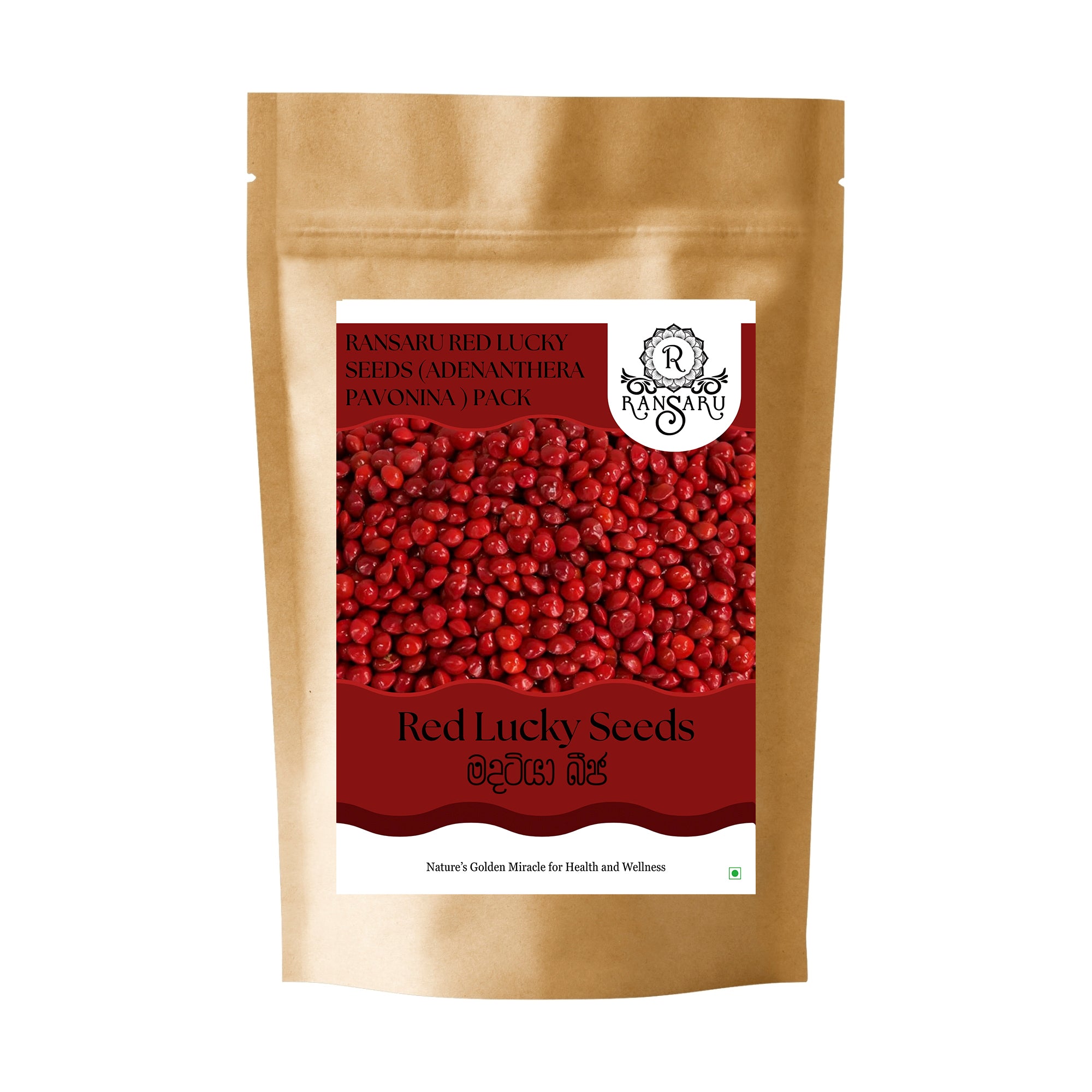
Adenanthera bicolor belongs to the same genus as the better-known Adenanthera pavonina — the red-seeded coral tree whose vivid seeds have been used as jewellery, currency weights, and ceremonial objects across Asia for centuries. Adenanthera bicolor, as the epithet suggests, is distinguished by its two-coloured seeds: the upper portion is typically red while the lower portion tends toward a yellowish or pale tone, a characteristic that sets it apart visually from its close relatives.
Botanically, the genus shares several hallmarks: bipinnate compound leaves, small pale-yellow to cream flowers arranged in slender racemes, and long twisted seed pods that split open to reveal hard, brightly coloured seeds. The wood of trees in this genus is dense and durable, historically valued in carpentry and fuel where available.
Where does Adenanthera bicolor grow in Sri Lanka?
Adenanthera bicolor is typically associated with tropical moist forests and forest margins rather than heavily disturbed or dry-zone habitats. In Sri Lanka it is more likely to be encountered in the wetter lowland and mid-country zones, sometimes alongside other medically significant forest trees such as Acacia chundra and Pongamia pinnata, both of which also feature in the island's ayurvedic pharmacopoeia.
Sri Lanka's exceptional plant biodiversity — the island hosts thousands of flowering plant species in a relatively compact land area — means that many species like Adenanthera bicolor exist within complex forest communities. Preserving these habitats is therefore inseparable from preserving the traditional knowledge built around them.
What are the traditional ayurvedic uses of Adenanthera bicolor?
Within the Sri Lankan ayurvedic tradition, plants of the Adenanthera genus have been employed in formulations targeting inflammatory conditions, skin disorders, and certain metabolic ailments. The seeds, bark, and leaves of related species have documented applications in classical ayurvedic texts, and Adenanthera bicolor is catalogued among the medicinal flora recognised by Sri Lankan practitioners.
It is worth noting that traditional use does not automatically confer clinical validation. Modern pharmacognostic research into Adenanthera species has identified compounds with anti-inflammatory and antioxidant properties in laboratory settings, but formal clinical trials for Adenanthera bicolor specifically remain limited. Anyone seeking ayurvedic treatment should consult a qualified practitioner rather than self-administer plant-based remedies.
The broader tradition of Sri Lankan ayurveda — one of the oldest continuously practised medical systems in the world — draws on a pharmacopoeia of hundreds of native plants. Formulations such as Yogaraja Guggulu and Kaishore Guggulu illustrate how individual plant ingredients are combined into compound preparations that address specific constitutional imbalances.
What is the ecological significance of this species?
Like other leguminous trees, Adenanthera bicolor contributes to soil health through nitrogen fixation — a process carried out by symbiotic bacteria in root nodules that converts atmospheric nitrogen into a form usable by plants. This makes leguminous forest trees disproportionately valuable in mixed forest ecosystems, supporting the fertility of the surrounding soil community.
The hard, brightly coloured seeds of Adenanthera species are also ecologically important as a food source for certain birds and mammals, which in turn act as seed dispersers. In degraded landscapes, the ability of these trees to establish on poor soils gives them potential value in reforestation programmes.
How does Adenanthera bicolor relate to Sri Lanka's wider botanical heritage?
Sri Lanka has one of the most intensively documented traditional plant-medicine systems in Asia, a legacy of ancient texts, living practitioner lineages, and government-supported research through institutions such as the Bandaranaike Memorial Ayurvedic Research Institute. The island's Department of Ayurveda maintains a catalogue of recognised medicinal plants — Adenanthera bicolor is included in this body of knowledge under reference LK94006451.
Plants like Adenanthera bicolor are part of the same cultural and ecological fabric that includes everyday Sri Lankan ingredients explored on this site — from Ceylon black pepper to Syzygium aromaticum (clove) — each with its own role in cuisine, medicine, and trade history. Understanding these connections gives travellers a richer appreciation of the landscapes they move through, whether that is a spice garden in the hill country or a forest trail in a protected reserve.
Can travellers encounter medicinal plant traditions during a Sri Lanka visit?
Yes — and it is one of the more genuinely educational aspects of a well-planned itinerary. Ayurvedic wellness retreats, herbal garden tours, and visits to rural communities offer direct encounters with the living practice of plant-based medicine. The Sinharaja Forest Reserve, a UNESCO World Heritage Site in the wet zone, is among the best places to observe Sri Lanka's native forest flora in an intact setting, where many of the island's endemic and medicinally significant plant species still thrive.
Village-based experiences, spice plantation tours in Matale and Kandy, and guided walks through secondary forest can all provide context for species like Adenanthera bicolor — transforming a botanical footnote into a lived, tangible connection to the island's natural history.
Other species in this genus
1 more, sharing the same genus.