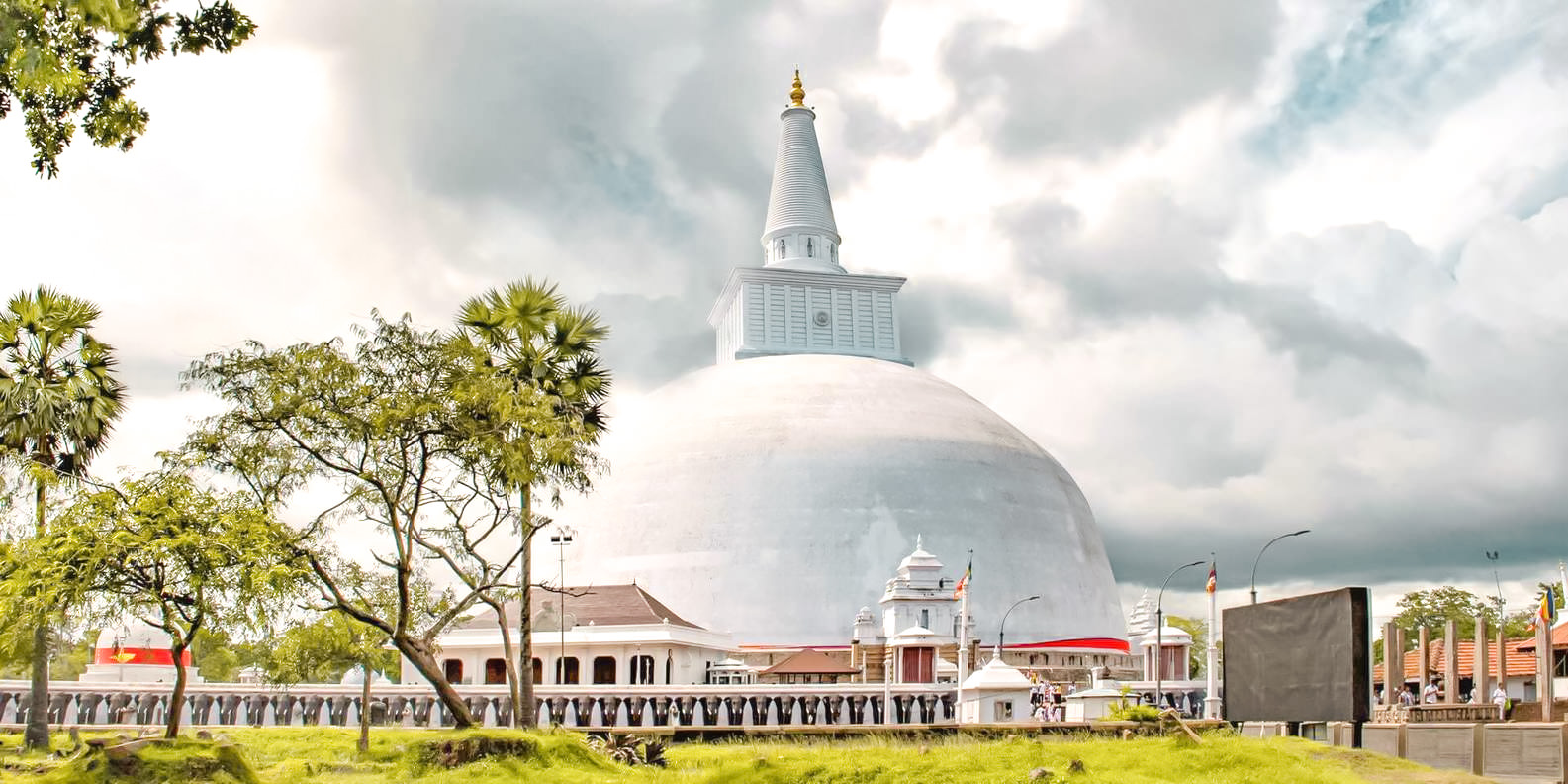
Abhayagiri Monastery in Sri Lanka, Anuradhapura established in the second century B.C., by King Valagamabau, during its glorious days, was not only complex of monastic buildings but also a great seat of learning. Unlike orthodox Mahavihara monastery, Abhayagiri Monastery accommodated the intellectual discussion on various schools of Buddhist thought in addition to Theravada Buddhism, considered as the pure words of Buddha. The center of attraction of the monastery was Abhayagiri stupa, the second tallest stupa at Anuradhapura, also built by King Valagambahu (89-77 BC).
In the 5th century, the Chinese monk Fa-Hsien visited Abhayagiri, the flourishing center of Buddhist studies. The monk lived 2 years at Abhayagiri Monastery copying Buddhist texts and took all copies to China. Fa-Hsien also made written records of his life and times at Abhayagiri Monastery. In his memoirs, he wrote about the Tooth Relic, monasteries, stupas, and statues of Sri Lanka.
The new museum at Abhayagiri Monastery, a source of valuable information to the tourists, was established in memory of Fa-Hsien to house the treasures discovered during the excavations at Abhayagiri Monastery. A large horde of artifacts was unearthed at the monastery during the recent excavations: ornaments and jewelry made of gold and studded with gems and crystals; coins belonging to the pre-Christian era; metal objects; molds and crucibles used in their manufacture; ceramics; pottery; glass; tiles; sculptures etc.
Abhayagiri Monastery, Highlights
Lankarama Dagoba
Lankarama Monastery is located to the south of the Abhayagiri Monastery and east of the Bulankulama man-made tank. Lankarama Dagoba, known as Mani Somarama meaning “the monastery of Soma” in Sinhalese, was built by King Valagambahu in celebration of the return of Somadevi, who was captured and taken to southern India by the marauding Dravidian Army. Having regained his kingdom from the Dravidian invaders, the king secured the release of his queen too. It is believed that Lankarama was the nunnery of the Abhayagiri Monastery.
Lankarama Dagoba is another vatadage (circular relic house) in Sri Lanka: in its days of glory, Lankarama had 88 stone columns, in three concentric circles, surrounding the dagoba that held up a circular roof. Today only a few of the carved stone pillars can be seen around the renovated dagoba. The renovated dagoba measuring 38 feet in diameter is set up on a platform 10feet in height and 132 feet in diameter. Four flights of steps from the cardinal directions take the devotees to the platform 10 feet above the ground level. The four vahalkadas (front entrances doorways) no longer exist. Among the ruins are few damaged Buddha statues and stone tubs for washing feet before entering the sacred terrace, the platform.
Eth-Pokuna
Eth-Pokuna (Sinhala: Elephant Pond), located south-west of the Abhayagiri stupa was built during the third century A.C. A flight of steps from each of the four sides leads down to the rectangular pond measuring 150 meters in length and 50 meters in width and 10 meters in depth. I
අවට ස්ථාන
කි.මී. 25ක් පමණ ඇතුළත ස්ථාන 15, ළඟම ඒවා මුලින්.
- Abhayagiri Museumකි.මී. 1ට අඩු
- Moonstone at Mahasen Maligayaකි.මී. 1ට අඩු
- Sandahiru Stupaකි.මී. 1ට අඩු
- Kuttam Pokunaකි.මී. 1ට අඩු
- Sandagiri stupaකි.මී. 1ට අඩු
- Abhayagiri Stupaකි.මී. 1ට අඩු
- Thuparamaya Stupaකි.මී. 1ට අඩු
- Eth Pokunaකි.මී. 1ට අඩු
- Jetavanaramaya Stupaකි.මී. 1ට අඩු
- Mirisawetiya Stupaකි.මී. 1ට අඩු
- Jetavana Monasteryකි.මී. 1ට අඩු
- Lankaramaya Stupaකි.මී. 1ට අඩු
- Abhayagiriya Dana shalawaකි.මී. 1ට අඩු
- Samadhi Statueකි.මී. 1ට අඩු
- Stone Bridge and Library (Pothgula)කි.මී. 1